
Digital Russia beyond stereotypes
People who have never visited Russia, especially Moscow, often think of Russia as a country far removed from advanced technology. In reality, however, this perception is quite different from what one actually sees on the ground. Russia has been undergoing digital transformation at a remarkable pace. In Moscow, delivery robots already move along the streets, passengers can use the metro simply through facial recognition without a transport card or smartphone, and AI robot assistants guide visitors in shopping malls. Advanced technology has become naturally embedded in everyday life.
What is important here is that these technologies are not merely presented as symbols of modernization or futuristic experiments. They are already connected to everyday activities such as transportation, shopping, delivery, and customer service. For Russians, digital technology is not something distant or exceptional. It is part of the practical infrastructure that makes daily life more convenient. This everyday use of technology reveals another side of Russia that is often overlooked from the outside.
From online shopping to lifestyle infrastructure
Alongside this rapid digitalization, Russia’s e-commerce market has also grown sharply since the COVID-19 pandemic. Consumers have increasingly turned to online shopping because it offers a wider range of products than offline stores, broader discounts, easier price and product comparison, and above all, greater convenience. According to the Association of Internet Trade Companies (AKIT) in Russia, the market has recorded an average annual growth rate of 32% over the past decade. In 2025, it grew by 28% year on year, reaching 11.5 trillion rubles, showing continued rapid expansion.
One particularly notable feature is the spread of mobile-based consumption. At present, 78% of Russia’s population uses mobile e-commerce, far above the global average of around 30%. This figure clearly shows how quickly Russian consumers have adapted to the digital environment. Based on this expansion of mobile consumption, Russia’s e-commerce platforms have also grown rapidly. Major platforms include Wildberries, Ozon, and Yandex Market. These platforms do not simply sell consumer goods such as clothing, food, and electronics. They also provide a wide range of services, including airline tickets, hotel reservations, grocery delivery, and food delivery. In this way, they are evolving beyond ordinary online shopping malls into comprehensive lifestyle service platforms. In other words, Russia’s major e-commerce platforms have become digital lifestyle infrastructure that connects many aspects of consumers’ everyday lives.
A key difference between Russia’s e-commerce system and that of Korea is the active use of pickup points and parcel lockers, known as parcel automats. Consumers can receive goods at the place and time they choose without exposing their home address. Many pickup points are also equipped with fitting rooms, allowing customers to try on clothing before making a final decision. Another major advantage is that if customers do not like the item after receiving it at the pickup point, they can return it immediately on the spot, even if there is no defect in the product.
Ozon: the platform reshaping Russian consumer life
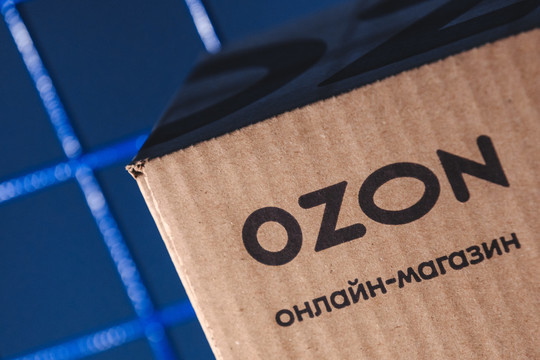
A representative example that clearly shows these features is Ozon. Often called “the Amazon of Russia,” Ozon was founded in 1998 and is one of Russia’s oldest e-commerce platforms. With its broad delivery infrastructure and dense pickup network, Ozon has grown into one of the key players in Russia’s online retail market. By combining fast delivery, convenient returns, and various additional services, Ozon has developed beyond a simple online shopping mall into a digital lifestyle platform closely connected to the everyday lives of Russian consumers.
Ozon’s first strength is fast delivery. In Moscow, most products arrive the day after ordering, and many items can be delivered within one to two days even without a membership subscription. While Korea’s Coupang Rocket Delivery is known for early-morning doorstep delivery, Ozon has secured its competitiveness by combining fast delivery with a pickup system suited to Russia’s urban structure and broad living areas. In particular, Ozon Fresh, which delivers fresh food and prepared meals, can deliver within one hour in some areas, providing a high level of convenience for Russian consumers.
The second strength is its dense pickup system. Ozon’s own pickup points and unmanned parcel lockers, known as Ozon Box, are located throughout the city, and several pickup locations can often be found within a ten-minute walk. This system reduces delivery costs and is also useful for consumers who do not want packages left in front of their homes. In that sense, it offers advantages in terms of both privacy protection and secure pickup.
The third strength is its free return policy. Ozon allows returns due to simple change of mind even without a membership subscription, and customers can easily receive and return items through pickup points. This system greatly reduces the burden of purchase, especially for products such as clothing and household goods that consumers may want to check in person before deciding whether to keep them.
The fourth strength is its membership service. By subscribing to Ozon Premium, users can access a range of benefits, including faster delivery, additional discounts, and connected OTT services. At a relatively low monthly price of 199 rubles, or about 4,200 Korean won, the service offers strong price competitiveness.
In short, the essence of Russian e-commerce does not lie simply in selling goods online. Fast delivery, pickup points, easy returns, fresh food delivery, food delivery, membership services are being integrated into one system. As a result, e-commerce platforms are developing into lifestyle infrastructure that organizes the everyday lives of Russian consumers. Ozon is a representative example of this transformation and an important platform for understanding Russia’s rapid digital transformation and changing consumer culture.
New face of digital Russia
This change is not limited to online shopping or fast delivery. In Russia’s e-commerce sector, new technologies are being applied to everyday services. A representative example is the introduction of autonomous delivery robots, which began in 2020. Even on snow-covered winter streets, delivery robots can be seen moving through the city. Sometimes, when a robot stops while moving, citizens naturally help it continue on its way. Such scenes show how naturally advanced technology has entered the daily lives of Russians.
Therefore, when visiting Russia, it can be a meaningful cultural experience not only to see tourist attractions, but also to try local e-commerce platforms such as Ozon. Russia’s e-commerce ecosystem is developing into lifestyle-oriented digital infrastructure that combines advanced technology with consumer convenience. In terms of both convenience and innovation, Russia’s digital consumer environment is comparable to that of Korea. Experiencing this system allows visitors to encounter a different face of Russia: a digitalized Russia that differs greatly from the image many people commonly associate with the country.