
Cooperation in an Age of Tension
The Korean Peninsula today is defined by a paradox. Political and military tensions remain deeply entrenched, with inter-Korean dialogue largely frozen and security concerns once again dominating the agenda. Yet at the same time, the two Koreas face a growing set of shared environmental challenges—ranging from extreme weather and flooding to air pollution, deforestation, and biodiversity loss.
These problems do not recognize borders. They are transboundary by nature and cannot be effectively addressed by either side alone. As a result, a striking contradiction emerges: while political relations deteriorate, ecological interdependence continues to intensify.
This tension raises an important question. If traditional diplomacy remains stalled, are there alternative pathways through which cooperation might still be possible? One promising—yet underutilized—avenue lies in environmental cooperation.
The Limits of Traditional Approaches
Efforts to stabilize relations on the Korean Peninsula have historically relied on high-level political and security negotiations. These approaches, while necessary, have proven fragile and difficult to sustain. Diplomatic breakthroughs are often followed by periods of stagnation or reversal, as seen after the collapse of the 2019 Hanoi summit and the subsequent deterioration in inter-Korean relations.
The core challenge lies in the highly securitized nature of the conflict. Issues such as nuclear weapons, military posture, and regime survival are deeply sensitive and politically charged. As a result, even small steps toward cooperation can become entangled in broader strategic calculations, limiting the scope for sustained engagement.
In this context, relying exclusively on traditional diplomacy may be insufficient. What is needed are complementary approaches—mechanisms that can operate even when political trust is low and formal dialogue is constrained.
Environmental Cooperation as a Low-Politics Entry Point
Environmental cooperation offers precisely such a mechanism. Unlike security or ideological disputes, environmental issues are often perceived as less politically sensitive. They fall into what scholars describe as the realm of “low politics”—areas where cooperation is driven more by practical necessity than by strategic competition.
This creates opportunities for engagement in otherwise frozen relationships.
Environmental cooperation works through several reinforcing dynamics. First, it is grounded in shared vulnerability. Floods, droughts, air pollution, and ecosystem degradation affect both sides of the border, creating incentives for joint problem-solving. Second, it enables technical and scientific collaboration. Experts, engineers, and environmental agencies can cooperate on data-sharing, monitoring, and risk management without requiring immediate political alignment.
Third, such cooperation can generate gradual spillover effects. What begins as narrowly technical engagement—such as joint flood management or air quality monitoring—can evolve into more institutionalized forms of interaction over time. Finally, environmental initiatives often involve non-state actors, including NGOs, research institutions, and local communities, creating additional channels of communication when official diplomacy is limited.
Importantly, environmental cooperation does not aim to resolve the Korean conflict directly. Rather, it creates space for interaction, reduces mistrust, and builds the foundations for more sustained engagement.
What Can Korea Learn from Global Experience?
Experiences from other regions demonstrate that environmental cooperation can function even in politically tense or conflict-affected settings.
One of the most frequently cited examples is the Indus Waters Treaty between India and Pakistan. Despite decades of political hostility and periodic military crises, the treaty has endured as a framework for managing shared water resources. Its resilience illustrates how technical cooperation, supported by institutional mechanisms, can persist even when broader relations are strained.
Similarly, in the Jordan River Basin, environmental cooperation has taken place in a context of deep political division. While far from resolving the conflict, joint initiatives—often supported by international organizations and civil society—have enabled limited but meaningful collaboration on water management and environmental protection.
In Europe, the Prespa Lakes region—shared by Albania, Greece, and North Macedonia—demonstrates how environmental cooperation can contribute to trust-building and regional integration over time. What began as conservation efforts evolved into a broader framework of cross-border governance, supported by both local and international actors.
These cases highlight a consistent lesson: environmental cooperation is neither automatic nor universally successful. Its effectiveness depends on factors such as institutional design, equitable distribution of benefits, third-party facilitation, and the ability to deliver tangible outcomes for local populations.
Nevertheless, even in difficult contexts, it can create “islands of cooperation” that persist despite broader political tensions.
Applying the Insight to the Korean Peninsula
What might environmental cooperation look like in the Korean context? While political constraints are significant, several practical entry points already exist.
First, joint water and flood management.
The Korean Peninsula is increasingly affected by extreme weather events, including heavy rainfall and flooding. Shared river basins—such as the Imjin River—create natural opportunities for cooperation on flood forecasting, data-sharing, and disaster response. These initiatives are technical in nature and directly linked to human security, making them potentially more acceptable to both sides.
Second, ecological cooperation in the DMZ.
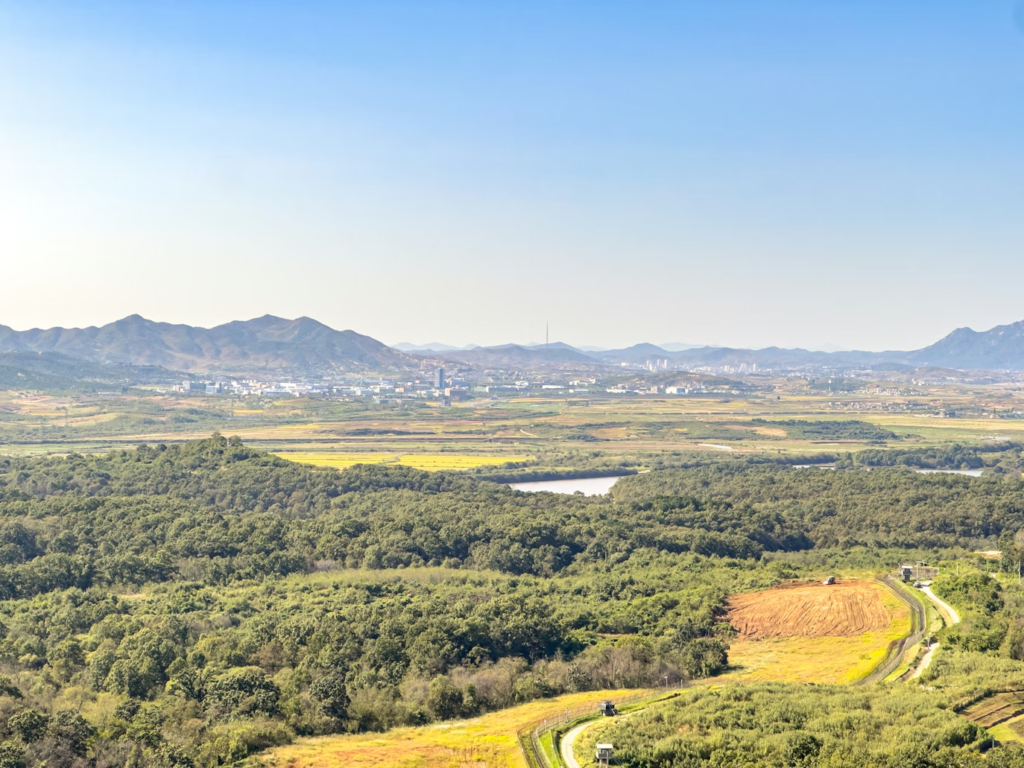
The Demilitarized Zone, one of the most heavily fortified borders in the world, has also become an unintended ecological sanctuary. Joint biodiversity monitoring, conservation projects, and scientific research could serve as neutral platforms for engagement. Such initiatives could involve international organizations and research institutions, providing an additional layer of support and legitimacy.
Third, air quality and climate cooperation.
Air pollution and climate change are regional challenges affecting both Koreas, as well as neighboring countries. Joint monitoring systems, data exchange, and participation in broader Northeast Asian environmental initiatives could offer a multilateral pathway for engagement, reducing the political sensitivity of bilateral cooperation.
These examples illustrate a broader point: environmental cooperation does not require a comprehensive political agreement to begin. It can start small, at the technical level, and expand incrementally as trust and capacity develop.
A Necessary Reality Check
At the same time, it is important to avoid overly optimistic assumptions. Environmental cooperation is not a substitute for political diplomacy, nor is it a guaranteed pathway to peace.
Global experience shows that such initiatives can fail or produce limited results, particularly in contexts characterized by deep asymmetries, low trust, and high securitization. Cooperation may remain confined to narrow technical domains, without generating broader political spillover. In some cases, it can even reinforce existing inequalities if benefits are unevenly distributed.
On the Korean Peninsula, additional challenges include limited data transparency, restricted access to North Korea, and the broader geopolitical environment. These constraints mean that environmental cooperation must be carefully designed, realistic in scope, and supported by sustained political and international engagement.
Small Steps, Strategic Value
Environmental cooperation will not resolve the Korean conflict. It will not replace the need for high-level diplomacy or security negotiations. However, it offers something that is currently in short supply: a practical, flexible, and relatively low-risk pathway for engagement.
By focusing on shared challenges and mutual benefits, environmental initiatives can create opportunities for dialogue, build trust at multiple levels, and establish institutional linkages that may endure even in periods of political tension.
In a context where traditional approaches have repeatedly stalled, such incremental and pragmatic strategies deserve greater attention. Environmental cooperation may not be a breakthrough solution—but it could be one of the few remaining avenues through which cooperation on the Korean Peninsula can begin again.