A Harder Moment for the Korean Peninsula
Peace on the Korean Peninsula depends on one thing above all. North Korea has to stop building nuclear weapons. That was true thirty years ago and it is still true today. What has changed is the world around the problem. Big powers are competing more openly, international rules are enforced less often, and the bodies that once kept watch on North Korea have been weakened or shut down. Stopping the programme is more urgent than ever. It is also harder than ever.
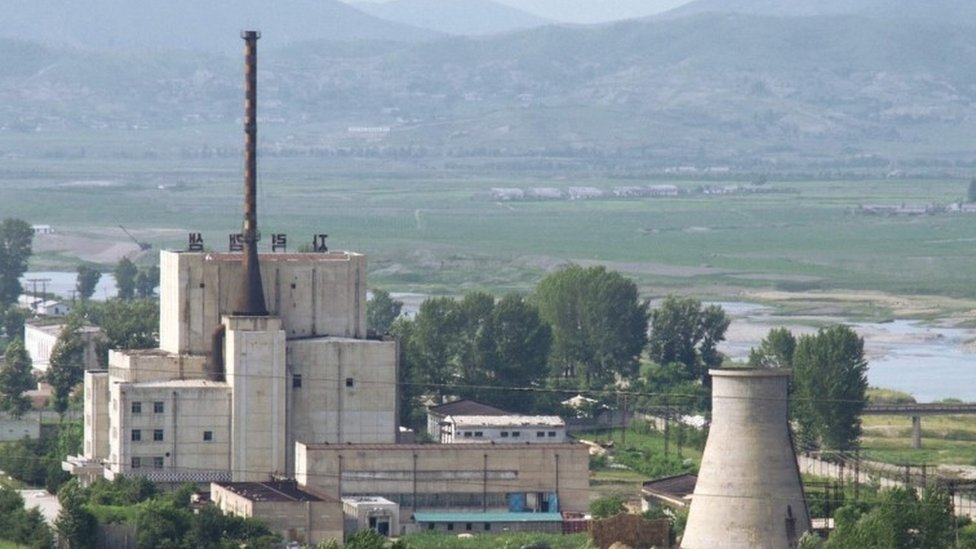
The technical news is bad. In a report dated August 2026 and presented to its Board of Governors in September, the International Atomic Energy Agency said that North Korea has built a second uranium enrichment building at Yongbyon, begun in December 2024 and externally complete by May 2025. It is large enough to hold as many as twenty-eight centrifuge cascades. A new wing beside the Kangson plant, built during 2024, started working in January 2026, and the Agency said it cannot rule out that highly enriched uranium is being made there. The older Yongbyon plant kept running as well. In plain terms, North Korea can now produce more bomb material than before, and it is doing so in clear breach of United Nations Security Council resolutions.
The political news is no better. North Korea has written its nuclear status into its constitution. In July 2026 Kim Yo Jong, the sister of the leader, called that choice final and said that the idea of giving up nuclear weapons had lost all meaning. In August 2026 the President of the United States said in public that North Korea holds fifty-seven nuclear weapons, and that he expects to meet Kim Jong Un again. In July 2026 the South Korean Ministry of Unification announced that Seoul would now aim to freeze the programme rather than demand that it be taken apart at once. President Lee Jae Myung described this as facing a hard reality.
Behind all of this, the system built to contain North Korea has been pulled apart. In March 2024 Russia used its veto to block the renewal of the United Nations Panel of Experts, the group that had recorded breaches of sanctions for fifteen years. Its mandate ended weeks later. The sanctions are still law. The people who watched over them are gone. Eleven countries set up a new monitoring team in October 2024, and it has done serious work, including a report in October 2025 on the cyber theft and the overseas computer workers who now pay for North Korea’s weapons. But that team speaks for a group of willing states rather than for the whole United Nations, and Pyongyang knows the difference. At the same time Russia signed a treaty with North Korea in June 2024 that includes a promise of military help, North Korean soldiers have fought on Russian soil, and the American National Security Strategy published in December 2025 did not mention North Korea at all.
This is the real danger. No government has formally accepted North Korea as a nuclear-weapon state. Yet a nuclear North Korea is slowly becoming normal, through habit, through distraction, and through one veto at a time.
Why Nuclear Weapons No Longer Deter the Way People Think
The usual answer to all this is that even a nuclear North Korea can be deterred. Recent wars suggest that this comfort is misplaced.
Rose Gottemoeller, who served as Deputy Secretary General of NATO and as the senior American official for arms control, calls what is happening the strange defeat of nuclear deterrence. Her examples are hard to argue with. In June 2025 Ukrainian agents smuggled small drones deep into Russia and, by Ukrainian accounts, destroyed or damaged dozens of aircraft at bomber bases, including planes linked to nuclear command. Russia had said openly that an attack on such targets could bring a nuclear answer. When the attack came, Russia replied with drones and missiles instead. Israel is widely believed to hold nuclear weapons, yet they did not prevent the attack of October 2023, nor the waves of missiles and drones that followed, nor the missile strike of March 2026 on the town beside its reactor site at Dimona. India and Pakistan, both nuclear-armed, fought their most serious battle in a generation in May 2025.
The pattern is clear. Holding nuclear weapons does not stop ordinary attacks. Cheap drones and accurate missiles can reach even the most powerful countries, and nuclear sites can become targets.
Three lessons follow for the Korean Peninsula. The first concerns North Korea itself. The weapons it is building will not make it safe. The nuclear-powered submarine it is building is meant to guarantee that it could strike back after any attack. But once both sides believe they could survive a first blow and answer it, full-scale war becomes less likely while smaller clashes, incidents at sea and open threats become more common, because each side assumes the other will not go all the way. That is not peace. It is a quieter and more constant form of danger.
The second lesson concerns South Korea and Japan, where more people now favor building their own nuclear weapons. If such weapons cannot stop drones, artillery or cyber-attacks, that argument falls apart on its own terms. A South Korean bomb would not close the short distance between the border and Seoul, and it would cost the country its standing under the Non-Proliferation Treaty along with much of the technology trade its economy rests on. The better answer to doubts about American protection is to keep that protection visible and well-practiced.
The third lesson is the most important. Gottemoeller suggests better defenses, stronger protection for nuclear sites and a new rule against attacking them. These are sensible steps, but they make nuclear weapons safer to live with rather than removing them. The more countries hold such weapons, the more chances there are for accidents, false alarms and misreadings, and the growing use of computers and artificial intelligence in military decisions leaves less time to catch a mistake. Living beside a nuclear North Korea means living one error away from disaster. The goal must be stopping the programme, not managing it.
What the United States Can and Cannot Do
Because Washington is the capital that Pyongyang most wants to talk to, any discussion of this problem quickly becomes a discussion of American policy. It is worth being clear about what the United States can and cannot deliver.
There are four things it can do well. It can keep its security promise believable by keeping forces in the region ready and exercising them often, since allies can check readiness even when they cannot predict the mood of a president. It can pay for the kind of defense that works against the weapons actually being used, meaning the cheap and plentiful air and drone defenses that Ukraine has learned to build. It can calm a crisis once one begins, as it did with quiet pressure on Moscow in the first year of the war in Ukraine and, by its own account, with swift help in ending the fighting between India and Pakistan. And it can keep enforcement alive by paying for the monitoring that replaced the Panel of Experts and by going after the stolen funds and hidden labor that finance the weapons.
There are four things it cannot do, and pretending otherwise has cost time. It cannot stop ordinary attacks by threatening nuclear use, since Russia’s own threats failed to protect Russian bombers. It cannot bring back the United Nations monitoring body, because the veto that removed it belongs to another country. It cannot outbid Russia and China for North Korean loyalty, because Moscow already supplies the fuel, food, money and probably the technology that sanctions were meant to deny. And it cannot obtain disarmament from a single summit, because Kim Jong Un’s condition for talks is that Washington drop the goal of disarmament first. An agreement on those terms would buy a friendly atmosphere and give away the point. American attention is limited too, as the silence about North Korea in the latest National Security Strategy showed.
The conclusion is straightforward. The United States can provide pressure, reassurance, crisis management and enforcement. It cannot provide legitimacy, permanence or inspection. Those must come from many countries acting together and from institutions that work. This is why the weakening of international enforcement is not a technical complaint. It is the main obstacle to peace on the peninsula.
What Stopping the Programme Really Means
Putting a stop to North Korea’s nuclear programme means three different things, and they are often treated as one. Making must stop, which means real limits at Yongbyon and Kangson that inspectors can check on the ground, and a freeze can be accepted only as a first step with dismantlement written into it. Selling must stop, which means monitoring backed by UN authority, supported by export rules, shipping checks and banking controls, because a country that sells shells and soldiers for hard currency can also sell nuclear knowledge. And acceptance must stop, which means that no government should treat these weapons as a closed question in its documents or language.
All three depend on rebuilding institutions, and the Korean case shows why. A body created by the Security Council was abolished by a member of that Council whose own conduct it had started to record. Intelligence gathered from a distance is no substitute for inspectors, as the years in which the Kangson plant operated without being acknowledged make clear. Enforcement therefore has to rest on something broader than agreement among five countries. One useful rule is already available. Every January, India and Pakistan exchange lists of nuclear sites that each promises not to attack. A similar promise would matter even more in Korea, where a strike on Yongbyon would spread radiation across one of the most crowded regions on earth. None of this can be achieved by one alliance, one summit or one list of sanctions. It needs countries working together, and it needs an international order that respects international law, including the resolutions that the most powerful members of the Security Council voted for themselves. Deterrence can hold a line for a while. Only law, checked on the ground, can move that line back. Peace on the Korean Peninsula, and in the wider region, now depends on whether the world still has the will to enforce the rules it wrote.
Yusuf Evirgen
Post-doctoral Fellow
Institute for Genocide and Mass Atrocity Prevention, Binghamton University