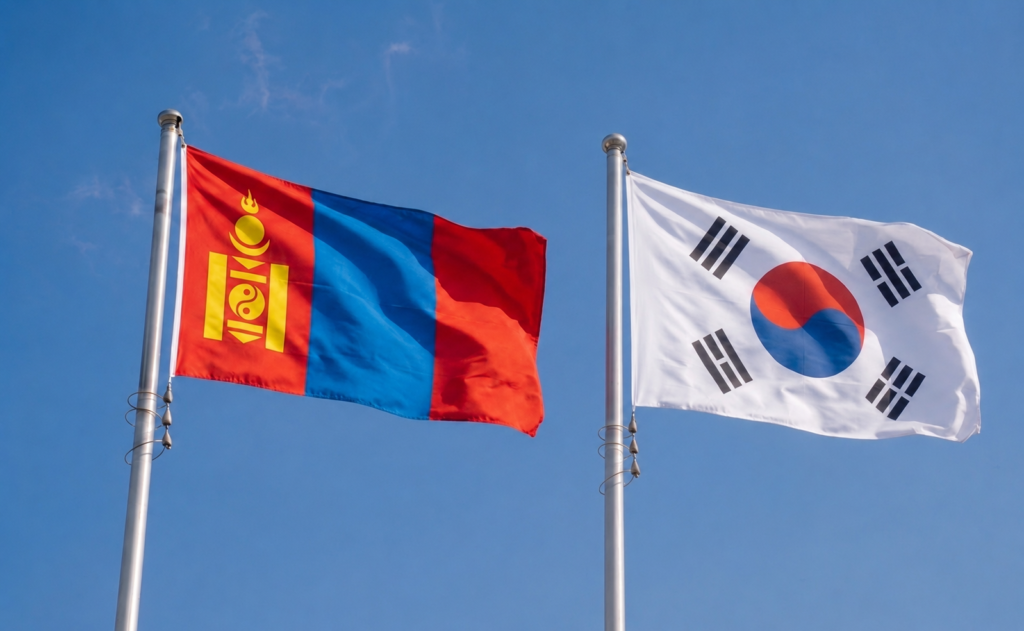

Geopolitical Transformation and the Emergence of Korea–Mongolia Strategic Convergence
The contemporary international order is increasingly characterized by intensified geopolitical competition, deepening economic fragmentation, and the strategic reconfiguration of interdependence across regions. In this evolving environment, states that do not possess the material capabilities of great powers are compelled to rely on alternative forms of influence that emphasize institutional engagement, policy diversification, and rule-based external relations. Rather than projecting power through coercive means, these states increasingly construct their international position through legal frameworks, economic connectivity, and sustained diplomatic networking that collectively reduce vulnerability to external shocks.
Korea represents a particularly salient case of such strategic adaptation. As a highly industrialized, export-oriented economy with limited natural resources, it is structurally embedded in global supply chains and therefore highly sensitive to geopolitical disruptions and systemic uncertainty. In response, it has developed a diversified external engagement strategy that seeks to expand its diplomatic and economic partnerships across multiple regions, thereby avoiding overdependence on any single geopolitical axis. Within this broader orientation, its engagement with Eurasian partners has gained increasing significance, with Mongolia emerging as a particularly important node in this evolving strategic architecture.
Mongolia occupies a structurally distinctive geopolitical position as a landlocked state situated between Russia and China. This geographic condition has historically constrained its external autonomy, but it has also incentivized the development of the “third neighbour policy,” which aims to expand diplomatic and economic relations beyond its immediate neighbours. This strategic orientation aligns closely with Korea’s own emphasis on diversified partnerships and non-exclusive engagement. The convergence of these strategic logics has provided a strong foundation for deepening bilateral cooperation, particularly in areas where institutional complementarity and economic complementarity intersect.
Korea’s engagement with Mongolia further reflects a broader evolution in its foreign policy identity, moving away from hierarchical or coercive modes of interaction toward a framework centred on mutual benefit, institutional cooperation, and long-term partnership stability. In this context, international law plays a constitutive role by providing predictability, reducing transaction costs, and enabling sustained interaction across political and economic domains. Legal structures thus operate not merely as regulatory instruments but as foundational mechanisms through which bilateral relations are stabilized, expanded, and strategically embedded within a broader regional order.
Economic Engagement and the Legal Foundations of Cooperation
Economic relations constitute the core dimension of Korea–Mongolia bilateral engagement, forming the most substantive and structurally significant pillar of their partnership. Mongolia’s rich endowment of natural resources, including coal, copper, and strategically important minerals, positions it as a critical partner for Korea’s resource diversification strategy. At the same time, Mongolia’s ongoing structural transformation and development agenda create expanding opportunities for cooperation in infrastructure development, industrial modernization, and service-sector expansion, thereby broadening the scope of economic interaction beyond extractive industries.
The legal foundations of this economic relationship are anchored in a dense network of bilateral instruments, including investment protection agreements, double taxation avoidance arrangements, and broader economic cooperation frameworks. These agreements play a critical role in mitigating political and regulatory uncertainty, thereby creating a stable and predictable environment for cross-border economic activity. By establishing clear standards for investor protection, dispute settlement, and regulatory coordination, these legal instruments enable long-term capital deployment and reduce the risks typically associated with emerging market environments.
In recent years, this legal infrastructure has been further strengthened through the expansion and updating of multiple bilateral cooperation instruments that reflect the changing nature of the partnership. These include enhanced economic cooperation memoranda of understanding focusing on supply chain resilience and industrial collaboration, expanded air transport agreements facilitating connectivity and mobility, and EDCF-linked development financing arrangements supporting infrastructure expansion. In addition, new cooperation frameworks have emerged in areas such as critical minerals governance, green development strategies, sustainable mining practices, and digital transformation initiatives, all of which signal a gradual shift toward a more complex and technologically integrated bilateral economic relationship.
Beyond traditional resource extraction, Korea’s economic engagement with Mongolia has increasingly diversified into sectors such as urban development, manufacturing cooperation, and digital infrastructure systems. Projects related to smart city development, transport infrastructure modernization, and energy system transformation illustrate this structural evolution toward higher value-added and technology-intensive forms of cooperation. The legal frameworks governing these domains serve to institutionalize emerging patterns of interaction and ensure that economic engagement is not episodic but rather embedded within a stable and evolving regulatory architecture.
Institutionalizing Development Cooperation
A defining characteristic of Korea’s engagement with Mongolia lies in the integration of developmental diplomacy within a structured legal-institutional framework. Official development assistance, concessional financing mechanisms, and technical cooperation programs are systematically linked to broader diplomatic and economic objectives, reflecting a coherent strategy that draws on Korea’s own historical experience of development-led transformation. This approach emphasizes institutional capacity-building, governance improvement, and long-term socio-economic upgrading as central components of bilateral engagement.
Development cooperation between Korea and Mongolia spans a wide range of sectors, including urban infrastructure development, education systems, public administration reform, healthcare modernization, and digital governance enhancement. Korean-supported initiatives have contributed to improving infrastructure conditions in Ulaanbaatar, strengthening administrative efficiency in public institutions, and enhancing human capital through education and training programs. These projects are typically embedded within formalized agreements that ensure continuity, coordination, and accountability across implementation phases, thereby reducing fragmentation and improving policy coherence.
The legal codification of development cooperation significantly enhances its effectiveness by transforming what might otherwise be fragmented project-based interventions into structured and sustained institutional engagement. Through clearly defined obligations, implementation mechanisms, and monitoring frameworks, these agreements ensure that development initiatives are aligned with long-term national development strategies. This institutionalization distinguishes Korea’s approach from more ad hoc or short-term assistance models, positioning it instead as a systemically integrated form of developmental diplomacy.
At the societal level, developmental cooperation also generates important soft power effects by fostering educational exchanges, scholarship programs, and cultural interaction. These people-to-people linkages strengthen mutual understanding and contribute to the gradual formation of a durable relational infrastructure between the two societies. While less visible than large-scale infrastructure projects, these dimensions are essential for sustaining long-term bilateral trust and reinforcing the perception of Korea as a reliable and constructive development partner.
Institutional Depth and the Future Pathways of Korea–Mongolia Cooperation
The cumulative outcome of Korea’s multifaceted engagement with Mongolia is the gradual emergence of a complex and multilayered institutional framework spanning economic cooperation, development assistance, administrative coordination, and sector-specific collaboration. Rather than functioning as isolated bilateral instruments, these arrangements collectively constitute an interconnected system that structures, stabilizes, and incrementally deepens the overall relationship. In this sense, bilateral cooperation is sustained not only through diplomatic interaction but also through continuously evolving institutional linkages that generate durability and predictability in an otherwise fluid regional environment.
This institutional framework can be analytically understood as comprising three interdependent layers that together produce cumulative governance capacity. The foundational layer consists of development cooperation agreements that establish initial channels of engagement and facilitate capacity-building processes. The intermediate layer is composed of economic and investment treaties that provide legal predictability, protect cross-border capital flows, and support the expansion of trade under stable regulatory conditions. The third layer consists of sector-specific agreements covering customs cooperation, environmental governance, scientific collaboration, cultural exchange, and digital policy coordination, all of which contribute to widening institutional connectivity across diverse policy domains.
A key characteristic of this evolving framework is its adaptive and context-sensitive design, which enables Korea to tailor its instruments to Mongolia’s changing economic structure and development priorities. Rather than applying a standardized or uniform model of external engagement, Korea adjusts its cooperation strategies according to sector-specific demands, ranging from resource governance and infrastructure development to environmental sustainability and digital innovation. This flexibility enhances both resilience and policy effectiveness while allowing continuous adjustment to domestic transformations in Mongolia and broader systemic shifts in the international system.
Future trajectories of bilateral cooperation are likely to be shaped by several structural transformations in the global political economy. The energy transition is expected to expand cooperation in renewable energy development, critical mineral supply chains, and environmental governance, all of which will require updated regulatory frameworks and more sophisticated forms of legal coordination. At the same time, infrastructure connectivity and regional logistics integration will remain central priorities, particularly given Mongolia’s strategic position within emerging transregional connectivity initiatives, thereby necessitating strengthened regimes governing transit, customs facilitation, and cross-border mobility.
At the same time, digital transformation is emerging as a decisive frontier of cooperation, with Korea’s technological capabilities in digital infrastructure, smart governance, and information systems complementing Mongolia’s modernization agenda. This will require further development of regulatory frameworks addressing data governance, cybersecurity standards, and digital service regulation. Taken together, these dynamics illustrate a broader transformation in contemporary international relations, in which influence is increasingly generated through institutional density and legal embeddedness rather than coercive capacity. Within this context, international law operates as a form of strategic infrastructure that enables states to manage complexity, reduce uncertainty, and sustain long-term cooperation, demonstrating how institutionalized legal coordination functions as a key mechanism of strategic adaptation in an evolving global system.