
The Importance of the Arctic Ocean and the PanStar Acro’s Challenge
As Arctic glaciers rapidly melt due to climate change and global warming, new economic opportunities and severe environmental challenges have emerged simultaneously. With the opening of the Arctic Route, which had long been blocked by solid ice, the global shipping industry has paid close attention to the potential of utilizing this shortest maritime path connecting East Asia and Europe to improve operational efficiency by bypassing the Suez Canal. While the reduction in navigation distance offers massive economic benefits in terms of fuel and time savings, concerns have also been raised that it poses a serious safety and environmental threat to the pristine ecosystem of the Arctic.
Due to the fragile nature of the Arctic environment, the natural decomposition of pollutants and ecosystem recovery are slow, and a large-scale oil spill would result in an irreversible catastrophe. Therefore, the waters utilized by the Arctic Route require stricter standards for pollution prevention and vessel safety than normal maritime zones. Compliance with these strict standards and norms has become a prerequisite for maintaining a balance between the commercial utilization of the route and environmental conservation. Consequently, beyond the mere possibility of navigation, the operational capacity to comply with international law and coastal state regulations has emerged as a core condition for shipping on the Arctic Route.
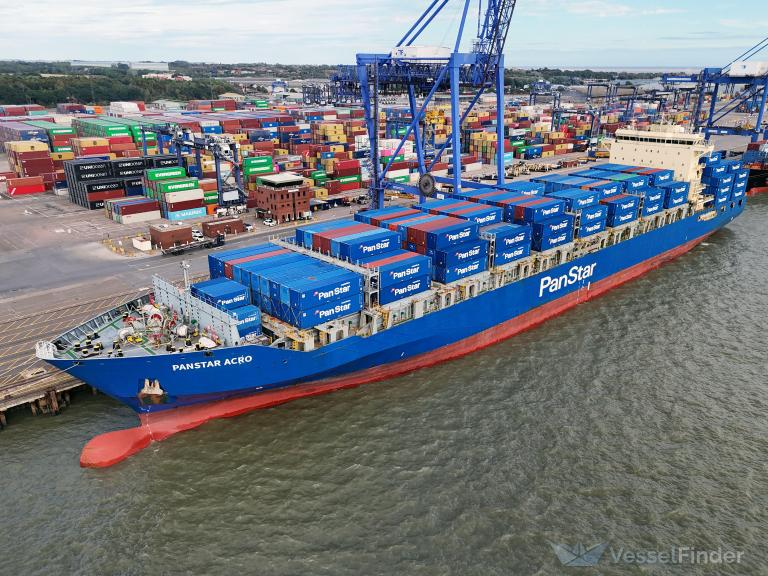
Under these circumstances, the container ship PanStar Acro, belonging to a South Korean shipping company, departed from Busan on August 22, 2026. After entering the Arctic Ocean on August 31, the vessel successfully transited the Arctic on September 9, making port calls at Felixstowe in the UK, Rotterdam in the Netherlands, and Gdansk in Poland. Arriving at major European ports approximately 21 days after departure, the PanStar Acro reduced the transit time by about 10 days compared to existing routes. Throughout this process, it overcame harsh environmental conditions, proving the practical operational capabilities of a national shipping line on the Arctic Route. This is not only an industrial achievement that directly verified technical and operational infrastructure in the field, but it also lays the foundation for the South Korean shipping industry to secure leadership in the future Arctic logistics market.
The achievement of the PanStar Acro holds distinct significance in that it satisfied the complex tasks of complying with the stringent domestic laws of the coastal state, Russia, and implementing the safety and environmental standards of the International Maritime Organization (IMO). This demonstration confirmed that the Arctic Route is more than just a geographically shorter path; it is a venue for legal verification where the UN Convention on the Law of the Sea (UNCLOS), coastal state jurisdiction, and vessel safety and environmental norms acutely intersect. Ultimately, this voyage serves as an exemplary precedent for complying with the complex legal frameworks of the Arctic Route, providing baseline data for establishing future sustainable Arctic navigation plans.
The International Legal Status of the Arctic Route and Coastal State Jurisdiction
The Arctic Route is not a space with a single legal character but a multi-layered zone where various maritime boundaries, such as internal waters, territorial seas, and exclusive economic zones (EEZs), are complexly intertwined. According to UNCLOS, the highest governing norm, the right of innocent passage for foreign vessels is recognized in territorial seas, while in the EEZ, resource and environmental jurisdiction and freedom of navigation exist in a mutually non-exclusive, coordinated relationship. Russia, the coastal state, applies strengthened domestic regulations, such as a prior passage permission system, under the pretext of safety and environmental protection; however, this harbors the potential to clash with the navigation rights of foreign vessels guaranteed under international law. Therefore, to ensure the stable operation of commercial vessels like the PanStar Acro, it is necessary to respond by precisely distinguishing the legal status of each individual maritime zone the vessel transits.
Article 234 of UNCLOS is a special provision that grants coastal states non-discriminatory regulatory powers to prevent environmental pollution in order to protect the fragile environment of ice-covered areas. Because damage from an accident in the Arctic Ocean expands rapidly due to delayed pollutant decomposition in low temperatures and a lack of response infrastructure, high-level preventive measures by coastal states like Russia are justified under this provision. However, as specified in the Bosphorus Queen ruling by the European Court of Justice (ECJ), a coastal state’s enforcement must be based on “clear objective evidence” of a “major threat of damage,” rather than arbitrary control. Recently, as sea ice decreases and the navigable period extends due to climate change, demands for an international legal review regarding the scope of this provision and the proportionality of coastal states’ special regulations have intensified.
To safely utilize the Arctic Route, stakeholders must comprehensively understand and fulfill the domestic legal obligations of Russia, including administrative procedures and verification of sea ice information, alongside analyzing navigation rights under international law. The case of the PanStar Acro illustrates a typical multi-jurisdictional structure involving the intertwined interests of the vessel’s flag state (Panama), the coastal state (Russia), port states (UK and EU), and the operating company (South Korea). Should an accident occur, coastal state jurisdiction, flag state supervisory rights, and the contract law governing shippers and insurers would intersect intricately, necessitating the prior establishment of a robust administrative and legal support system.
Legal Issues Related to Safety, Environment, and Maritime Transport on the Arctic Route
The Arctic waters pose several unique risk factors, making the implementation of proactive and integrated safety standards essential. The IMO’s International Code for Ships Operating in Polar Waters (Polar Code), which took effect in 2017, mandates ship structure, equipment, crew training, and the provisioning of a Polar Water Operational Manual in conjunction with the International Convention for the Safety of Life at Sea (SOLAS) and the International Convention for the Prevention of Pollution from Ships (MARPOL). The PanStar Acro proved the legal safety of its operation by passing these polar certifications and inspections. To expand regular operations in the future, securing Polar Class certification for vessels is required, along with overhauling a differentiated, integrated safety management system linked to search and rescue frameworks.
Due to the vulnerability of the Arctic ecosystem, precautionary environmental management regarding ship-source pollutants, such as oil spills, air pollution, and black carbon emissions, is heavily emphasized. The IMO’s regulations limiting the use of heavy fuel oil (HFO) and coastal states’ strict measures banning pollutant discharges (such as Russia’s ASSPPR) deepen the environmental liability burdens placed on shipping companies. For the transport of dangerous goods, compliance with special standards for packaging and loading is mandatory, and massive no-fault liability for damages could arise in the event of an accident. Ultimately, the justification for using the Arctic Route depends on proving environmental sustainability that minimizes energy consumption and air pollution, moving beyond mere distance reduction.
The intensified sanctions against Russia following the war in Ukraine have expanded the legal and economic risks in ancillary transactions such as icebreaker support and port services. Satellite navigation errors in the high-latitude Arctic Ocean and natural sea ice risks translate directly into increased insurance premiums and restricted compensation conditions. When concluding maritime transport contracts, specific special provisions and risk allocation clauses must be established to prepare for delay damages, route changes, and force majeure situations caused by sea ice. If the unique characteristics of Arctic Route operations are not clearly reflected in the contract drafting stage, any accident could lead to prolonged international disputes.
Arctic Route transportation involves intricately entangled interests among shipping lines, flag states, transit waters, and destination countries, making the determination of governing law and jurisdiction difficult in the event of a dispute. Hegemonic competition and geopolitical confrontation among major powers are amplifying the security and legal uncertainties of the route. Even if vessel passage is technically possible, sustained regular commercial operation remains impossible without an established financial, insurance, and sanctions-compliance system. Therefore, based on the demonstration voyage of the PanStar Acro, a comprehensive legal, diplomatic, and administrative support system must be solidified to prepare for the era of regular Arctic Route operations.
South Korea’s Role Following the PanStar Acro’s Arctic Voyage
The Arctic voyage of the PanStar Acro is a historical milestone that transitioned South Korea’s Arctic policy paradigm from a research and technology development level to a practical commercialization demonstration stage by deploying an actual vessel and cargo. Data regarding navigation time, fuel consumption, sea ice conditions, and communication environments accumulated through this actual voyage can be utilized as core baseline data to evaluate the route’s economic viability and improve domestic legal systems. Furthermore, it holds immense value as a legal demonstration, having verified the applicability of multi-layered international maritime norms, such as coastal state regulations under UNCLOS Article 234, the Polar Code, SOLAS, and MARPOL, through actual commercial operation.
However, this voyage clearly demonstrated that behind the economic advantage of the Arctic Route’s shortened distance lie complex legal and geopolitical risks. Not only are there potential clashes between the right of innocent passage of foreign vessels under UNCLOS and the unilateral jurisdiction of the coastal state, Russia, but multiple risk factors are also intertwined, including international sanctions against Russia, marine insurance limitations, and force majeure and delay damages in transport contracts. Accordingly, rather than passively complying with Russia’s domestic laws and administrative procedures, South Korea must secure the legal predictability of navigation by establishing clear response criteria and guidelines based on international legal principles.
Amidst these complex interests, South Korea, a non-Arctic coastal state but a shipping and shipbuilding powerhouse, must deploy a neutral and balanced diplomatic strategy as a middle power to facilitate the commercialization of the Arctic Route. Beyond unilateral pushback or unconditional acceptance within the framework of major power hegemonic competition, South Korea should play the role of a normative mediator advocating for international maritime law principles alongside universal maritime safety and environmental standards. To this end, it must actively utilize bilateral channels such as the Korea-Russia shipping agreement while participating in international organizations like the IMO to keep excessive coastal state regulations in check and lead the enactment of inclusive international laws.
Ultimately, South Korea must evolve beyond being a simple user of the route into a “norm enabler” that shapes a sustainable polar maritime traffic order. Leveraging its world-class shipbuilding and shipping capabilities, eco-friendly vessel technology, and know-how in establishing digital sea-ice information and search-and-rescue systems, South Korea can propose practical multilateral cooperation platforms to the international community, such as building Far East logistics infrastructure and utilizing joint research icebreakers. The voyage of the PanStar Acro will serve as the starting point for South Korea to open a new future for an Arctic Route that complies with international law, is environmentally sustainable, and is economically predictable, grounded in neutral middle-power diplomacy.