
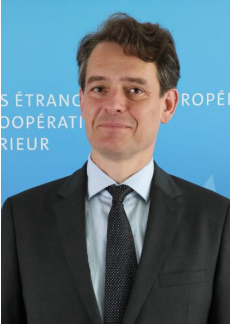
Ambassador Jacques Flies serves as the Ambassador of the Grand Duchy of Luxembourg to the Republic of Korea, a position he assumed in 2024. A career diplomat, he joined Luxembourg’s Ministry of Foreign Affairs in 2001 and has extensive experience in development cooperation, multilateral diplomacy, and government administration. He previously served at the Embassy of Luxembourg in Senegal, where he oversaw development cooperation with Senegal and Mali, and at the Permanent Mission of Luxembourg to the United Nations in New York as Political Coordinator. He later served as Deputy Director of the Defense Directorate at the Ministry of Foreign and European Affairs and as Secretary General of the Government of Luxembourg from 2020 to 2023.
At a time of increasing uncertainty in the international order, what roles can the Republic of Korea and European countries play together in promoting peace, security, democracy, and a rules-based international order?
At a time of increasing uncertainty, the Republic of Korea and European countries have a vital role to play in defending peace, security, democracy, and the rules-based international order.
Our partnership is built on shared values and a common understanding that peace, prosperity, and democracy cannot be taken for granted. Together, we must continue to lead by example: upholding international law, defending the principles of the United Nations Charter, and supporting countries whose sovereignty and territorial integrity are violated, as we are seeing currently in Ukraine.
We should also recognize that today’s security challenges extend beyond traditional military threats. Climate change is a growing peace and security multiplier, making cooperation on the green transition and sustainable development increasingly important for global stability. As global leaders in these fields, the European Union and Korea are particularly well placed to take up these challenges and to contribute to both sustainable development and long-term global stability.
As open and trade-dependent economies, Korea and the European Union share a strong interest in preserving a rules-based international trading system while strengthening economic security and resilience. At the same time, we must work together to reinforce democratic resilience against disinformation, cyber threats, and external interference.
The security of Europe and the Indo-Pacific is increasingly interconnected. Developments in one region can have direct consequences for the other, and this reality makes closer cooperation between Korea and Europe more important than ever. Such cooperation cannot ignore the importance of the Korean Peninsula. We strongly support peace, stability, and dialogue on the Peninsula and all efforts aimed at reducing tensions, promoting confidence-building measures, and achieving the complete denuclearization of North Korea in accordance with relevant UN Security Council resolutions.
Luxembourg remains committed to dialogue, international law, and multilateral cooperation as the best means to build a more secure and prosperous future for all.
What role can exchanges among universities, research institutions, students, and younger generations play in strengthening the long-term foundations of relations between the Republic of Korea and European countries?
Exchanges among universities, research institutions, students, and young professionals help build the mutual understanding, trust, and personal connections that sustain partnerships across generations.
Korea and Luxembourg already enjoy excellent academic and research cooperation, and we are working to deepen these ties further. By encouraging students, researchers, entrepreneurs, and young professionals to study, work, and innovate across borders, we invest in the human capital that will shape the future of our relationship. The Republic of Korea – Luxembourg Working Holiday Program is another tool at our disposal to allow young people to gain a deeper understanding of each other’s societies, cultures, and ways of thinking. In an increasingly interconnected world, this cultural understanding is as important as economic or political cooperation.
Research collaboration is equally important. Today’s global challenges – from climate change and digital transformation to health, cybersecurity, and space technologies – cannot be solved by one country alone. Korea’s association to Horizon Europe provides valuable opportunities for cooperation between European and Korean researchers, fostering innovation while strengthening our scientific communities.
From Luxembourg’s perspective, investing in people-to-people ties is one of the most effective ways to strengthen the foundations of the Korea–Europe partnership. The relationships built through education, research, and youth exchanges create lasting bonds that help ensure that our cooperation remains dynamic, innovative, and resilient for decades to come.
Luxembourg is a leading international financial center with expertise in investment funds, sustainable finance, financial technology, and cross-border services. How can Luxembourg and South Korea develop closer cooperation in future-oriented finance and responsible investment?
Luxembourg can bring particular value as Europe’s leading international financial center. It is the largest fund domicile in Europe and the second largest globally, with more than 8 trillion euros in assets under management. As a leading hub for cross-border fund distribution, Luxembourg serves as a gateway to international investors and European capital markets. This creates significant opportunities for Korean asset managers, financial institutions, and investment firms seeking access to European and global investors.
Looking ahead, I see considerable potential for cooperation in the field of private markets and long-term investment. Luxembourg is the leading domicile for European Long-Term Investment Funds (ELTIFs), which channel capital toward infrastructure, innovation, energy transition, and other strategic sectors. These are precisely the areas where Korea and Europe share ambitions for sustainable and resilient growth.
Another promising area is digital finance. Luxembourg has consistently positioned itself at the forefront of financial innovation, from payments and fintech to digital assets. Luxembourg is today the jurisdiction of choice for some of the world’s leading payment firms and e-commerce firms, home to Amazon Payments, Ant Financial, PayPal, Airbnb and ByteDance (Tik Tok) amongst others. We were among the first movers in implementing the Markets in Crypto-Assets Regulation, MiCA, providing a clear and secure framework for crypto-asset service providers. Serious players in this field, from Coinbase to Standard Chartered, have chosen Luxembourg as their base to offer crypto services and stablecoins across Europe. As Korea continues to develop its own digital finance ecosystem, there is ample scope for exchanges on regulation, fintech innovation, digital assets, tokenization, and distributed-ledger-technology-based securities.
At the same time, both countries recognize that finance must serve broader economic and societal goals. Luxembourg has become a global leader in sustainable finance, hosting the Luxembourg Green Exchange – the world’s leading platform for sustainable securities – and the largest share of Europe’s ESG and impact investment funds. There is significant potential for Luxembourg and Korea to work together in mobilizing capital for the green transition, clean technologies, sustainable infrastructure, and climate resilience.
As a corporate banking center in the heart of Europe, Luxembourg can also act as a platform for Korean banks serving their corporate clients as they develop and expand in Europe. In the current macroeconomic environment, I expect trade and investment between Korea, a key ally, and Europe to grow even further. As a result, the opportunities for Korean banks in the EU will also increase substantially. And Luxembourg, as the EU’s most international financial center, is the ideal partner.
More broadly, the challenges facing our economies – from decarbonization and digitalization to demographic change – require substantial long-term investment. By combining Korea’s technological excellence and industrial capabilities with Luxembourg’s expertise in international finance, investment funds, sustainable finance, and cross-border capital raising, we can build partnerships that not only generate economic value but also contribute to a more sustainable and resilient future.
Ultimately, responsible investment and future-oriented finance are not merely financial objectives. They are strategic tools for supporting innovation, competitiveness, and sustainable development. Luxembourg stands ready to deepen its cooperation with Korea in these areas and to build bridges between European and Korean investors, institutions, and innovators.
Space has emerged as a particularly promising area of bilateral cooperation, including research on satellites and space resources. What concrete partnerships could be developed among government agencies, research institutions, startups, and private companies in the two countries?
Space is a very exciting and promising area of cooperation between Luxembourg and the Republic of Korea. Although our countries differ greatly in size, we share a strong belief that innovation, technology, and international partnerships are essential to succeeding in the space economy of the future.
We already have an excellent foundation to build upon. The Memorandum of Understanding signed in 2024 between the Luxembourg Space Agency (LSA) and the Korea AeroSpace Administration (KASA) provides a framework for deeper cooperation in areas such as space research, technology development, commercial space activities, and talent exchanges.
A first area for concrete collaboration is research and innovation. Luxembourg’s research ecosystem, including the University of Luxembourg, the Luxembourg Institute of Science and Technology (LIST), and other research actors, could further expand cooperation with Korean universities and research institutes. The EU’s Horizon Europe program offers excellent opportunities for joint projects in areas such as satellite applications, earth observation, space resources, advanced materials, artificial intelligence, and space sustainability.
A second area is the development of the space resources economy. Through the Spaceresources.lu initiative, Luxembourg has become a pioneer in promoting the exploration and sustainable utilization of space resources. Korea’s growing space capabilities and industrial expertise create natural synergies for joint research, legal and regulatory exchanges, and the development of technologies that may one day support resource utilization on the Moon and beyond.
Start-ups and private companies should also play a central role. This is especially the case in Luxembourg where the development of the space sector has largely been private-sector-driven and morphed into a dynamic space innovation ecosystem. We stand ready to encourage greater interaction between entrepreneurs, facilitate soft-landing opportunities, and connect innovative companies with investors and industrial partners. Bringing together agencies, researchers, investors, and industry leaders helps create the networks that often lead to successful commercial partnerships.
Another particularly promising area is finance. Luxembourg combines a world-class space ecosystem with one of the leading international financial centers globally. As space activities increasingly move from government-led programs to commercial ventures, access to innovative financing mechanisms will become critical. Luxembourg is well positioned to support Korean and European space companies through venture capital, private equity, investment funds, and other forms of New Space financing.
By combining Korea’s technological excellence and manufacturing capabilities with Luxembourg’s strengths in international cooperation, research, finance, and the commercialization of space activities, we can contribute to a dynamic and sustainable space economy that benefits both our countries and the broader international community.
Luxembourg volunteers served during the Korean War, creating an important historical connection between our countries. How can this shared history, together with Luxembourg’s multilingual culture and European identity, be presented more widely to the South Korean public?
The participation of Luxembourg volunteers in the Korean War remains the foundation of the relationship between Luxembourg and the Republic of Korea. Although Luxembourg is a small country, 85 Luxembourg volunteers served alongside the United Nations forces in defense of freedom and peace on the Korean Peninsula, the highest per capita participation of all combating nations. Their sacrifice created a bond between our two nations that goes far beyond geography and continues to shape our relationship today.
We are deeply grateful to the Korean government and people for keeping alive the memory of those who served during the Korean War. The care dedicated to war memorials, commemorative ceremonies, and education about the conflict demonstrates a profound respect for the sacrifices made by all United Nations forces, including those from Luxembourg. Veterans and their family members are very appreciative of programs like “Revisit Korea” as they contribute to cement the remembrance across generations.
Looking forward, I believe we should continue to make this history more visible, particularly to younger generations. Luxembourg has already organized exhibitions and commemorative events in Korea highlighting our participation in the war and the evolution of our bilateral relations. These initiatives have shown that there is strong interest among Koreans in learning more about Luxembourg and our historical connection.
At the same time, our shared history offers a natural gateway to presenting modern Luxembourg. While many Koreans first encounter Luxembourg through the story of the Korean War, they also discover a country that is proudly European, multilingual, innovative, and internationally oriented. Luxembourg’s unique cultural diversity and highly international population offer an interesting example of how different cultures and identities can thrive together.
By linking the historical story of the Korean War with contemporary themes such as European integration, multilingualism, innovation, and sustainability, we can present a fuller picture of today’s Luxembourg.
Interviews conducted via email by Hayann Lee (Deputy Director, HUFS Jean Monnet Centre of Excellence)
