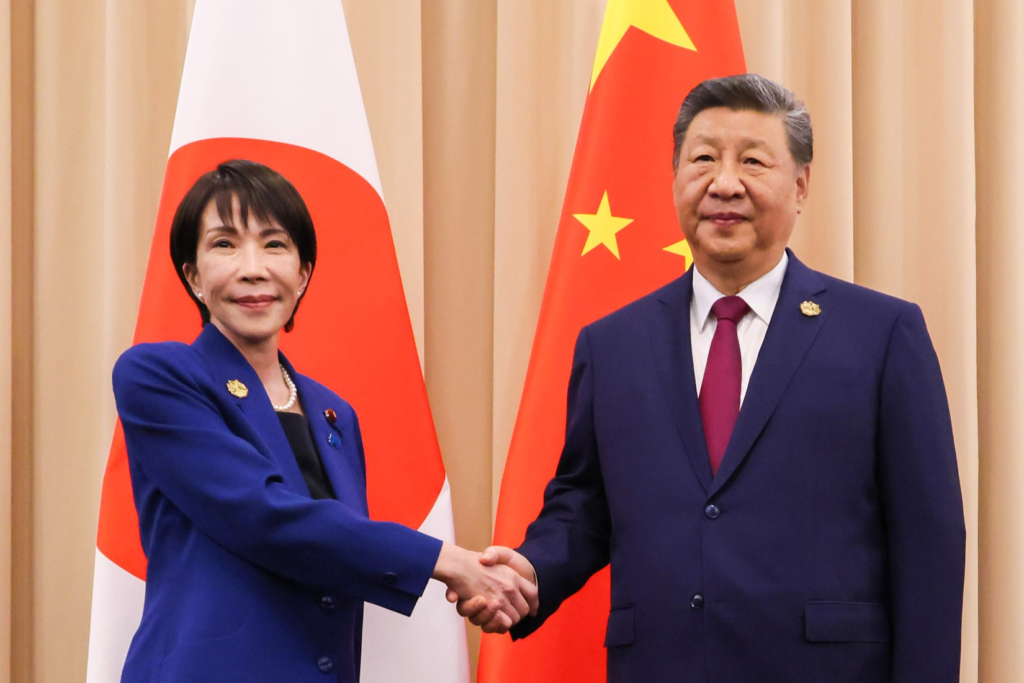

The release of Japan’s 2026 Diplomatic Bluebook and Prime Minister Sanae Takaichi’s subsequent declaration on constitutional revision represent more than just a change in wording; they signal a fundamental pivot in the Tokyo-Beijing-Washington triangle. For decades, Japan’s foreign policy was defined by a delicate balancing act—the “Yoshihide-Abe” legacy—where economic interdependence with China was maintained alongside a strong security alliance with the United States. However, under the Takaichi administration, domestic political imperatives are now driving a “normalization” agenda that is effectively dismantling the post-war pacifist settlement. This domestic shift is not only a Japanese internal affair; it is the primary trigger currently reshaping regional geopolitics in the Indo-Pacific.
The “Important Neighbor” Paradigm: From Partnership to Management
The decision to downgrade China’s status from “one of the most important bilateral relationships” in 2025 to an “important neighbor” in 2026 is a great change in diplomatic signaling. To the casual observer, the change might seem semantic, but in the world of Japanese bureaucracy, it is a tectonic shift. Domestically, Takaichi’s Liberal Democratic Party (LDP) is responding to a Japanese electorate that has grown increasingly weary of Chinese maritime assertiveness in the East China Sea and the use of economic “sticks” regarding trade.
By recalibrating this language, the Takaichi cabinet is aligning its official diplomatic doctrine with a hardening domestic sentiment. This “downgrade” serves a dual purpose. First, it provides the political cover necessary for Japan’s massive defense buildup. As the Japanese defense budget reaches the historic peak of 2% of GDP in 2026-27, the government must provide a coherent narrative to the taxpayers. It is logically inconsistent to categorize China as a “partner” while simultaneously justifying the deployment of long-range “counterattack” capabilities—such as the Type 12 enhanced missiles in Kumamoto—designed specifically to deter Chinese naval power. Second, the relocation is a reminder to Beijing that Tokyo is not ready to compromise its strategic sovereignty in the name of finding a common ground. The change of the concept of reciprocity to management implies that Japan has started to interpret the relationship in terms of risk reduction instead of cooperating opportunistically. It is a pragmatic realignment of a Takaichi government that thinks that the China threat has ceased to be a theoretical issue and has become a structural reality.
Domestic Goal with Regional Shockwave: Constitutional Revision
The hammer is the proposed amendment of Article Nine of the Japanese Constitution, should the Diplomatic Bluebook be the reflection of the relationship. On April 12, in the LDP convention, Takaichi made it clear; they will introduce a draft amendment to the Diet by 2027. No coincidence exists that this schedule is a calculated domestic political gambit meant to help unify the LDP conservative base and complete a mission of the party that has never been accomplished since the founding of the party in 1955.
But what is meant to be a domestic crowning achievement of the LDP is being construed in Beijing as a statement of strategic intent.
The local consequences are momentous:
- The End of “Exclusive Defense”: Making the Self-Defense Forces (SDF) constitutional essentially makes Japan a U.S.-Japan alliance in which Japan is not a shield but a spear. The dismantling of the post-war structure puts Japan at the advantage of having the legal right to participate in collective self-defense in a more agile way.
- The Taiwan Factor: Beijing sees this revision as a direct planning of Japanese intervention in a Taiwan contingency. The personal history of Takaichi, such as her 2025 delegation to Taiwan and her meeting with President Lai Ching-te, strengthens the fears of the mainland that a normal Japan is a Japan that is prepared to protect the first island chain.
- The 2027 Milestone Alignment: Strategic analysts like Stephen Nagy have remarked that the constitutional change deadline of 2027 set by Takaichi coincides with the own milestones of the modernization of the People’s Liberation Army (PLA) that is set by President Xi Jinping. This poses a threatening security dilemma in which national defense preparations on either side are seen as national defense preparations.
Survival Crisis Narrative
Assistant Professor Hung Yao-nan of Tamkang University emphasizes a pivotal change in Japanese domestic discourse: the changes in constitutional revision as an ideological debate to a necessity as a survival crisis. The pacifist constitution became a source of pride and safeguarded against militarism over decades. Nevertheless, the Takaichi administration has managed to capitalize on the present world climate, such as the Russia-Ukraine war as well as the so-called coercive nature of China, to paint the idea that the current constitution is a liability.
This strategic divorce from the pacifist past is a two-track project. With the definition of China as a threat that has to be addressed in the Bluebook, Takiyoshi has removed the national barrier towards national normalization. The story has changed from the expansion of the military to rational defense. This change is essential to uphold popular opinion, particularly as there are still anti-Japanese protests by leading cultural figures and leftist movements, on grounds that Japan is already forgetting the lessons of the 20th century.
The Reaction of Beijing: Breach of Faith
The reaction of Beijing has been intense, but it has been well calculated. By calling what Japan had done a breach of faith and violation of the four political documents, China is trying to take the historical record of Japan to isolate the Takaichi administration. Rhetoric on both sides, from the Global Times and the Foreign Ministry spokesperson Mao Ning, suggests that China views such actions as a straightforward defiance against the post-war international order.
We now have a policy of cautious coercion. Beijing is aware of the fact that the complete collapse of relations will make both parties economically catastrophic. Thus, the answer will probably be focused:
- Economic Friction: Use interdependence by imposing export controls on dual-use products and rare earths to remind Japan about the price of its hard line.
- Military Presence: More often incur incursions of the navy and air in Okinawa and the Senkaku Islands to demonstrate the determination of new Japanese missiles.
- Diplomatic Pressure: Coercing Japan to revoke its decision on the downgrade and denying high-level dialogue until Japan takes tangible steps that would help win back trust.
| Key Policy Area | 2025 Status (Abe/Kishida/Ishiba) | 2026 Status (Takaichi Doctrine) |
| China Label | “Most Important Bilateral Relationship” | “Important Neighbor” |
| Defense Spending | Progressive increases | Will reach 2% GDP in 2026-27 (more than USD 58 billion) |
| Article 9 | Legislative reinterpretation | Active push for formal amendment |
| Taiwan’s Stance | Strategic Ambiguity | High-level engagement / Contingency focus |
| Regional Role | Economic Power / Passive Ally | “Normal Country” / Strategic Lead |
This table shows the difference in approach between strategic ambiguity and partnership to the concept of military normalization and contingency planning that indicates that Takaichi is more realistic and conservative, much more than others, focusing on national security and power relations instead of the economic interdependence and diplomatic prudence of the past.
The Domestic Friction: A Pacifist Guardrail?
Takaichi does not have a carte blanche; even though the LDP won the election by an overwhelming majority, the Komeito (the allied party of the LDP) is on board. Local opposition is still a major concern. When Kyoko Koizumi or an average Tokyo citizen speaks against war and the constitutional revision, they are a pacifist guardrail of some sort.
In the event that the Takaichi cabinet drives the normalization agenda too hard without assuring economic stability, particularly in the context of Chinese economic retaliation, the domestic consensus might break. The future of the so-called Takaichi Doctrine lies in the fact that the Japanese people still believe that military normalization is necessary to ensure their safety but not the precursor of war.
Conclusion
Sanae Takaichi is gambling that, in a bipolar world, the only method of ensuring the survival of Japan is the realism of the reinforcement of the military, the revision of the constitution, and the lowering of the level of ties with China. It is an internal undertaking that has the dream of national revolution. One can clearly see that with the shift of Japan from an economic superpower to a normal military power, the Indo-Pacific is losing its most important stabilizer: Japanese strategic ambiguity. These Japanese actions showcase that the Diplomatic Blue Book mirror is now a region where the gap between the two largest economies in Asia is becoming wider, with a domestic political trigger in Tokyo that does not seem to be slowing down. The question of 2026 will be whether this will result in a new era of stability or a downward spiral towards conflict.