
The Strategic Weight of Diplomatic Discourse
In international relations (IR), the language states use to describe their role — the frames, metaphors, and identity claims embedded in policy documents and diplomatic communications — tends to shape what they can ask for, what others expect from them, and what institutional spaces they can credibly occupy. Discourse, in this sense, functions less as a summary of policy than as an instrument of it, and therefore getting the framing right is, arguably, as much a strategic question as a communication one.
This insight has deep roots in constructivist IR theory, which holds that identities and interests are not pre-given but socially constructed through practice and language. The foundational claim that “anarchy is what states make of it” can be extended: so too is Arctic relevance in 2026. A state’s role in a regional governance system is not simply read off from its geography or GDP (anymore) — it is articulated, negotiated, and performed. A state’s identity functions as a cognitive shortcut for other actors, shaping expectations, reducing uncertainty, and signalling what kind of actor one is likely to be. Where that identity is well-calibrated to real capabilities, it multiplies diplomatic leverage; where it lags or misleads, it generates what might be called a credibility deficit.
The concept of Arcticness is instructive here. It captures the process by which states geographically external to the Arctic construct legitimacy in the region: not through the brute fact of proximity, but through sustained policy engagement, normative alignment, and institutional contribution. The EU’s decade-long effort to secure and then justify Arctic Council observer status illustrates both the difficulty and the stakes of this process. Despite being an important regional actor given its regulatory reach, Member States’ Arctic territories, and research footprint, the EU repeatedly found that claiming regional relevance was insufficient; this had to be demonstrated, institutionally embedded, and ultimately recognised by Arctic insiders. A key lesson from that experience is that for a conditional outsider, Arctic legitimacy is demonstrated primarily through contributory efforts, not merely through observer participation.
Scholarship on what has been termed ‘outsider geopolitics’ has sharpened this framework further. It argues that legitimacy in the Arctic is not passively granted but actively performed — and that the quality of that performance depends on the alignment between a state’s stated role, its actual contributions, and the expectations of Arctic insiders. A ‘symbolic outsider’ generates aspirational rhetoric disconnected from institutional realities; a more credible outsider anchors its Arctic identity in substantive normative and operational engagement. The distinction maps onto a key diagnostic question for any non-Arctic state: is your Arctic narrative co-produced through genuine interaction with the region’s governance architecture, or is it self-styled through strategic imagination alone?
Discourse, in other words, is only effective when it is credibly anchored to reality, and hence it is reflective of the actual capabilities and means that are readily available to the state. A state cannot sustain a narrative that outpaces its actual capabilities without inviting scepticism, nor can it sustain one that systematically understates them without squandering leverage. The most effective diplomatic identities tend to be those where what a state says it is, and what it demonstrably can do, are tightly aligned. When this alignment breaks down — when the narrative lags behind capability or when the framing was designed for a different moment — the discourse risks generating credibility costs rather than diplomatic returns.
From Responsible Observer to Enabler Actor: Korea’s Evolving Arctic Identity
This is the situation South Korea arguably now faces as it seeks to ramp up its Arctic engagement. Seoul’s contemporary self-declared identity as a ‘responsible observer’ was a rational choice in 2013, calibrated to the conditions of Arctic Council accession. One can reasonably speculate that such framing signalled non-threatening intent, demonstrated normative compliance, and opened doors to working-group participation. In terms of the outsider legitimacy framework sketched above, it was a sensible entry strategy for a conditional outsider seeking to establish Arcticness from a position of relatively limited regional visibility. In a nutshell, that discourse has served its purpose.
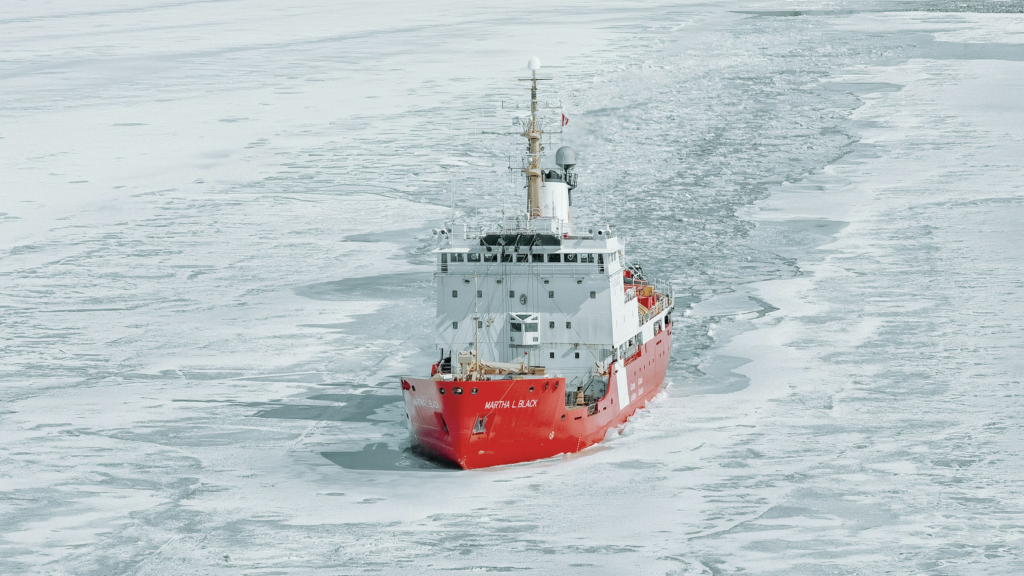
Today, however, Korea’s Arctic capabilities and interests extend well beyond that framing. Seoul has emerged as a key player in icebreaker and LNG carrier construction, is developing AI-integrated sea-ice forecasting systems that reduce Northern Sea Route prediction errors, contributes to IMO Polar Code standards, and has demonstrated its capacity to facilitate complex multilateral issues through hosting Central Arctic Ocean Fisheries Agreement conferences. Taken together, these developments suggest that South Korea is evolving not merely as an observer, but as an enabler—building infrastructure, systems, and frameworks that support presence and collaborative decision-making.
The responsible observer discourse is not inaccurate about Korea so much as incomplete in ways that now carry real costs. It captures the normative dimension of Seoul’s engagement while saying relatively little about its operational and infrastructural contributions. More consequentially, it was designed as a compliance posture rather than a contribution posture; it signals what Korea will not do rather than what Korea is uniquely positioned to provide. If one can agree with the notion that a state’s identity shapes not only how others perceive it, but the range of roles it can credibly claim, a Korea that continues to define itself through restraint may find it structurally difficult to pivot toward active, visible leadership without that pivot itself being read as a departure from character. This constitutes the kind of credibility cost that a more proactive framing would have pre-empted.
There is also a subtler problem: the gap between a modest stated identity and visibly growing commercial interests in Arctic logistics and energy infrastructure can themselves become a liability. When a state’s declared restraint coexists with expanding material ambitions, the responsible observer framing invites precisely the suspicion it was meant to deflect. In the outsider geopolitics literature, this is the risk of sliding from performative legitimacy toward symbolic opportunism whereby the stated role and the visible interest diverge enough to invite the charge of concealment. Applied to the South Korean case, it is perfectly plausible to envision scenarios in which the embedded modesty of the ‘responsible observer’ framing is read as a performative plot aimed at disguising Seoul’s commercial or geopolitical objectives.
The Enabler Frame: Transparency, Differentiation, and Diplomatic Capital
The enabler actor framing offers a way to close that gap rather than paper over it. Positioning Korea as a state whose primary Arctic value is facilitative and infrastructural — one that enhances the capacity of Arctic states, international bodies, and indigenous communities to pursue their own priorities more effectively — does more than convert capability into diplomatic legibility. It also makes Seoul’s interests transparent in a way that is harder to interpret them as concealed ambitions. A state that openly presents itself as providing navigational tools, building ice-capable vessels, and hosting governance conferences is articulating a role whose logic is visible and whose benefits to other actors are concrete. This transparency could be a more durable defence against accusations of strategic opportunism precisely because it invites scrutiny rather than avoiding it.
The differentiation case is equally important. Japan, arguably Korea’s nearest peer in the Arctic observer space, has traditionally deployed a narrative that rests predominantly on responsible actor logic — highlighting scientific contribution and institutional participation — while revealing relatively little about what Japan concretely enables. To distinguish itself and develop its own diplomatic identity, Seoul would benefit from a discourse that makes explicit comparisons between its Arctic approach and that of other non-Arctic states. The enabler discourse would make that distinction legible without requiring Seoul to be adversarial toward its peers.
China’s ‘near-Arctic stakeholder’ framing, meanwhile, has generated persistent wariness among Arctic states because stakeholder language implies entitlement proportional to interest rather than contribution. Enabler language centres on what a state provides rather than what it is owed, which may sidestep that backlash while staking out a role that is both more credible and more welcomed by Arctic states with genuine infrastructure needs. It is, in the terms of the outsider legitimacy literature, a way of performing Arcticness through contribution rather than claiming it through proximity or geopolitical weight.
What this suggests, taken together, is that the shift from responsible observer to enabler actor could give Seoul something it arguably lacks: a distinct diplomatic voice, grounded in genuine capabilities, that Arctic states and governance institutions can engage with on terms Korea itself has helped define. The EU’s experience offers a useful parallel here. For years, the EU claimed Arctic relevance through normative and regulatory linkages, yet found that this approach generated scepticism about its regional role rather than circumpolar acceptance. The corrective was not to abandon the normative dimension but to root it more visibly in concrete contributions: progress on contentious governance issues, substantive Arctic working group participation, and meaningful research investment. Korea is not starting from as weak a position as the EU was in the early stages of its Arctic engagement. Its industrial and operational contributions are already substantial. What it lacks is not capability but a framing that renders those capabilities diplomatically legible.
Whether the enabler framing gains traction will depend on how consistently and substantively it is deployed across multiple venues, including the Arctic Council Working Groups, bilateral diplomacy with regional states, Korea’s future Arctic strategy document, and in the way Seoul communicates around specific projects like its icebreaker programme and sea-ice forecasting work. Discourse does not work by declaration; it accrues through repeated, coherent enactment. Identities are not asserted once and then accepted; they are reproduced through practice and validated through the responses of other actors.
In a region where the terms of non-Arctic participation remain contested — and where outsiderness is not merely a matter of geography but of narrative alignment, institutional access, and the capacity to speak the language of Arctic governance in ways that resonate with those from within — the ability to shape one’s own role rather than inherit a default one is not an insignificant advantage. For South Korea, the enabler frame is not a rebrand. It is an honest reckoning with what Seoul has already become.