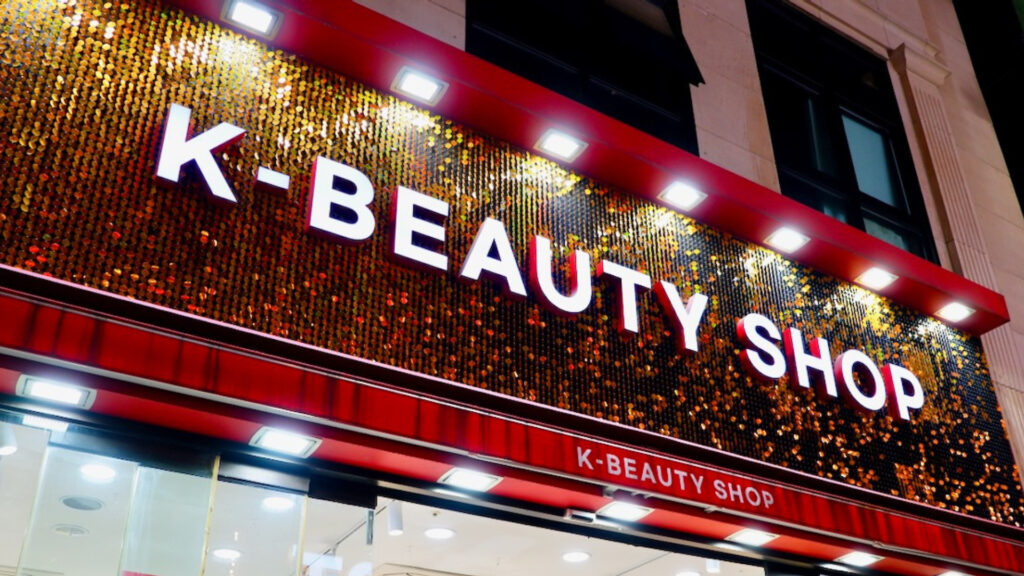
In 2025, South Korea’s cosmetics exports reached a record $11.4 billion, making the country the world’s second-largest cosmetics exporter after France and pushing the United States into third place for the first time. This paper examines how the Korean cosmetics industry, known worldwide as K-beauty, grew from a small, protected domestic market into a major global export sector and what this transformation means for South Korea’s economy. The central question is how a mid-sized economy without a long-established luxury-goods tradition built a globally competitive beauty industry, and why this matters for Korea’s trade balance, industrial diversification, and soft power alongside K-pop and Korean television dramas.
Korean beauty culture has deep historical roots, extending back more than two thousand years to herbal skincare remedies used during the Three Kingdoms period. The modern cosmetics industry, however, is much newer. Western-style beauty salons appeared in Seoul in the early 1900s, while small domestic manufacturers began to emerge after national liberation in 1945, gradually moving from homemade herbal preparations to factory production.
A turning point came in 1961, when the government banned the sale of foreign cosmetics to protect the young domestic industry. Local companies could no longer rely on imported Western products and were pushed to develop their own formulas. This period of enforced self-reliance is often credited with laying the technical foundations of Korean skincare science. By the 1990s, brands such as Amorepacific, Sulwhasoo, and Laneige had become household names, combining traditional ingredients with modern dermatological research.
The major international breakthrough came in the 2010s. The global spread of Korean popular culture, known as Hallyu, through K-pop and Korean television dramas generated curiosity about Korean lifestyle products, including skincare. Korean beauty products entered the US market around 2011, introducing Western consumers to BB cream, sheet masks, and multi-step skincare routines centred on hydration rather than heavy makeup.
Government policy supported this growth. The Ministry of Food and Drug Safety regulates product safety and export certification, while the Ministry of Trade, Industry and Energy has treated cosmetics as a strategic export category as Korea has sought to diversify its economy beyond semiconductors, automobiles, and shipbuilding. Trade agreements, including the Korea-EU Free Trade Agreement, have also given Korean cosmetics a tariff advantage over some competitors in Europe.
A second structural development was the expansion of original design manufacturing, or ODM. Companies such as Kolmar Korea, founded in 1990, and Cosmax do more than manufacture products to order. They research, formulate, and produce cosmetics that smaller companies then sell under their own brand names. This model has allowed entrepreneurs to launch brands without owning a factory or research laboratory, helping to create a wave of small indie companies alongside the older conglomerates.
The industry’s main stakeholders now include government regulators, established conglomerates, ODM manufacturers serving both large and small brands, retail platforms such as Olive Young, and a growing number of independent founders who rely on online sales and social media rather than department stores.
The industry was also reshaped by a major external shock. At its peak, nearly half of all Korean cosmetics exports went to China. In 2017, after South Korea agreed to host the US THAAD missile defence system, Beijing responded with economic pressure and Chinese consumers boycotted Korean brands. Exports to China collapsed, badly affecting Amorepacific and LG Household & Health Care, the two largest Korean cosmetics companies, both of which had invested heavily in Chinese stores. The crisis pushed the industry to look beyond China, particularly towards the United States and Europe, and that shift still defines its growth today.
From Conglomerates to Indie Brands
The clearest way to understand the Korean cosmetics industry today is as two overlapping models. The first is the older, conglomerate-led model, represented by large firms such as Amorepacific and LG Household & Health Care, which built recognisable brands, operated department-store counters, and depended heavily on Chinese demand for many years. The second is a newer model built around small, fast-moving indie brands such as Beauty of Joseon, Anua, Skin1004, and Tirtir. These brands are sold largely through social media and online retail and are manufactured not by the brands themselves but by large ODM firms. Analysts describe the current phase of growth as different from earlier booms because it is no longer centred on one country or a handful of companies. Instead, it rests on the interaction of manufacturing capacity, social media, and direct-to-consumer platforms.
The ODM system sits at the centre of this shift. Cosmax and Kolmar Korea each generated more than one trillion won in ODM sales in a recent year. Because these manufacturers maintain large libraries of tested formulas and can produce at scale, a small founder can launch a skincare line with a modest order and no chemistry background, while the manufacturer handles research, safety testing, and production. This lowers the barrier to entry dramatically compared with older beauty markets in Europe or the United States, where launching a brand often requires far greater upfront capital.
The export figures show how far this model has developed. Korean cosmetics exports rose by 12.3 percent in 2025 to $11.43 billion and reached 202 countries, up from 172 the previous year. Skincare accounted for nearly 75 percent of the total, with makeup and cleansing products making up most of the remainder. Korea’s cosmetics trade surplus exceeded $10 billion for the first time, equal to roughly 13 percent of the country’s total trade surplus that year. This was a significant contribution from an industry that, only two decades earlier, had remained largely domestic. Domestic cosmetics production also reached a record of nearly 18 trillion won in 2025. LG Household & Health Care and Amorepacific still lead among established sales companies, while Cosmax and Kolmar Korea now lead among manufacturers, each producing well over one trillion won worth of goods for other brands. Several Korean cosmetics companies have also begun pursuing stock-market listings to finance further overseas expansion, suggesting that investors increasingly regard the sector as a long-term growth industry rather than a passing trend.
Beyond China: K-Beauty Goes Global
The most striking change concerns the destination of these exports. In 2025, the United States became Korea’s largest cosmetics export market for the first time, with exports rising by 15 percent to about $2.2 billion. It overtook China, where exports fell by 19 percent to $2 billion. This shift is a direct legacy of the 2017 China shock. Rather than rebuilding dependence on a single large market, Korean firms diversified more widely, with particularly rapid growth in the United Arab Emirates, Poland, and other markets outside East Asia and North America. Japan remained a stable third market. This geographic diversification reduces the risk that a future political dispute with any one country could again severely damage the industry.
Retail infrastructure and digital marketing have reinforced this expansion. Olive Young, Korea’s dominant beauty retail chain, opened its first US store in 2026 and has become a showcase for hundreds of Korean brands entering the American market. Indie brands rely heavily on Instagram, TikTok, and YouTube, where reviewers demonstrate products directly to consumers. This reduces the cost of building brand awareness, which once required expensive department-store partnerships, and allows smaller companies with limited marketing budgets to compete internationally in ways that were not possible a decade ago.
The industry nevertheless faces significant risks. The most immediate is trade policy. In 2025, the Trump administration threatened tariffs of up to 25 percent on Korean goods. The possibility of new duties on cosmetics created uncertainty among American retailers and consumers, some of whom stockpiled sheet masks and serums in anticipation of higher prices before a trade agreement was reached. Because part of K-beauty’s appeal is the idea that effective skincare need not be expensive, tariffs threaten not only profit margins but also one of the industry’s central selling points. Korean ODM firms have partly responded by establishing manufacturing capacity inside the United States, allowing products sold there to avoid crossing a tariff border.
A second risk is competition from domestic Chinese C-beauty brands, which have regained market share in China and contributed to the decline in Korean exports there. Korean firms have responded in two main ways. First, some have moved into premium price segments, giving them more room to absorb higher costs without losing customers. Second, companies have expanded into categories such as medical aesthetics and injectable skin-booster treatments, where profit margins are higher than in mass-market skincare and Korea’s reputation for dermatological research provides a genuine advantage. Some cosmetics companies have also acquired stakes in overseas manufacturers, extending their production bases and distribution networks directly into markets such as Europe rather than relying solely on exports from Korea.
The broader implications for South Korea’s economy extend well beyond cosmetics. The sector is now Korea’s leading consumer export industry and demonstrates how cultural influence generated through Hallyu can be converted into direct economic value, complementing the international profile created by K-pop and Korean film and television. It also offers a model of industrial policy that does not depend solely on large conglomerates. Government support for manufacturing infrastructure and safety regulation, combined with a competitive ODM sector, has enabled thousands of small firms to compete globally. In the short term, much depends on trade relations with the United States and continued diversification into Europe, the Middle East, and Latin America. Over the longer term, Korea’s cosmetics exports could narrow the gap with France if current growth continues, although this will require sustained innovation and the broad geographic reach that has protected the industry since 2017.
The rise of the Korean cosmetics industry, from a protected domestic market shaped by a 1961 import ban to the world’s second-largest cosmetics exporter in 2025, shows how policy choices, manufacturing innovation, and cultural exports can combine to build a globally competitive industry. The 2017 China shock became a turning point rather than a lasting setback. It forced Korean firms to move away from dependence on a single market, leaving the industry more resilient and contributing to record exports to the United States, Europe, and dozens of newer destinations. The growth of ODM manufacturing, together with agile indie brands and social-media marketing, has allowed the industry to continue innovating without relying exclusively on a small number of conglomerates.
Looking ahead, the main risks are external, particularly US tariff policy and renewed competition from Chinese domestic brands. Korean firms and policymakers should continue to support geographic diversification, premium product lines, and adjacent categories such as medical aesthetics rather than allowing the industry to become dependent on any single export market again. More broadly, K-beauty’s rise offers a wider lesson for South Korea’s economic development: when cultural influence and industrial capacity are deliberately connected through supportive regulation and a flexible manufacturing base, a mid-sized economy can become a global leader in a highly competitive consumer industry.
Demir Muhamedbegovic
Researcher