
Introduction
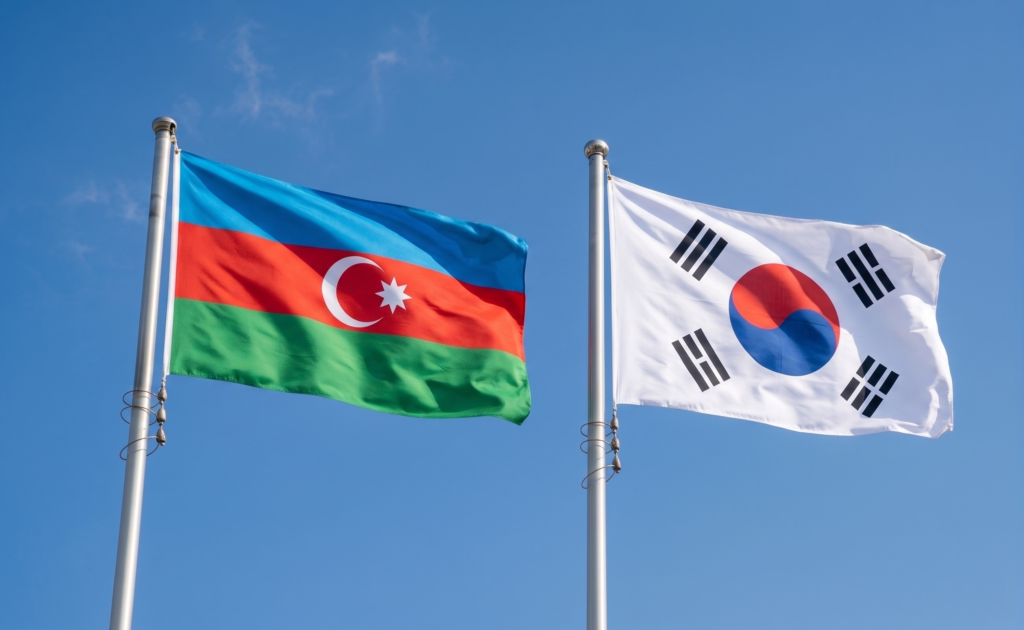
As global energy systems undergo rapid transformation driven by decarbonization pressures, technological innovation, and shifting geopolitical alignments, energy-producing states are increasingly redefining their strategies to remain competitive. In this evolving landscape, Azerbaijan has begun to move beyond its traditional role as a hydrocarbon exporter, placing greater emphasis on industrial modernization, supply chain integration, and diversification of international partnerships. The growing energy cooperation between Azerbaijan and South Korea reflects this strategic recalibration, highlighting Baku’s efforts to align with technologically advanced partners while strengthening its position within emerging global energy value chains. At the center of this shift is a new wave of bilateral initiatives that extend beyond conventional energy cooperation, encompassing technology transfer, infrastructure modernization, and low-carbon development. These developments not only underscore Azerbaijan’s ambition to build a more resilient and diversified energy economy but also signal the increasing importance of cross-regional partnerships linking the Caspian region with East Asia in the context of a changing global energy order.
Early Foundations of Azerbaijan–South Korea Energy Cooperation
The foundations of Azerbaijan–South Korea energy cooperation were established through a series of early diplomatic engagements that increasingly emphasized collaboration in renewable and green energy. A key milestone in this process was the November 2021 meeting between Azerbaijan’s Minister of Energy, Parviz Shahbazov, and a delegation led by Chong Soo Park, Chairman of the Northern Economic Cooperation Committee under the President of South Korea. During these discussions, both sides explored avenues to expand bilateral energy cooperation, with a particular focus on attracting South Korean investment and technological expertise into Azerbaijan’s evolving energy sector.
Notably, the dialogue highlighted Azerbaijan’s substantial offshore wind potential in the Caspian Sea, which has emerged as a strategic asset in the country’s long-term energy transition. In parallel, the parties examined prospects for developing green hydrogen production and export capabilities, reflecting a shared ambition to position themselves within emerging low-carbon energy markets. This early engagement marked a shift away from narrowly defined hydrocarbon cooperation toward a broader, forward-looking agenda centered on sustainability, innovation, and diversification. In doing so, it laid the conceptual and diplomatic groundwork for more structured and institutionalized cooperation in the years that followed.
Building on this foundation, bilateral engagement gradually intensified, reflecting a growing alignment of strategic priorities and economic interests. By September 2025, the partnership had gained further momentum, as demonstrated during a meeting in Baku between Azerbaijan’s Deputy Energy Minister Orkhan Zeynalov and South Korea’s Ambassador Kang Geum-gu. During the meeting, Azerbaijani officials presented a comprehensive overview of ongoing and planned renewable energy projects and actively encouraged the participation of South Korean companies in their development.
These discussions underscored an expanding scope of cooperation extending beyond renewables to the broader energy sector, particularly in areas requiring advanced engineering capabilities, digital solutions, and significant capital investment. They also reflected an increasing recognition in Baku of South Korea’s strengths in technology-intensive industries and large-scale infrastructure development. This phase of engagement demonstrated not only a deepening of mutual trust but also a clearer convergence of long-term strategic objectives, effectively paving the way for the transition from exploratory dialogue to concrete industrial and strategic cooperation in subsequent years.
SOCAR and Samsung E&A Strengthen Industrial Cooperation
A memorandum of understanding signed on February 25, 2026, between Azerbaijan’s state energy company, SOCAR, and the South Korean engineering firm Samsung E&A, reflects Azerbaijan’s broader efforts to modernize its energy sector and reposition itself within evolving global energy value chains. As the international energy landscape undergoes a profound transformation—driven by decarbonization pressures, technological innovation, and supply chain reconfiguration—Baku is increasingly seeking to move beyond its traditional role as a supplier of raw hydrocarbons toward a more diversified and technologically integrated energy economy.
The agreement outlines several key areas of cooperation, including enhancing the efficiency of existing energy assets, localizing production processes, developing a regional industrial and supply hub, fostering human capital development, and advancing joint decarbonization initiatives. These priorities reflect a strategic effort not only to improve operational performance within the energy sector but also to generate broader economic value through industrial upgrading and knowledge transfer. In this context, the partnership underscores Azerbaijan’s commitment to strengthening its domestic industrial base, expanding technological capabilities, and building more resilient and adaptive energy supply chains through collaboration with technologically advanced partners.
Moreover, the initiative aligns closely with Azerbaijan’s long-term development objectives as outlined in the “Azerbaijan 2030: National Priorities for Socio-Economic Development” framework announced in 2021. By diversifying its network of international partners and embedding advanced technologies into domestic industries, Baku aims to reduce structural vulnerabilities, enhance competitiveness, and ensure sustainable economic growth in an increasingly complex global environment. The growing emphasis on localized production and supply chain development also reflects a broader policy shift toward maximizing the domestic economic impact of large-scale energy and infrastructure projects.
Within this broader policy context, the SOCAR–Samsung E&A partnership represents more than a conventional engineering or procurement arrangement. Rather, it signals a transition toward deeper, long-term strategic industrial cooperation that is closely aligned with Azerbaijan’s evolving energy strategy. As Baku seeks to generate 30 percent of its electricity from renewable sources by 2030 and reduce greenhouse gas emissions by 40 percent by 2050, partnerships with experienced engineering, procurement, and construction (EPC) firms become increasingly important for accessing advanced technologies, implementing complex projects, and ensuring adherence to international standards.
In this regard, collaboration with Samsung E&A highlights an increasing emphasis on technology transfer, workforce development, and the integration of local firms into global project ecosystems. Such cooperation enables Azerbaijani companies to gain exposure to advanced engineering practices, improve technical capabilities, and participate more actively in high-value segments of the energy industry. While foreign contractors have historically played a significant role in developing Azerbaijan’s energy infrastructure, policymakers are now placing greater emphasis on ensuring that these partnerships deliver tangible and lasting benefits for domestic industrial development. This includes fostering local expertise, strengthening supply chains, and creating opportunities for Azerbaijani firms to expand their presence both domestically and across the wider region.
Modernizing Infrastructure and Enhancing Efficiency
A central element of this strategy is the modernization and efficiency enhancement of Azerbaijan’s existing energy infrastructure. While hydrocarbons continue to underpin the national economy, key segments of the refining and petrochemical industries require continuous technological upgrading to remain competitive in an evolving global market. Through cooperation with advanced engineering partners, Azerbaijan seeks to deploy modern industrial technologies that improve operational efficiency, reduce production costs, and enhance the environmental performance of energy facilities.
Beyond infrastructure upgrades, the partnership also has the potential to generate broader economic spillovers by strengthening Azerbaijan’s domestic industrial ecosystem. The development of local supply chains has become an important policy priority, particularly in the context of large-scale energy and infrastructure projects. Cooperation with global engineering firms exposes Azerbaijani contractors, manufacturers, and service providers to international technical standards, advanced engineering practices, and new market opportunities. Over time, such engagement could enable local companies to participate more actively in regional energy and industrial initiatives across the Greater Caspian region.
Equally important, the agreement addresses cooperation in the area of decarbonization. As global pressure to reduce carbon emissions intensifies, energy-producing countries are increasingly seeking ways to make their industries more environmentally sustainable. In the case of Azerbaijan, this transition does not necessarily mean moving entirely away from hydrocarbons, but rather improving the environmental performance of existing energy systems while gradually incorporating lower-carbon technologies. Against this backdrop, improving energy efficiency, deploying emissions-reduction technologies, and adopting advanced industrial processes can contribute to enhancing environmental performance and advancing broader sustainability goals.
Emerging Role as a Eurasian Energy and Connectivity Hub
SOCAR’s partnership with a Korean conglomerate also advances Azerbaijan’s broader geopolitical and economic objectives by strengthening its capacity to move beyond resource extraction and develop higher-value industrial capabilities. Collaboration with international companies can help cultivate specialized manufacturing and service sectors capable of supporting energy projects across the wider Caspian region. At the same time, Baku is increasingly pursuing its ambition to position itself as a key energy and logistics hub linking Europe and Asia.
Supported by the expansion of transport and digital infrastructure along the Trans-Caspian International Transport Route, widely known as the Middle Corridor, Azerbaijan aims to complement its traditional role as an energy exporter with stronger industrial and engineering capabilities. Within this broader strategy, the emerging Zangezur Energy Corridor—developed as part of the Azerbaijan–Türkiye–Europe Green Energy Corridor under the Trump Route for International Peace and Prosperity (TRIPP)—is designed to enhance regional connectivity and deepen energy cooperation.
In parallel, several large-scale transregional initiatives, including the Black Sea Green Energy Corridor, the Central Asia–Azerbaijan Green Energy Corridor, and the Azerbaijan–Georgia–Türkiye–Bulgaria Green Energy Corridor, aim to link the Caspian region with Eastern Europe through submarine electricity cables, facilitating the transmission and integration of renewable energy across the Black Sea and Caspian basins.
Conclusion
In sum, the evolution of Azerbaijan and South Korea’s energy cooperation, from early diplomatic engagement to a more structured industrial partnership, reflects a broader reorientation of Azerbaijan’s energy strategy toward diversification, technological upgrading, and deeper integration into global energy value chains. The SOCAR–Samsung E&A agreement stands as a concrete manifestation of this shift, illustrating how Baku is increasingly leveraging partnerships with technologically advanced economies to modernize its energy infrastructure, enhance efficiency, and strengthen domestic industrial capacity. Ultimately, the Azerbaijan–South Korea energy partnership exemplifies how mid-sized energy producers can adapt to global energy transitions by combining external cooperation with domestic capacity-building. If sustained and effectively implemented, this model could not only enhance Azerbaijan’s strategic relevance but also contribute to the emergence of more interconnected, resilient, and low-carbon energy systems across the wider region.
