Introduction
On 6 July 2026, at HMC Dockyard in Halifax, Nova Scotia, Prime Minister Mark Carney announced that Germany’s ThyssenKrupp Marine Systems (TKMS) had been named the preferred bidder for the Canadian Patrol Submarine Project (CPSP), a program valued at up to 60 trillion won. With that, the bid mounted by Hanwha Ocean and HD Hyundai Heavy Industries as a “K-defense one-team” came to an end.
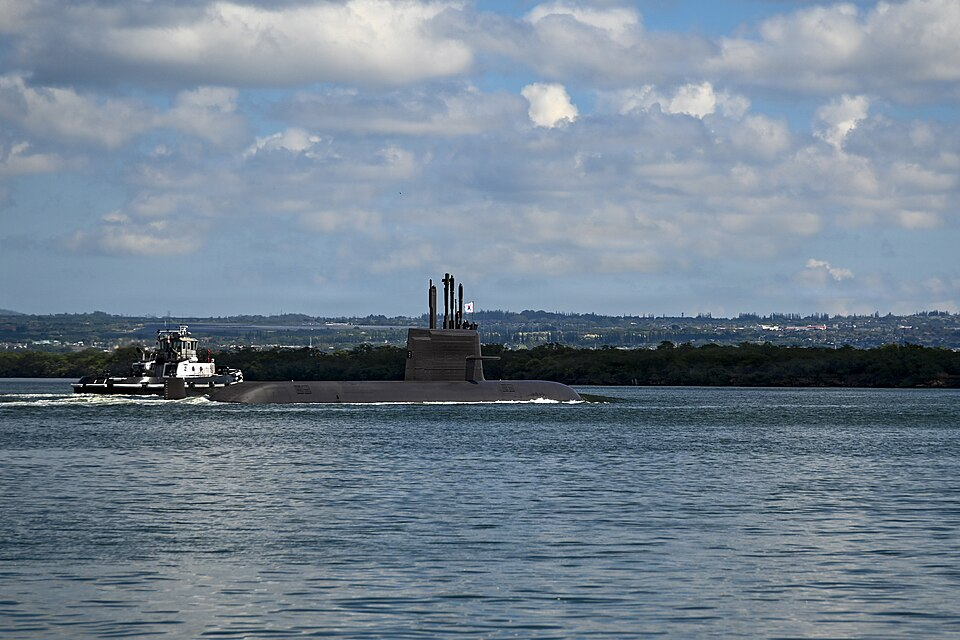
What deserves attention is that Korea did not lose because it fell short. The platform Hanwha Ocean offered — the KSS-III Batch-II — was a proven design, already built and in active service, whereas the TKMS Type 212CD still existed only on the drawing board. The lead boat of the class, ROKS Dosan Ahn Chang-ho, had sailed some 14,000 kilometers from Jinhae, by way of Guam and Hawaii, to a naval base on Canada’s west coast, demonstrating long-range operational endurance and interoperability with the Royal Canadian Navy under real-world conditions. In capability, in delivery schedule, in operational experience, Korea gave up nothing. And yet, in the end, it lost the contract.
Korea’s Bid, in the Grammer of “Technology”
Looking back, the story South Korea has told about its defense exports has been consistently one of “technology” and “efficiency”: fast delivery, exceptional value for money, proven mass-production capacity, and bold technology transfer paired with local production. That combination has, in fact, proven itself across a string of deals. The largest of them — the record-breaking 2022 contract with Poland for K-2 tanks, K-9 Self-Propelled howitzers, FA-50 light combat aircraft, and K239-Chunmoo MLRS — became the emblem of K-defense’s rise, and the 2025 follow-on order for additional K-2s established a bridgehead into the European market.
But to read Poland’s success as simply “the faster, cheaper weapon won in the marketplace” is to see only half the picture. That contract rested on a particular political moment. The government then in power, the right-wing Law and Justice party (PiS), pursued a course that prized national “self-reliance” and defense-industrial autonomy over Brussels- and Berlin-centered European solidarity. For a government desperate to rearm quickly in the immediate wake of Russia’s invasion of Ukraine, the Franco-German-led framework of European defense cooperation looked slow and burdensome. Korea — offering technology transfer and local production, and thereby satisfying Warsaw’s appetite for defense autonomy — was the ideal partner for precisely that “European bypass.”
Just how much this arrangement rested on the buyer’s internal political alignment became clearer, paradoxically, once that alignment shifted. When the pro-European government of Donald Tusk took office at the end of 2023, friction erupted over financing terms, and as the European Union pressed to raise the share of intra-European procurement, the pull of “buy European” reasserted itself. In short, Poland’s choice cannot be explained by the excellence of Korean hardware alone; it was closer to an anomaly, produced by a peculiar configuration of the buyer’s domestic politics. We may well have misread that anomaly as a triumph of sheer competitiveness.
In Canada, Korea went a step beyond the Polish playbook. It placed not merely product competitiveness but “industrial cooperation” itself at the center of its pitch: more than eighty local partnerships, tens of trillions of won in economic benefit, tens of thousands of jobs, down to a commitment to source steel in Ontario. Korea was selling not a single submarine but an investment in Canada’s industrial ecosystem. It was, unmistakably, a more sophisticated approach.
And yet even that evolution remained inside the same grammar — “product competitiveness” and “economic benefit.” A better product, offered with a larger quid pro quo. Worse, this buyer offered no “European bypass” of the kind Polish politics had once opened. The trouble was that the question Canada was really asking lay on an altogether different plane.
Germany’s Win, in the Grammar of “Security Diplomacy”
Germany, for its part, hardly neglected the contest over benefits. If anything, it belatedly matched Korea’s scale of industrial offsets, and it made up its relative weakness on delivery by reallocating a portion of its own and Norway’s order slots to Canada. But the decisive variable was neither the size of the benefits nor that last remaining gap on schedule.
It was NATO — decades of accumulated military, security, and economic cooperation between Germany and Canada across the Atlantic, and the interoperability of a 212CD platform that plugs directly into NATO’s operating architecture. Carney himself framed the rationale around collective security with allies and the opening it offered into European supply chains: the 212CD, he stressed, is a boat Canada would operate alongside its NATO partners Norway and Germany, which are buying the very same design. The essence of the decision was contained in that framing. That a single contract doubles as a ticket into a cluster of NATO member states is a strategic asset for which no tally of industrial benefits can substitute.
A larger current was running beneath all this. Since the start of Trump’s second term, Washington has made no secret of drawing down its forces in Europe and shifting alliance burdens onto others; toward Canada, it has gone further still, with tariff offensives and even talk of annexation. Carney’s response was pointed and structured. Declaring that it was “not smart” for so much of Canada’s defense capital spending — by his own account, on the order of three-quarters — to flow to the United States, he began to shift the axis of procurement toward Europe. His March 2025 review of the F-35 purchase, the selection of Sweden’s Saab GlobalEye early-warning aircraft, the security and defense partnership signed with the EU that June, and Canada’s confirmation in December as the first non-European state to join the EU’s €150-billion defense-loan instrument, SAFE (Security Action for Europe) — these were not discrete events but successive steps pointing in a single direction. The CPSP decision was made along that trajectory; in a sense, it was all but foreordained.
In short, what Canada chose was not a submarine. What Canada bought was thirty to fifty years of “alliance reassurance.” In selecting a weapons system it would live with for the better part of half a century, it calculated first which security umbrella that platform would operate under, whose doctrine, logistics, and intelligence networks it would be woven into, and on what strategic ground that choice would place its own standing in security diplomacy. Before that calculation, capability, schedule, and benefit were all relegated to second-order variables.
It is precisely here that the fundamental grammar of arms exports reveals itself. The moment a state adopts a single weapons system, it is bound for decades to the seller’s doctrine, training, parts supply chains, maintenance (MRO), and upgrade pathways. That is why the buyer has, well before signing — indeed, often before even inviting bids — already settled the prior question: can we share our security with this country? That is why security diplomacy writes more than half the answer before a contract is ever on the table. And on that half, we were unprepared.
Arms Exports as an Extension of Security Diplomacy
Here lies the essential insight of this case. As we have seen, adopting a single weapons system binds the buyer for decades to the seller’s doctrine, training, parts supply chains, maintenance (MRO), and upgrade pathways. An arms transfer is not a commodity transaction but the opening of a strategic partnership. That is why the buyer completes its judgment long before signing — often before even requesting bids: can we share our security with this country? The success or failure of a defense export is decided, more than half of it, not at the negotiating table but in the earlier stage, over the time in which security and diplomatic trust accumulates. To say that one must sell trust before selling weapons is therefore not rhetoric but structure.
Seen in this light, one telling detail stands out. Only months before the decision was announced, in early 2026, Canada — against the backdrop of a sharp rise in Russian submarine activity — sounded Korea out about expanding cooperation on Arctic security. Our government’s response was measured, of the “we’ll look into it” variety. Viewed as one moment in a commercial negotiation, this is nothing. But in the grammar of arms exports, such a signal is anything but trivial, for to Canada that overture was in effect a qualifying test for partnership — a question of whether Korea could stand with it on the Arctic, its highest-priority security stage. If, when asked for a political and military commitment, we answered with commercial caution, our counterpart would have read it as exactly that. When Canada stood at the threshold of a 60-trillion-won submarine contract and asked whether it could go thirty years with this country, it is worth asking what weight that exchange of a season earlier carried back into the room.
The trouble is that episodes like this are not chance missteps but the recurring products of an old cast of mind. Arms exports have long been treated as an “industrial and trade agenda” led by the Ministry of Trade, the Defense Acquisition Program Administration, and the Export-Import Bank, with the foreign and defense ministries relegated to tidying up afterward in a supporting role. Even presidential sales diplomacy tended to be poured in intensively only as a contract drew near. As a result, arms exports were understood as an “all-out campaign waged on the eve of a contract” — never as a matter of long-term asset accumulation, of how long and how deeply we have embedded ourselves within a counterpart’s security narrative. What makes the Canadian case sting is that this gap in perception has now sent its invoice in the form of a real contract.
Success and failure, in truth, point to the same principle. In Poland, our industrial strengths could flourish atop a bypass that the buyer’s domestic politics had cleared; in Canada, not only was there no such bypass, but the buyer was itself assembling a new security alignment — a “European axis.” Unless we had positioned ourselves within that alignment in advance, no package of industrial benefits would ever have been enough. The conclusion that remains is a single one: a defense export is consummated only where security diplomacy has first laid the road. And that road is never paved once negotiations have begun.
The Conditions for K-Defense 2.0
A counterargument is, of course, available. For a non-NATO state like Korea, this was a structural ceiling all but impossible to clear; reaching the final two against Germany — the world’s foremost builder of conventional submarines — was itself a genuine achievement, an entry into a major North American market. If cohesion among NATO members was the court of last resort deciding a 60-trillion-won contract, then this was never a contest Korea could have won. The point is well taken; and indeed, since the result, that diagnosis has been repeated in many quarters.
The problem is that this diagnosis may console, but it can never serve as strategy. “It was a structural limit” says nothing about how the next attempt should differ. On the contrary, the moment we keep repeating it, we resign ourselves to reciting the same consolation before the same wall next time. The real question is this: how do we bypass the structure we cannot climb, or reshape it in our favor?
The direction of the answer is one this very case already points toward — to relocate arms exports from a subordinate item of industrial and trade policy to a core instrument of security and foreign-policy strategy. This must happen at three levels at once.
First, the level of perception. Arms exports must be redefined — not as an all-out event fought in the final stretch before a contract, but as a matter of long-term assets: of how long and how deeply we are lodged within a counterpart’s security narrative. When Korea is already inscribed as a fixed coordinate on the security map a counterpart is drawing, the contract follows as a consequence of that coordinate.
Second, the level of institutions. The present configuration — with the Defense Acquisition Program Administration, the Ministry of Trade, and the Export-Import Bank out front and the foreign and defense ministries in support — reproduces the habit of treating arms exports as a trade issue. We need a whole-of-government control tower for defense exports and security diplomacy, anchored by the National Security Office and encompassing the foreign and defense ministries and the acquisition administration, so that participation in combined exercises, intelligence-sharing, and regional security initiatives is linked to the arms-export roadmap within a single planning document. It is the minimum mechanism for preventing a repeat of this Canadian pattern, in which we meet a counterpart’s overture toward security partnership with commercial caution.
Third, the level of conduct. Our active participation in the combined exercises, multilateral initiatives, and regional security consultations that partner states request is, over the long run, the most powerful defense marketing there is. Whether in the Arctic, the Pacific, the Indian Ocean, or at points of contact with NATO members, such engagement must accumulate without any impression that we are “showing up to chase an arms contract,” yet in a way that nonetheless works us into the counterpart’s security narrative. This circuit, already partly operative in Poland, Australia, and the Philippines, must now be extended to Canada, Europe, the Middle East, and Latin America.
To summarize the direction: from fast delivery and value for money (K-defense 1.0), through industrial cooperation (1.5), to security diplomacy (2.0). If the first two stages were about what we would sell, the last is about what we would become. Will we remain a capable arms merchant, or be recognized as a trusted security partner?
At HMC Dockyard in Halifax that day, what was sold the moment Carney named Germany’s TKMS was not twelve submarines. It was thirty years of an alliance pledge, laid across the far side of the Atlantic. If, when we next stand at the threshold of a submarine competition, we mean to be the one named within, then what we must sell now is not a weapon but that pledge. The costly tuition Korea paid in Canada comes down, in the end, to just that.
Woojin Yang
Senior Researcher
Security Management Institute (SMI)