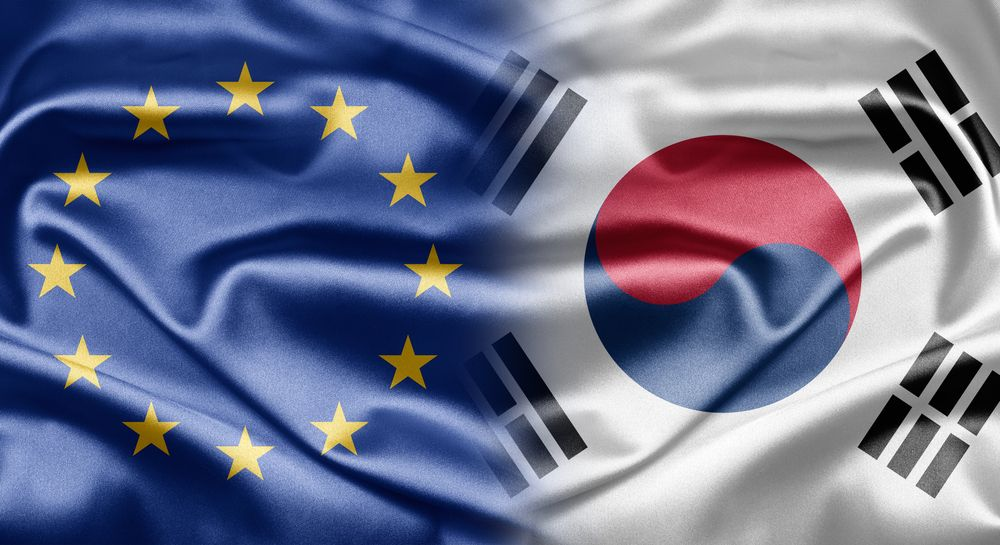

Korea’s Expanding Global Profile: Economic, Military, and Technological Dimensions
In the context of rapidly shifting global dynamics, Korea has emerged as a country whose international standing has grown significantly across political, economic, and military domains. This transformation is particularly evident when Korea is compared with major European states. With a population exceeding 50 million, Korea possesses a demographic scale comparable to countries such as Spain or Italy. This provides a solid domestic market and a robust human capital base, enabling sustained economic growth and innovation.
Economically, Korea ranks among the world’s top economies, typically positioned within the top ten in terms of nominal GDP. While Europe as a region contains several large economies, many individual European countries fall behind Korea in terms of overall economic size. More importantly, Korea’s export-oriented economic structure, coupled with its advanced manufacturing capabilities, gives it a competitive edge in key industries. Sectors such as semiconductors, shipbuilding, automobiles, and information technology illustrate the country’s capacity to compete directly with, and in some cases surpass, traditional European industrial powers.
In terms of military capability, Korea is widely regarded as one of the most powerful nations globally, often ranked within the top five to seven. This level of strength surpasses that of most European Union member states, with only a few exceptions. The foundation of this capability lies in a combination of factors: a conscription-based system ensuring substantial troop numbers, continuous investment in advanced weaponry, and a high state of readiness driven by persistent security threats. These elements collectively define Korea’s strategic posture and contribute to its growing influence in global security discussions.
Technological advancement further reinforces Korea’s global position. Its leadership in semiconductor production, digital infrastructure, and innovation-driven industries positions it at the forefront of the Fourth Industrial Revolution. When compared with countries such as Germany, known for its manufacturing excellence, Korea demonstrates equal or greater competitiveness in several high-tech sectors. This convergence of economic strength, military capability, and technological innovation underscores Korea’s emergence as a multifaceted global actor.
Cultural Influence and Historical Trajectory: A Distinctive Path to Global Recognition
Beyond material capabilities, Korea’s rise is equally notable in the cultural domain. Over the past two decades, the country has experienced an unprecedented expansion of cultural influence, often referred to as the “Korean Wave” or Hallyu. This phenomenon encompasses film, music, television, and other forms of cultural production that have gained widespread global popularity.
Korean cinema has achieved remarkable international recognition, with films winning major awards at prestigious global institutions. These successes signal not only artistic excellence but also the ability to resonate with diverse audiences worldwide. In this regard, Korea has reached a level of cultural competitiveness comparable to traditional European film powerhouses such as France and Italy.
In the music industry, K-pop has become a global cultural force, influencing trends and attracting massive international audiences. The scale and intensity of its global reach invite comparisons with the historical impact of British pop music, including iconic acts that shaped global music culture. Korea’s cultural industries have thus evolved into a major source of soft power, enhancing the country’s global visibility and appeal.
This cultural rise is particularly significant when viewed in light of Korea’s historical trajectory. Unlike many European countries that accumulated wealth and influence through colonial expansion, Korea’s modern development emerged from a context marked by colonization and war. The country endured Japanese colonial rule in the early twentieth century and the devastation of the Korean War, yet it successfully transformed itself into a prosperous democracy with a dynamic economy.
This experience has shaped Korea’s identity as a nation that achieved growth through resilience, cooperation, and innovation rather than domination. As a result, it is often perceived as a positive model for other countries, particularly those seeking pathways to development without relying on exploitative historical structures. This distinctive narrative enhances Korea’s moral and political credibility in the international arena.
Toward a Strategic Partnership: Reimagining Korea–Europe Cooperation in a Changing World
As global uncertainties intensify, the relationship between Korea and Europe has entered a new phase characterized by deeper and more diversified cooperation. European countries, particularly those within the European Union framework, have increasingly recognized Korea as a valuable strategic partner. This recognition is reflected in the growing frequency of high-level diplomatic exchanges and the expansion of institutional cooperation mechanisms.
One of the key drivers of this evolving relationship is the restructuring of global supply chains. In an era marked by geopolitical tensions and technological competition, both Korea and European nations face the challenge of ensuring economic security while maintaining openness. Their complementary strengths—Korea’s technological and manufacturing expertise and Europe’s regulatory frameworks and market integration—create opportunities for mutually beneficial collaboration.
In the field of science and academia, cooperation has also expanded significantly. Joint research initiatives, student exchanges, and institutional partnerships facilitate the flow of knowledge and innovation between the two regions. Korea’s strong educational system and technological capabilities serve as valuable assets in these exchanges, contributing to a dynamic and reciprocal relationship.
Moreover, the acceleration of digital transformation has opened new avenues for collaboration. Areas such as artificial intelligence, green technology, cybersecurity, and digital governance represent critical domains where Korea and Europe can work together to establish global standards and frameworks. This cooperation is not only economically advantageous but also strategically important in shaping the future of the international system.
Importantly, the Korea–Europe partnership is not limited to economic or technological dimensions. It also encompasses shared values, including a commitment to democracy, human rights, and multilateralism. These common principles provide a solid foundation for long-term cooperation and enhance the legitimacy of joint initiatives on the global stage.
Given these developments, there is a clear need to recalibrate the strategic approach to Korea–Europe relations. This involves moving beyond traditional frameworks of interaction and embracing a more integrated and forward-looking partnership. Such a strategy should prioritize sustainability, inclusivity, and resilience, ensuring that cooperation remains adaptable to changing global conditions.
Strategic Recalibration and Future Directions: From Partnership to Co-Leadership
The evolution of Korea’s global status and the deepening of its engagement with Europe necessitate not merely incremental adjustments but a fundamental strategic recalibration. The relationship must transition from a framework of complementary cooperation to one of joint leadership in addressing global challenges.
First, Korea and Europe should institutionalize their cooperation in emerging strategic sectors. This includes establishing more robust mechanisms for joint policymaking in areas such as supply chain resilience, critical technologies, and climate governance. Rather than responding reactively to global disruptions, both sides should proactively shape international norms and standards.
Second, there is a need to deepen security cooperation beyond traditional parameters. While Europe has historically focused on regional security and Korea on the Korean Peninsula, the convergence of global threats—ranging from cyber warfare to maritime security—demands a more integrated approach. Expanding dialogue and collaboration in defense technology, intelligence sharing, and crisis management would significantly enhance mutual strategic capacity.
Third, cultural and societal exchanges should be further expanded to sustain long-term partnership. While economic and political cooperation often fluctuates with changing administrations and market conditions, people-to-people connections provide enduring stability. Strengthening academic networks, youth exchanges, and cultural collaborations will ensure that the Korea–Europe relationship remains resilient and forward-looking.
Finally, both Korea and Europe must recognize their shared responsibility in upholding a rules-based international order. At a time when global governance structures face increasing strain, their commitment to multilateralism, democratic values, and international law positions them as key actors in maintaining global stability. By aligning their diplomatic strategies and amplifying their collective voice, Korea and Europe can exert meaningful influence on the future direction of international relations.
In conclusion, Korea’s rise is not merely a story of national success but a reflection of broader transformations within the global system. Its partnership with Europe, grounded in mutual respect and shared interests, holds significant potential for shaping a more cooperative and sustainable international order. Realizing this potential, however, requires strategic vision, institutional innovation, and a willingness to move beyond conventional paradigms toward a more integrated and proactive form of global engagement.