The political crisis of December 2024 and the subsequent inauguration of President Lee Jae-myung in June 2025 constitute an inflection point in the trajectory of the Republic of Korea’s foreign policy. Under the new administration, Seoul is recalibrating away from the value-oriented diplomacy and the expansive “K-Silk Road” initiative characteristic of the Yoon Suk Yeol government and is instead adopting a form of strategic pragmatism primarily oriented toward immediate national interests and economic security. For Central Asia, this reorientation produces a dual-level outcome: on the one hand, diminished geopolitical activism by Seoul, in parallel with reduced competitive pressure from Beijing in certain domains, generates additional room for diplomatic manoeuvre; on the other hand, the region faces some level of uncertainty of relegation to a “peripheral priority” within South Korea’s external policy agenda, unless it succeeds in embedding itself structurally within Seoul’s newly reconfigured supply chains for critical minerals.
From “Global Pivot” to National Interests.
Seoul’s strategic engagement in Central Asia has historically been constrained by the volatility of South Korea’s domestic political cycles. The “K-Silk Road” strategy, announced by the Yoon Suk Yeol administration in June 2024, constituted the first substantive attempt to institutionalize the Central Asian vector as an autonomous regional priority within South Korea’s foreign policy architecture. This initiative was grounded in the conceptualization of South Korea as a “Global Pivotal State” and was explicitly articulated within a pro-United States geopolitical framework.
The subsequent political crisis and the removal of President Yoon from office led to an abrupt reorientation of this policy trajectory. Upon assuming the presidency, Lee Jae-myung promulgated a doctrine of “practical diplomacy.” The 123 national tasks and five diplomatic priorities endorsed in September 2025 place predominant emphasis on economic security, the safeguarding of export markets in the context of intensifying United States-China trade frictions, and the calibrated management of relations with Seoul’s four principal partners – the United States, Japan, China, and Russia.
Within this revised paradigm, Central Asia is no longer conceptualized as a discrete ideological or strategic project. Policy analysts from the Asan Institute and the Peace Foundation contend that the viability of Lee’s diplomatic framework is contingent upon the extent to which Seoul can delineate its “national interests” with precision, while simultaneously preserving its reputation as a reliable international actor. One can clearly see the differences between two administration’s practices by dissecting the table 1.
Table 1. Comparative Analysis of Diplomatic Trajectories of Yoon Suk Yeol’s and Lee Jae-myung’s Administrations.
| Yoon Suk Yeol Administration (2022–2024) | Lee Jae-myung Administration (2025–Present) | |
| Ideological Framework | Value-based diplomacy, “Global Pivotal State” concept. | Hard pragmatism, Prioritization of national interests and economic security. |
| Geopolitical Stance | “Strategic clarity,” pronounced pro-US alignment, Containing China. | “Maximum flexibility,” Balancing relations between the US and China, Reducing tensions. |
| Approach to Central Asia | Comprehensive integration via the “K-Silk Road” strategy; A standalone foreign policy focus. | Resource diplomacy; The region is viewed primarily through the lens of diversifying mineral supply chains. |
Securing the Supply Chain of Critical Minerals
The most concrete manifestation of the emerging Korean pragmatism in Central Asia is the rapid intensification of its resource diplomacy. The structural vulnerability of the South Korean economy was starkly revealed in April 2025, when China’s tightening of export controls led to a 76% decline in the supply of Chinese rare earth metals (REEs) to the Republic of Korea. Given that China had previously accounted for approximately 47.5% of South Korea’s imports of these materials, the diversification of raw material suppliers immediately became an imperative for the preservation of South Korea’s industrial base.
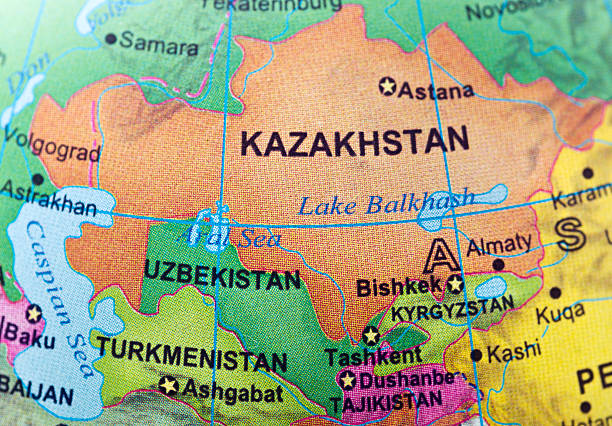
In this context, the memorandums of cooperation on critical minerals concluded with Kazakhstan and Uzbekistan have acquired particular strategic importance for the administration of President Lee Jae-myung. Seoul is in the process of integrating these bilateral arrangements into the multilateral FORGE framework, over which South Korea will preside until June 2026 According to assessments by the Centre for Strategic and International Studies (CSIS), South Korea continues to function as the most reliable external partner in the region in the field of geological exploration, providing advanced technological capabilities in return for long-term supply commitments.
Paradoxically, the recalibration of Seoul’s diplomatic rhetoric is enhancing the investment environment for South Korean initiatives in Central Asia. Under President Yoon Suk Yeol, the “K-Silk Road” strategy might have probably been interpreted in Beijing as a competing framework to the Belt and Road Initiative, situated within the broader context of intensifying United States-China strategic rivalry. By contrast, Lee Jae-myung’s approach, which prioritizes the normalization of dialogue with China, alleviates pressure on Central Asian governments to undertake politically sensitive alignments or binary choices among external partners.
This pragmatic turn, however, entails notable trade-offs. The attenuation of overt geopolitical confrontation brings into sharper focus a structural economic asymmetry: South Korea remains substantially behind China in terms of cumulative and annual investment volumes in the region. If Seoul seeks to compete primarily on pragmatic, market-oriented grounds, it will be required to deploy significantly more robust and proactive state-private partnership financing instruments than those utilized by previous administrations.
Central Asia + South Korea 2026 Summit
This pragmatic course introduces a “complex” variable for Central Asia’s strategic outlook. As analysts observe, amidst domestic political transitions in Korea and ongoing global developments in regions such as the Middle East, sustained attention to long-term regional projects – including infrastructure development and geological exploration – will require proactive management. However, rather than becoming a peripheral priority, the region possesses strong potential for long-term cooperation. By aligning their resource wealth with Seoul’s immediate economic security needs, Central Asian nations can embed themselves into South Korea’s long-term industrial planning, ensuring stable, decades-long partnerships.
Initial signals remain encouraging. The institutional foundation, including the Parliamentary Forum, has been preserved. Furthermore, the September 2025 meeting between President Lee Jae-myung and Uzbek President Shavkat Mirziyoyev on the sidelines of the UN General Assembly reaffirmed Seoul’s intent to trade Korean technology for stable resource access. The upcoming Korea-Central Asia Summit in 2026 will serve as the ultimate barometer for these relations. To retain Seoul’s strategic attention, Central Asian leaders must pivot their diplomatic offerings: transitioning from broad declarations of friendship to hard, pragmatic packages focused on the joint extraction of lithium, uranium, and REEs. Against the backdrop of China’s reduction in critical mineral exports to Korea and the concurrently growing demand from South Korean tech companies for these elements, the new ROK (Republic of Korea) government is positioned to pay special attention to this sector in cooperation with Central Asian states. In turn, this dynamic is beneficial for the region, allowing Central Asian countries to secure Korean investments to develop their critical minerals industries, diversify their strategic partners, and strengthen mutual political ties with Seoul. Considering the multi-vector diplomacy course practiced by Uzbekistan, for example, this advanced level of cooperation secures a vital high-tech partner and provides crucial balancing leverage on the geopolitical board. All this leads to the following narrow conclusion: by becoming a link in South Korea’s technological and economic security, the region can guarantee Seoul’s long-term engagement.
Aziza Saginbaeva
Research intern at the Institute for Advanced International Studies (IAIS) under UWED
Botirjon Muhammadibrokhimov
Research fellow at the Institute for Advanced International Studies (IAIS) under UWED