

Oil, Power, and the International System: Setting the Stage
Throughout the twentieth century, oil emerged as one of the most decisive instruments of power in the international system. It was not merely a commodity but a structural pillar underpinning industrial growth, military capability, and political stability. As Western economies rapidly expanded after World War II, their dependence on cheap and abundant Middle Eastern oil deepened. This growing reliance elevated the Arab region from a peripheral supplier to a central node in global economic and strategic calculations.
Within this evolving context, the Arab–Israeli conflict began to transcend its regional boundaries. What initially appeared as a localized geopolitical struggle gradually became intertwined with global energy flows and economic stability. The wars between Arab states and Israel thus acquired systemic significance, reshaping not only regional dynamics but also the broader architecture of international society.
Between 1967 and 1975, the concept of energy security underwent a fundamental transformation. Energy was no longer understood simply in terms of supply availability; it became inseparable from geopolitics, military conflict, and strategic vulnerability. The intersection of the Arab–Israeli conflict with global oil supply chains exposed the fragility of the international economic system and demonstrated how regional instability could trigger worldwide consequences.
The period marked a transition from a market-driven energy order dominated by Western oil companies to a more politicized system in which producing states began to assert control. This shift laid the groundwork for a new era in which energy would be used not only as an economic resource but also as a strategic weapon.
The 1967 War and Structural Shifts in Energy Security
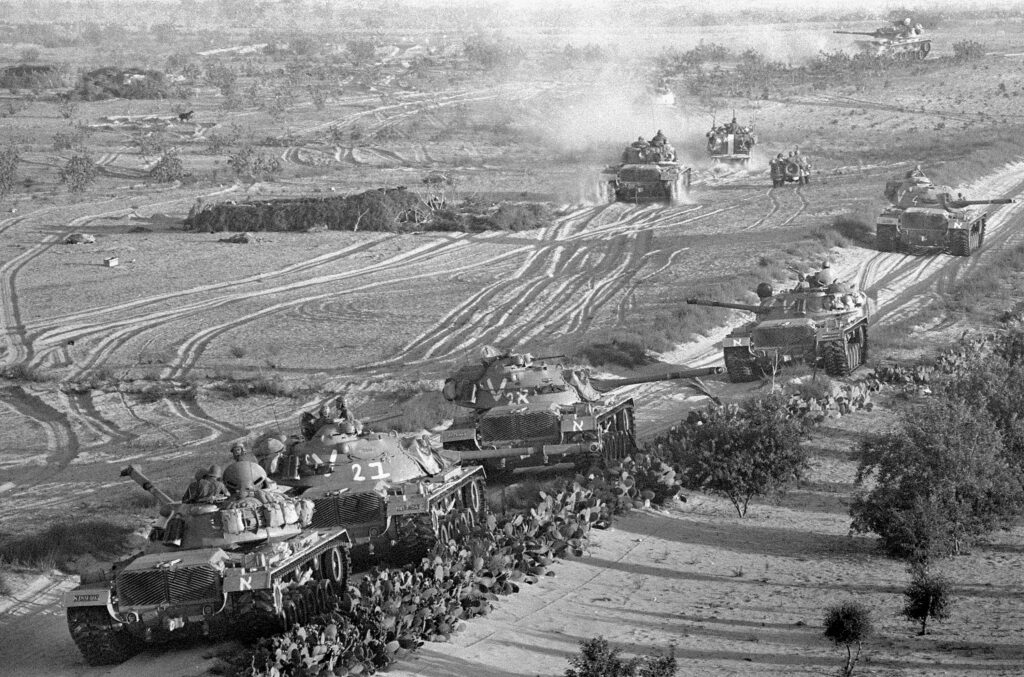
The June 1967 War represents a critical turning point in the evolution of global energy security. Following the conflict and Israel’s occupation of the Sinai Peninsula, the Suez Canal—one of the world’s most vital maritime chokepoints—was closed for nearly eight years. This closure severely disrupted the primary oil transportation route connecting the Persian Gulf to European markets.
As a result, oil tankers were forced to take the much longer route around the Cape of Good Hope. This detour significantly increased transportation costs and delivery times, creating immediate strain on global supply chains. More importantly, it revealed the extent to which industrialized economies depended on a limited number of vulnerable transit routes. Energy security, therefore, was no longer simply about access to resources but also about the security of transportation infrastructure.
Beyond logistical disruptions, the 1967 War had profound political implications. Arab oil-producing states began to recognize the strategic potential of their natural resources. Although initial attempts to use oil as a political tool during the war were largely ineffective due to limited coordination and the dominance of Western oil companies, the idea of the “oil weapon” began to take shape.
At the same time, the late 1960s witnessed a surge in resource nationalism across the Arab world. Oil-producing countries increasingly challenged the control of Western multinational corporations, renegotiating concession agreements to secure greater revenue shares and sovereignty over their resources. This shift was reinforced by rising global demand for oil, which strengthened the bargaining power of producing states.
The early 1970s further consolidated these changes through key agreements such as the Tehran and Tripoli accords of 1971. These agreements allowed producing countries to increase posted oil prices and gain partial control over pricing mechanisms. As a result, the traditional dominance of the “Seven Sisters” oil companies began to erode, paving the way for a more state-centered energy order.
The 1973 Oil Crisis: Weaponizing Energy
The October 1973 War marked the most dramatic convergence of geopolitics and energy in modern history. When Egypt and Syria launched a coordinated attack against Israel, the United States and several Western allies provided substantial military support to Israel. In response, Arab oil-producing states decided to employ oil as a strategic weapon.
On October 17, 1973, Arab members of the Organization of Arab Petroleum Exporting Countries (OAPEC) initiated a coordinated policy of production cuts and selective embargoes targeting countries perceived as supporting Israel, including the United States and the Netherlands. This action represented an unprecedented shift: energy producers moved from being passive suppliers to active geopolitical actors capable of reshaping the global economy.
The impact was immediate and profound. Oil prices surged dramatically, rising from around three dollars per barrel to over eleven dollars within a few months. This fourfold increase sent shockwaves through the global economy, particularly affecting industrialized nations that were heavily dependent on imported oil.
The crisis exposed the vulnerability of Western economic systems and shattered the assumption that economic power resided solely in industrialized countries. It demonstrated that resource-rich states could exert significant influence over global economic structures. The Arab–Israeli conflict, therefore, was no longer a regional issue but a central factor in the functioning of the international system.
The 1973 oil shock also triggered a broader economic crisis characterized by inflation, declining growth, and rising unemployment. This phenomenon, later termed “stagflation,” challenged prevailing economic theories and highlighted the far-reaching consequences of energy disruptions. The crisis underscored the extent to which modern economies were structurally dependent on stable and affordable energy supplies.
Global Consequences and the Transformation of Energy Governance
The repercussions of the 1973 oil crisis extended far beyond immediate economic disruption, leading to a comprehensive transformation of global energy governance and international relations. Industrialized countries were forced to rethink their approach to energy security, recognizing it as a core component of national security.
One of the most significant institutional responses was the establishment of the International Energy Agency (IEA) in 1974. The IEA was designed to facilitate coordination among energy-consuming nations, enabling them to respond collectively to future supply disruptions. At the national level, countries such as the United States created strategic petroleum reserves to buffer against external shocks.
In addition to institutional reforms, the crisis prompted major shifts in energy policy. Western countries began to pursue diversification strategies, reducing their dependence on Middle Eastern oil by investing in alternative energy sources, expanding domestic production, and improving energy efficiency. France and Japan, for example, significantly expanded their nuclear energy programs, while others explored natural gas and renewable energy options.
The crisis also had profound implications for the global financial system. The sharp increase in oil prices resulted in a massive transfer of wealth from oil-importing to oil-exporting countries. These revenues, often referred to as “petrodollars,” were recycled through international financial markets, linking global banking systems with energy markets in new and complex ways.
For developing countries, however, the consequences were particularly severe. Many faced rising import costs, worsening balance-of-payments deficits, and increasing debt burdens. The oil shock thus exacerbated global economic inequalities, widening the gap between the industrialized Global North and the developing Global South.
Ultimately, the events of 1967–1975 fundamentally reshaped the relationship between energy, geopolitics, and the global economy. The Arab–Israeli conflict and subsequent oil shocks transformed energy into a central axis of international power, institutionalized new forms of cooperation and competition, and left a lasting legacy that continues to influence global energy policy today.