The North Korean nuclear dossier is generating growing concern across the Western world and more recently Italy has expressed the urgency of containing the threat, not merely at the rhetorical level, but also through a pragmatic approach. The Pyongyang government has formally abandoned any ambiguity on this matter, declaring in 2022 its status as a permanent nuclear-weapon state and defining the two Koreas as “completely incompatible entities”, while dismissing denuclearization as a “daydream”. This evolution does not leave any room for misunderstanding and it marks a significant leap in terms of capabilities, as proved by the nuclear-powered strategic guided missile submarine under construction, first publicly revealed in March 2025. Moreover, North Korean leader Kim Jong Un has later announced that he Kang Kon, the second Choe Hyon-class destroyer would also form part of the Navy’s nuclear response system. In operational terms, this stages a qualitative shift extending North Korea’s traditionally land-based deterrence into the naval and undersea domain. Most likely, those steps have been facilitated by Russian technological transfers.
Indeed, the consolidation of the Pyongyang–Moscow axis is a worrying development within an already fragmented geopolitical landscape, posing significant challenges to the West and, above all, to Europe, which since the outbreak of the war in Ukraine has extensively sanctioned Moscow by identifying it as the primary threat to its security and territorial integrity. North Korea’s direct involvement in the Ukraine conflict is fact-checked as there is evidence that Pyongyang provides Russia with both troops and military equipment. Hence, the European Union is increasingly alarmed by the strategic and security implications of North Korea’s growing nuclear and expanding military influence, overall in a time when diplomacy seems to fail.
In this regard, it is not a coincidence that, since the outbreak of hostilities, Russia’s veto has de facto paralysed the adoption of further UN Security Council resolutions on North Korea, with significant consequences for the UN Panel of Experts, established in 2009 pursuant to Security Council Resolution 1874 to assist the 1718 Committee in monitoring sanctions implementation and investigating cases of non-compliance and sanctions evasion. The Panel was dismantled in April 2024, marking the first time that the United Nations was left without a dedicated body responsible for monitoring the implementation and circumvention of sanctions against North Korea.
The rationale behind the decision was clearly linked to the documentation proving Moscow-Pyongyang military cooperation. Due to the convergence of the North Korean dossier with the Russia-Ukraine war, the European perception of the nuclear program is no longer through the lens of an isolated non-proliferation issue. In this frame, Italy stands firmly anchored within the European security architecture by dedicating particular attention to the developments on the Korean Peninsula and closely monitoring Pyongyang’s moves by advocating North Korea’s complete denuclearization.
Rome-Seoul axis, political alignment and operational pressure
It is also within this broader strategic perspective that Italy has strengthened its relations with South Korea. In January 2026, the visit to Seoul of the Italian Prime Minister Giorgia Meloni marked a significant turning point as the final stop of her Asian tour, which carried a significant symbolic weight. It was not only the first visit by a European leader after President Lee Jae Myung came to power, but it also sealed the first visit to South Korea of an Italian Prime Minister in the last twenty years. In Seoul Meloni’s first engagement was the tribute at the National Cemetery: the gesture aimed also at symbolically connecting the wartime sacrifice of the Korean War with the security challenge posed today by North Korea’s nuclear programme. “Their sacrifice was not in vain, because it gave a voice to a people and a future to a nation”, Meloni wrote in the cemetery’s Book of Honour, linking a relatively recent difficult past to the current regional threats.
The emphasis on the security and stability of the Korean Peninsula, as a condition for sustainable global peace, was jointly reiterated by the two leaders reaffirming “their commitment to a peaceful and prosperous Indo-Pacific (…); to the complete denuclearization of the Korean Peninsula and to a lasting peace”. This message framed further the Italian–South Korean relationship around shared principles and scope widely consistent with the positions of the European Union. The issue of Indo-Pacific stability was also addressed during President Lee Jae Myung’s state visit to Italy in June 2026, when the two countries adopted the 2026–2030 ROK–Italy Strategic Action Plan, expanding cooperation in political, economic, scientific, cultural, security and defence fields.
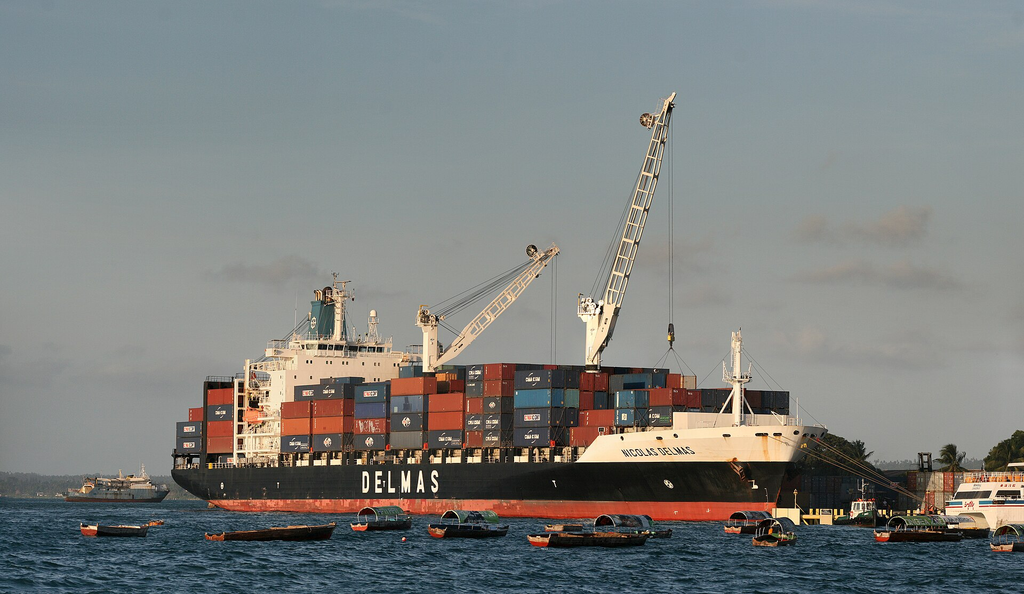
Rome subsequently demonstrated renewed concern over Pyongyang’s sanctions evasion on May 29, 2026, joining the governments of Australia, Canada, France, Germany, Japan, New Zealand, South Korea, the United Kingdom and the United States, together with the European External Action Service (EEAS), in calling on the UN Security Council’s 1718 Committee to act swiftly on the designation of seven vessels previously nominated in December 2025 under Resolution 2321. The joint statement also highlighted evidence implicating five additional vessels in recent violations of UN sanctions prohibiting North Korean exports of coal and iron ore. The request was fundamentally based on some satellite evidence of manipulation of vessels’ Automatic Identification Systems collected by the Open Source Centre.
To some extent, the initiative marks a significant breaking point in Italy’s approach, which moved beyond rhetorical endorsement towards a more operational security-policy posture in advancing active requests, while it consolidated further Rome’s alignment with South Korea and a significant part of the international community. In this new form of cooperation with like-minded states and independent research centres, there is the attempt of Italy and its partners to mitigate the constraints created by Russia’s veto within the UN system. In other words, starting from this point a significant institutional shift can be observed also in terms of global governance as the emerging model, effectively pointing towards the externalisation of certain monitoring and enforcement functions to informal coalitions, represents a non-negligible evolution challenging those formal multilateral mechanisms constrained by vetos and great-power rivalry.
Beyond the Korean Peninsula: the Russia–North Korea Cooperation as Broader Security Threat
As mentioned, on the urgent need for North Korea’s complete denuclearization, Italy is de facto aligned with the European Union and the broader Western community. Also at the procedural level, Rome is quite transparent as Italy’s Permanent Representation at the UN systematically opens its interventions by stating that it matches the position expressed by the European Union. Brussels has indeed structured its posture towards the Korean Peninsula around the “demand for the complete, verifiable and irreversible denuclearization of North Korea, together with a firm refusal to recognize the DPRK as a nuclear-weapon state”. This technical formula dates back to the 2000s’ Six-Party Talks and since then Brussels has remained consistent in its position openly reiterating it in any EU statement.
However, since 2006, the EU has developed its own highly restrictive sanctions regime, including asset freezes, travel bans and prohibitions on making funds or economic resources available to designated entities and individuals. Thus, over time, in response to Pyongyang escalations, the number of sanctioned targets has progressively expanded. Currently, the framework established by Brussels is widely regarded as one of the most restrictive sanctions regimes in place against North Korea and it is increasingly intertwined with growing concern over the Pyongyang–Moscow axis.
This sentiment led also to the EU high representatives and President Lee Jae Myung’s explicit condemnation of the military cooperation between Russia and North Korea during the EU–South Korea Summit in Brussels on June 10, 2026. On that occasion, the leaders openly denounced “Third-party support, in particular from North Korea, enabling Russia to sustain its war of aggression against Ukraine,” while describing Russia–DPRK military cooperation as “illegal”. More recently, along with the opening of Russia-North Korea first-ever road bridge across the Tumen River, which was presented by Moscow and Pyongyang as a “milestone in their strategic partnership”, the EU is further concerned by its potential use aiming to obscure military and sanctioned cargo flows. But not just that, through the corridor North Korea and Russia are further integrated and this unfortunately reinforces the perception of a consolidating revisionist axis that could channel resources and materiel beyond the immediate Ukrainian theatre.
As a matter of fact, North Korea and Russia are now structurally interconnected and for Europe the issue is no longer a non-proliferation and regional security matter regarding mainly the Korean Peninsula, but it became a direct threat at its domestic border as well as a main challenge to the existing international security order.
Conclusion
As a strategic partner, Rome is closely aligned with Seoul and shares its security concerns. The Italian and European approach signs a progressive trajectory from political condemnation towards operational pressure, not just calling for denuclearization, but also implementing and enforcing targeted sanctions. This shift pivots on the growing awareness that North Korea’s growing strategic alignment with Moscow is accelerating and expanding. Rome, Brussels, Seoul and part of the international community now converge on a clear strategic principle and on a firm priority: no recognition, no normalization and no residual space for North Korea as a de facto nuclear-weapon state and a direct threat to international stability.
Valeria GIANNOTTA
Scientific Director
Turkey Observatory at Center for International Political Studies (CeSPI)