

The Northern Sea Route: From Commercial Opportunity to Legal Challenge
Global warming is increasing the commercial potential of the Northern Sea Route (NSR), which connects East Asia and Europe through the Arctic Ocean. Compared with conventional routes through the Suez Canal or around the Cape of Good Hope, the NSR can significantly reduce sailing distances and transit times, offering opportunities to lower fuel consumption, reduce carbon emissions, and improve logistical efficiency. However, realizing these benefits requires more than technological capabilities. Shipping companies must navigate a complex legal and geopolitical environment involving maritime safety, environmental protection, coastal-state jurisdiction, and international sanctions.
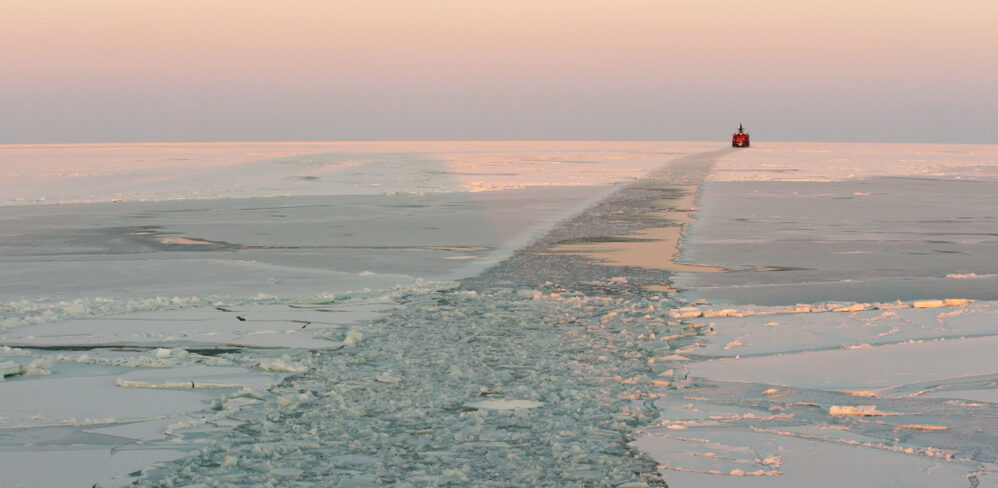
The successful demonstration voyage of the PanStar Acro, a container ship operated by a Korean shipping company, marked an important step toward the commercial utilization of the NSR. Carrying actual cargo, the vessel departed from Busan on August 22, 2026, and subsequently proceeded to European ports, including destinations in the United Kingdom, the Netherlands, and Poland. The approximately 21-day voyage demonstrated the potential to reduce transit time by more than ten days compared with the conventional Suez Canal route.
Beyond its commercial significance, the voyage provided practical experience in complying with Russian navigation procedures and international maritime safety and environmental standards established by the International Maritime Organization (IMO). It also generated valuable operational data on vessel performance, fuel consumption, icebreaker assistance, satellite communications, and port procedures.
Nevertheless, the voyage highlighted substantial legal and geopolitical challenges, including uncertainty over coastal-state jurisdiction, sanctions against Russia, restrictions on marine insurance, and delays caused by ice conditions. It should therefore be understood not merely as a technical achievement but as an exercise in legal verification—testing the practical requirements for safe, lawful, and commercially sustainable navigation.
For Korea, the central challenge is to translate this experience into a comprehensive framework that enables shipping companies to operate predictably while protecting national interests and upholding international law.
Coastal-State Jurisdiction and Legal Uncertainty
The NSR encompasses maritime areas with different legal statuses, including internal waters, territorial seas, and exclusive economic zones (EEZs). Under the United Nations Convention on the Law of the Sea (UNCLOS), foreign vessels generally enjoy the right of innocent passage through territorial seas, while navigational freedoms in the EEZ must coexist with the coastal state’s rights and jurisdiction.
Russia exercises extensive regulatory authority over the NSR in the name of navigational safety and environmental protection. Its requirements include advance navigation permits, icebreaker assistance, and, in certain circumstances, the use of polar pilots. Russia also claims that certain waters enclosed by straight baselines constitute internal waters, raising questions about the navigational rights of foreign vessels.
Article 234 of UNCLOS provides a legal basis for coastal states to adopt and enforce nondiscriminatory regulations to prevent, reduce, and control marine pollution in ice-covered areas within their EEZs, where severe climatic conditions and ice covering such areas for most of the year create exceptional navigational hazards. However, this provision does not confer unlimited regulatory authority. Coastal-state measures must be consistent with applicable international law, including the principles of nondiscrimination and proportionality.
The rapid decline of Arctic sea ice also raises questions about the continued application of Article 234, which is premised on ice-covered conditions prevailing for most of the year. Korea should therefore promote clearer international standards governing coastal-state jurisdiction, balancing legitimate environmental and safety concerns with the navigational rights of other states.
The PanStar Acro’s voyage further illustrates the complexity of multiple jurisdictions. Although operated by a Korean company, the vessel was registered in Panama, transited Russian waters, and subsequently entered European ports. The flag state, coastal state, and port state may each exercise different forms of jurisdiction, potentially creating overlapping obligations and conflicting legal claims.
International sanctions against Russia add another layer of uncertainty. Payments for navigation services, icebreaker assistance, and port-related activities may expose shipping companies to sanctions risks, depending on the parties involved and the applicable restrictions. These risks can also affect access to marine insurance and reinsurance, increasing costs or limiting coverage.
A sustainable NSR strategy must therefore integrate maritime law, sanctions compliance, financial arrangements, and contractual risk management. Korean shipping companies need comprehensive systems to assess legal risks before departure, anticipate jurisdictional conflicts, and respond effectively to geopolitical disruptions.
Safety, Environmental Protection, and Maritime Contracts
The Arctic presents distinctive operational hazards, including ice accumulation on vessels, collisions with floating ice, satellite communication failures, and inadequate search-and-rescue infrastructure. Compliance with international safety standards is therefore essential.
The IMO’s International Code for Ships Operating in Polar Waters, commonly known as the Polar Code, supplements the International Convention for the Safety of Life at Sea (SOLAS) and the International Convention for the Prevention of Pollution from Ships (MARPOL). It establishes requirements concerning vessel design, equipment, operational procedures, and crew qualifications. Expanding commercial operations along the NSR will require appropriate polar-vessel capabilities and integrated safety management systems coordinated with Arctic coastal states.
Environmental protection presents equally significant challenges. The Arctic ecosystem is particularly vulnerable to pollution, and recovery from major environmental damage can be exceptionally slow. Restrictions on heavy fuel oil in Arctic waters and efforts to reduce black carbon emissions are increasing pressure on shipping companies to adopt cleaner technologies and fuels. Alternative fuels, including marine gas oil, liquefied natural gas, and methanol, may involve additional costs and infrastructure requirements.
Pollution incidents could also expose operators to substantial liability under applicable international conventions and domestic legislation. The economic viability of the NSR must therefore be evaluated not only in terms of shorter distances but also in terms of environmental performance, safety requirements, and compliance costs.
These risks should be explicitly addressed in maritime transport contracts. Standard charterparty provisions and bills of lading may not adequately cover the distinctive challenges of Arctic navigation. Shipping companies should consider special clauses addressing delays and demurrage, route deviations caused by ice conditions, sanctions-related disruptions, force majeure, and cargo damage resulting from communication failures.
Without clear contractual provisions, disruptions may trigger prolonged disputes among shipping companies, cargo owners, and insurers. Korea should therefore develop standardized contractual clauses tailored to polar shipping and provide legal guidance to domestic operators. It should also establish mechanisms to verify regulatory compliance and facilitate lawful payments under applicable sanctions regimes.
Korea as a Norm Enabler in Arctic Governance
The PanStar Acro’s voyage represents a shift in Korea’s Arctic policy from research and development toward practical commercial demonstration. The operational data generated by the voyage can support economic assessments, improve domestic maritime legislation, and inform future shipping strategies. More importantly, the experience creates an opportunity for Korea to move beyond passively complying with coastal-state regulations and contribute actively to developing international rules for Arctic navigation.
As a non-Arctic state with advanced shipping, shipbuilding, and maritime technologies, Korea occupies a distinctive position. Although it has no territorial sovereignty over the Arctic Ocean, it has substantial commercial interests and technological capabilities as a potential user of the NSR.
Korea should use these strengths to pursue balanced middle-power diplomacy. Rather than aligning unconditionally with any major power or accepting excessive coastal-state claims, it should advocate universal principles of international maritime law, particularly UNCLOS, and support the IMO’s safety and environmental standards.
This approach would allow Korea to serve as a normative mediator, helping reconcile the interests of Arctic coastal states and countries that use the route. Bilateral channels can support practical communication where legally and politically feasible, while multilateral institutions such as the IMO should remain central to clarifying navigational rights and developing proportionate, inclusive regulations.
Korea can also contribute through technology and infrastructure. Its capabilities in environmentally friendly shipbuilding, autonomous navigation, satellite-based sea-ice monitoring, and polar research icebreaker operations offer practical tools for improving Arctic safety and sustainability. Developing cleaner polar vessels, sharing real-time sea-ice information, and improving digital route optimization could reduce environmental impacts and operational uncertainty. Korea could also promote cooperation on logistics infrastructure and multinational search-and-rescue arrangements.
In the long term, Korea should evolve beyond its role as a user or mediator of the NSR. It should become a norm enabler—a country that facilitates the development of international standards, institutions, and cooperative arrangements for sustainable maritime transportation in polar regions. Such leadership would combine legal legitimacy, environmental responsibility, technological innovation, and diplomatic engagement.
Policy Recommendations
The PanStar Acro’s voyage demonstrated both the commercial potential of the NSR and the legal, institutional, and geopolitical challenges that must be addressed before regular commercial operations can expand. Shorter transit times alone cannot guarantee commercial success. Effective safety management, environmental compliance, legal predictability, and resilience against geopolitical disruptions are equally important.
Korea should pursue four policy priorities.
First, strengthen legal and institutional frameworks. Develop navigation guidelines grounded in UNCLOS and IMO standards, clarify procedures for managing jurisdictional disputes, and introduce standardized contractual clauses addressing delays, route deviations, sanctions, and icebreaker-related risks.
Second, enhance diplomatic leadership. Use middle-power diplomacy to promote proportionate coastal-state regulation and strengthen multilateral cooperation through the IMO. Korea should advocate an inclusive legal framework that balances environmental protection with navigational rights.
Third, establish a technology-based cooperation platform. Bring Arctic coastal states and user countries together to share digital sea-ice information, improve search-and-rescue capabilities, develop cleaner polar vessels, and cooperate on maritime infrastructure. These initiatives would translate Korea’s technological strengths into practical contributions to Arctic governance.
Fourth, create an integrated public-private support system. Establish a Public–Private Task Force for the Commercialization of the NSR, bringing together government agencies, shipping companies, research institutions, and legal experts. This body should manage operational data from demonstration voyages and provide integrated legal, administrative, meteorological, financial, and insurance-related support to Korean shipping companies.
Commercializing the NSR cannot depend on individual companies alone. It requires a coordinated national strategy that reduces entry barriers, improves risk management, and supports compliance with international law.
The PanStar Acro’s voyage marks the beginning of Korea’s transition toward a more active role in shaping the global maritime order. By combining legal legitimacy, environmentally responsible technologies, and balanced diplomacy, Korea can help establish a predictable and sustainable framework for Arctic navigation.
Korea’s long-term objective should not simply be to use the Northern Sea Route, but to help shape the international rules and cooperative institutions that make its sustainable use possible. This transformation would strengthen Korea’s maritime capabilities, improve the competitiveness of its shipping industry, and position the country as a leading norm enabler in the emerging era of Arctic transportation.