
Ottoman Palestine and the Emergence of Zionist Migration
The establishment of Israel in 1948 was not an abrupt or isolated historical event, but rather the culmination of a long and complex process shaped by political transformations, social changes, and shifting international dynamics. In the late nineteenth century, Palestine remained a province of the Ottoman Empire, characterized by a relatively stable agrarian society. Its economy was largely based on agriculture, small-scale trade, and local markets, while social relations were organized through traditional communal and religious structures. The population consisted predominantly of Muslim and Christian Arabs, alongside a small but historically rooted Jewish minority concentrated in urban centers such as Jerusalem, Hebron, and Safed.
Toward the end of the nineteenth century, however, this relatively stable social structure began to undergo significant changes. The emergence of the Zionist movement in Europe introduced new political and demographic dynamics into the region. Zionism, as both a political and ideological movement, sought to establish a national homeland for the Jewish people, driven in large part by increasing persecution and discrimination faced by Jewish communities, particularly in the Russian Empire and Eastern Europe. Pogroms, legal restrictions, and widespread social hostility created strong incentives for emigration.
The First Aliyah, beginning in 1882, marked the first organized wave of Jewish migration to Palestine. Unlike earlier sporadic movements, this migration was systematic and supported by emerging Zionist institutions, which provided financial backing, organizational support, and ideological direction. As such, it represented the beginning of a structured settlement project rather than a purely individual or economic migration.
The choice of Palestine as the destination was not accidental. Beyond its geographic and strategic considerations, it held deep religious and historical significance in Jewish thought as the Promised Land. This symbolic dimension reinforced the ideological commitment of migrants and strengthened the long-term objectives of settlement.
In its early stages, Jewish migration did not immediately appear as a political threat to the existing population. Many migrants were perceived as settlers seeking agricultural livelihoods and economic stability. They typically arrived by sea, departing from ports such as Odessa, crossing the Mediterranean, and entering through Jaffa, which served as the primary gateway to Palestine. From there, they established agricultural settlements, including Rishon LeZion and Petah Tikva.
During this period, interactions between Jewish settlers and the local Arab population were relatively cooperative. Palestinians, particularly in rural areas, sometimes assisted newcomers by sharing agricultural knowledge and local practices. This initial coexistence, however, was fragile. As migration increased in scale and settlements expanded, the dynamics began to shift. Zionist policies emphasizing land acquisition and the development of self-sufficient Jewish communities gradually reduced economic and social interdependence between the two groups. Over time, these developments contributed to rising tensions, as the demographic and economic balance of the region began to change.
The British Mandate and the Internationalization of the Palestinian Question
The outbreak of World War I marked a decisive turning point in the history of Palestine. The collapse of the Ottoman Empire led to the incorporation of Palestine into the British Mandate system, fundamentally altering its political and administrative structure. This transition was accompanied by a series of international agreements and declarations that would shape the future of the region.
Among these, the Balfour Declaration of 1917 stands out as a pivotal moment. In this declaration, the British government expressed its support for the establishment of a “national home for the Jewish people” in Palestine, while also stating that the civil and religious rights of existing non-Jewish communities should not be prejudiced. In practice, however, the declaration created a framework of ambiguity and contradiction, as it attempted to reconcile incompatible objectives.
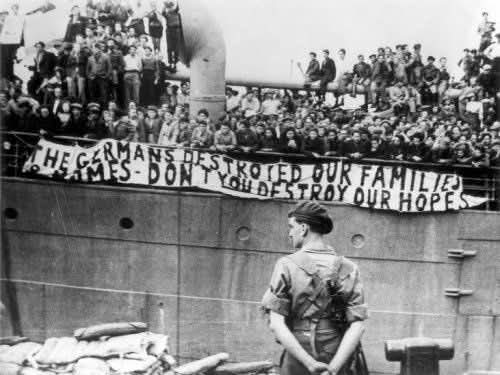
During the British Mandate period (1920–1948), Jewish migration increased significantly, particularly during the 1930s. This surge was driven largely by the rise of anti-Semitism in Europe, culminating in the persecution of Jews under Nazi rule. The Holocaust, which resulted in the systematic extermination of approximately six million Jews, had a profound impact on global public opinion and strengthened international support for the creation of a Jewish state.
British administrative policies during this period played a crucial role in shaping developments on the ground. While Britain maintained formal commitments to both Arab and Jewish communities, its policies often facilitated Jewish immigration and land acquisition. Legal and administrative mechanisms enabled the transfer of land and the expansion of settlements, while Arab political demands were frequently constrained or suppressed. This asymmetry contributed to deepening divisions within Palestinian society.
As tensions between Arab and Jewish communities intensified, the Palestinian question evolved into an international issue. By the end of World War II, it had become deeply embedded in the emerging global order, influenced by the strategic interests of major powers. Both the United States and the Soviet Union, despite their ideological rivalry, expressed support for the establishment of a Jewish state, albeit for different geopolitical reasons. In contrast, Arab states were unable to present a unified or effective diplomatic response capable of counterbalancing these developments.
In 1947, the United Nations proposed the Partition Plan for Palestine, which recommended the creation of two separate states—one Arab and one Jewish. The plan allocated approximately 55% of the territory to the proposed Jewish state, despite the Arab population forming a demographic majority. This allocation was widely perceived by Arab communities as unjust and led to its rejection. Conversely, Zionist leaders accepted the plan as a basis for statehood, despite its limitations, thereby setting the stage for further conflict.
The Establishment of Israel and the Transformation of Palestinian Society
The declaration of the State of Israel on May 14, 1948, marked the culmination of decades of political mobilization, migration, and international diplomacy. Almost immediately, war broke out between Israel and neighboring Arab states, including Egypt, Jordan, Syria, and Iraq. This conflict, known as the Arab-Israeli War of 1948, resulted in significant territorial and political changes.
Israel emerged from the war with control over a larger territory than had been allocated under the UN Partition Plan. However, the most profound and lasting consequences of this period were experienced by the Palestinian population. The events surrounding the war gave rise to what Palestinians refer to as the Nakba, or “catastrophe.” During this period, more than 700,000 Palestinians were displaced from their homes, and over 400 villages were destroyed or depopulated.
The displacement was not solely the result of military operations but was also accompanied by violence, including attacks on civilian populations and instances of mass killings. Entire communities were uprooted, leading to a large-scale refugee crisis that extended beyond the borders of Palestine into neighboring countries such as Lebanon, Syria, and Jordan. The social, economic, and psychological impacts of this displacement have persisted across generations.
For Jewish communities, however, the establishment of Israel represented the realization of a long-standing national project. What had once been an ideological aspiration was transformed into a sovereign political entity. The new state rapidly developed its institutions, absorbed waves of immigrants from Europe and other regions, and gained increasing international recognition.
The transformation that occurred between the pre-1948 and post-1948 periods was profound and multifaceted. It involved not only changes in political sovereignty and territorial boundaries but also a fundamental restructuring of social realities. Palestinians who had previously lived in stable, locally rooted communities found themselves dispersed as refugees, often living under precarious conditions. At the same time, a new state system emerged, reshaping the political landscape of the Middle East.
Historical Legacies and the Persistence of Conflict
The transformation of Palestine from a relatively stable Ottoman province into a central arena of international conflict illustrates the profound impact of migration, imperial policy, and global power politics on regional realities. The establishment of Israel in 1948 was not simply the outcome of a single event but rather the culmination of decades of demographic change, ideological mobilization, and international intervention.
From a historical perspective, the processes that led to 1948 reveal the layered nature of conflict formation. Early patterns of coexistence gave way to competition and confrontation as demographic pressures increased and political objectives became more explicit. The British Mandate period further institutionalized these tensions by introducing policies that facilitated structural inequality while failing to reconcile competing national aspirations. The subsequent involvement of international actors transformed the Palestinian question into a global issue, embedding it within broader geopolitical rivalries.
The consequences of these developments continue to resonate in contemporary politics. The displacement of Palestinians and the establishment of Israel created enduring questions related to sovereignty, self-determination, and refugee rights. These issues remain central to ongoing debates in international law and diplomacy. Moreover, the asymmetrical nature of early agreements and policies has contributed to persistent grievances that shape political narratives on all sides.
At the same time, this historical trajectory underscores the importance of understanding conflict as a dynamic process rather than a static condition. The case of Palestine demonstrates how local, regional, and international factors interact over time to produce transformative outcomes. It also highlights the limitations of externally imposed solutions that fail to address underlying structural imbalances.
Ultimately, the legacy of 1948 is not confined to the past but continues to define the present and future of the region. Any meaningful attempt to address the conflict must therefore engage with its historical roots, acknowledging both the experiences of displacement and the aspirations for statehood that emerged from this period. Only through such a comprehensive understanding can pathways toward a more stable and just political order be envisioned.