
The Evolution of European Studies in Korea: From Regional Studies to Multidisciplinary Expansion
European Studies in Korea has undergone a significant transformation over the past four decades, evolving from a relatively narrow branch of regional studies into a broad, multidisciplinary field encompassing both the humanities and social sciences. In its early stages, the development of European Studies was closely tied to the process of European integration, with a strong emphasis on political and economic analysis of the European Union (EU). As a result, the field was initially dominated by social science approaches aimed at understanding European institutions, governance structures, and policy frameworks.
Over time, however, the scope and methodology of European Studies have expanded considerably. Today, the field incorporates disciplines such as linguistics, literature, history, philosophy, geography, sociology, anthropology, and law, alongside political science and economics. This shift reflects both the increasing complexity of European integration and the growing demand within Korean society for a deeper and more comprehensive understanding of Europe. At the same time, research approaches have become more diverse, integrating comparative perspectives, interdisciplinary frameworks, and collaborative research models that transcend traditional academic boundaries.
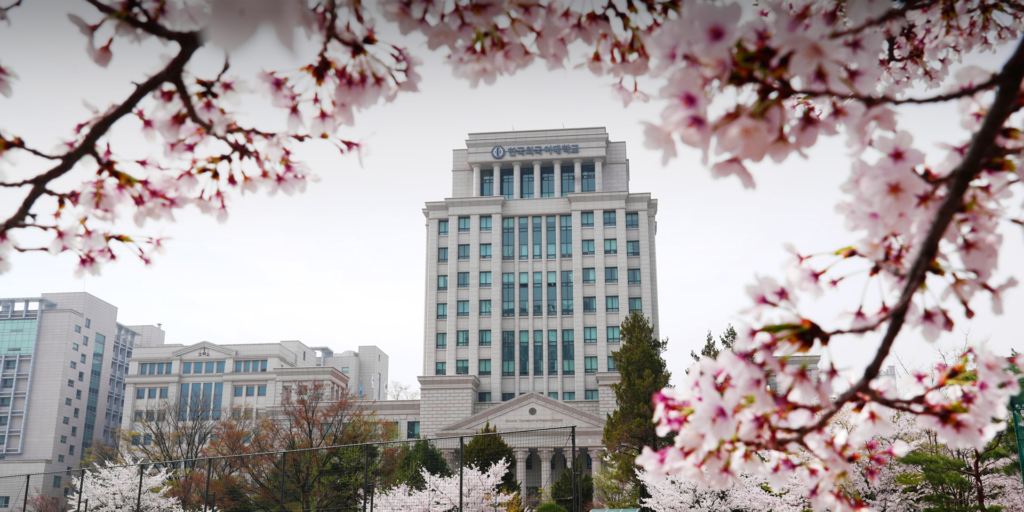
Universities have played a central role in this evolution. Initially functioning as conduits for importing European knowledge into Korea, they have increasingly become platforms for producing original research and facilitating mutual exchange between Korea and Europe. Among these institutions, Hankuk University of Foreign Studies (HUFS) stands out due to its long-standing specialization in European languages and regional studies. Its institutional characteristics have enabled it to develop a distinctive model of European Studies that integrates linguistic, cultural, and social scientific approaches, thereby contributing significantly to the broader development of the field in Korea.
Educational Structures at HUFS: Building an Integrated European Studies System
The educational system for European Studies at HUFS is characterized by a well-structured and integrated framework that connects undergraduate and graduate programs. At the graduate level, the Department of European Union Studies within the Graduate School of International Area Studies serves as the core institution for advanced education and research. Its curriculum is built upon three key pillars—disciplinary knowledge, language proficiency, and regional expertise—reflecting the foundational principles of area studies while incorporating the specific characteristics of the EU as a subject of analysis.
The graduate program offers a comprehensive range of courses covering EU politics, international relations, economics, law, and socio-cultural studies. It has also demonstrated adaptability by incorporating emerging topics such as global governance, international economic challenges, and other contemporary global issues. Students are required to complete a structured program that includes coursework, language proficiency requirements, and either a thesis or alternative graduation requirements. Despite these strengths, the program faces challenges, including a declining number of students and limitations in fostering the next generation of academic researchers. The introduction of non-thesis tracks has increased flexibility but may also weaken the research orientation of the program.
At the undergraduate level, the EU Convergence Major represents an innovative approach that allows students from diverse academic backgrounds to engage with European Studies through a double major or minor system. The curriculum covers a wide range of topics, including European history, politics, economics, socio-cultural issues, and contemporary challenges, while also incorporating practical subjects relevant to careers in international business and policy. Recent curriculum reforms have strengthened the program’s practical orientation, aligning it more closely with labor market demands and contributing to increased student enrollment, particularly in upper-level courses.
However, the removal of the graduation thesis requirement at the undergraduate level has reduced opportunities for in-depth academic research, creating a potential gap in the educational pipeline. Overall, the HUFS educational model demonstrates strong institutional coherence and integration, but addressing issues related to student recruitment and the cultivation of research capacity remains essential for its long-term sustainability.
Research and Public Diplomacy: Institutional Synergy at HUFS
The research system for European Studies at HUFS is anchored by two key institutions: the EU Research Institute and the EU Center, including the Jean Monnet EU Center. Together, these institutions form a comprehensive framework that integrates academic research with public diplomacy and external engagement, thereby enhancing both scholarly output and societal impact.
The EU Research Institute has played a leading role in advancing European Studies in Korea. Originating from earlier Western European research centers, it has evolved into a specialized institution focusing on EU and European integration studies. Its core activities include publishing academic journals, organizing conferences and seminars, and conducting collaborative research projects. Over time, the institute has shifted from a multidisciplinary focus that included language and literature to a more concentrated emphasis on social science research related to the EU, while more recently reintroducing interdisciplinary perspectives by incorporating topics such as environmental policy, Arctic issues, and broader humanities research.
Complementing the institute’s academic focus, the EU Center operates as a platform for public diplomacy, promoting understanding of the EU through education, research, and outreach activities. Supported by the European Union, the center engages in a wide range of programs, including academic conferences, public lectures, student competitions, media initiatives, and networking activities with domestic and international partners. The transition to the Jean Monnet EU Center has further strengthened the academic and policy-oriented dimensions of these activities, fostering dialogue between academia, policymakers, and the broader public.
The synergy between the EU Research Institute and the EU Center represents a defining feature of the HUFS model. By combining research excellence with active public engagement, these institutions create a dynamic ecosystem that supports both academic development and societal outreach. Their collaborative efforts facilitate knowledge exchange, enhance Korea–EU relations, and position HUFS as a leading institution in European Studies both domestically and internationally.
Strategic Challenges and Future Directions: Rethinking European Studies in Korea
Despite its institutional strengths and achievements, European Studies in Korea faces several significant challenges that require strategic reconsideration. One of the most pressing issues is the declining demand for area studies, influenced by global uncertainties and changing perceptions of Europe. Events such as economic crises, Brexit, and the COVID-19 pandemic have contributed to a more cautious outlook, affecting student interest and institutional priorities.
Another critical challenge is the shortage of the next generation of scholars. While European Studies programs have expanded in scope and institutional presence, they have not always succeeded in fostering sustainable academic careers. Addressing this issue requires comprehensive measures, including increased financial support, enhanced mentorship, and expanded opportunities for international collaboration.
In response to these challenges, European Studies in Korea must pursue several strategic directions. First, it should move beyond its traditional focus on social sciences and embrace a more integrated and interdisciplinary approach that incorporates science, technology, and the humanities. This is essential for addressing complex global issues such as climate change, migration, and public health, which transcend disciplinary boundaries. Second, universities should strengthen their role in public diplomacy by engaging broader audiences beyond academia through innovative programs that utilize digital technologies, media platforms, and cultural initiatives.
Third, there is a need to align European Studies more closely with national policy objectives, enabling universities to contribute more directly to Korea’s international engagement and cooperation with Europe. Finally, institutional capacity must be strengthened through the expansion of faculty resources, improvement of research infrastructure, and development of partnerships with domestic and international organizations. These efforts are essential for ensuring the continued relevance and competitiveness of European Studies in Korea.
Toward a Sustainable and Integrated Future for European Studies
The case of Hankuk University of Foreign Studies offers valuable insights into the development and future direction of European Studies in Korea. Through the integration of education, research, and public diplomacy, HUFS has established a comprehensive and dynamic model that reflects both the achievements and the challenges of the field. Its experience demonstrates the importance of institutional coherence, adaptability, and strategic vision in advancing European Studies in a rapidly changing global environment.
At the same time, the sustainability of European Studies in Korea depends on the ability to address emerging challenges and embrace new opportunities. In particular, fostering the next generation of scholars, strengthening interdisciplinary collaboration, and enhancing public engagement will be critical for maintaining the vitality of the field. European Studies must also redefine its role by contributing to the understanding of global issues and promoting solutions that transcend national and regional boundaries.
Ultimately, the future of European Studies in Korea lies in its capacity to evolve and innovate. By building on existing strengths and adopting forward-looking strategies, institutions such as HUFS can continue to play a leading role in shaping the field and fostering meaningful cooperation between Korea and Europe.