

From Strategic Aspiration to Legal Reality on the Northern Sea Route
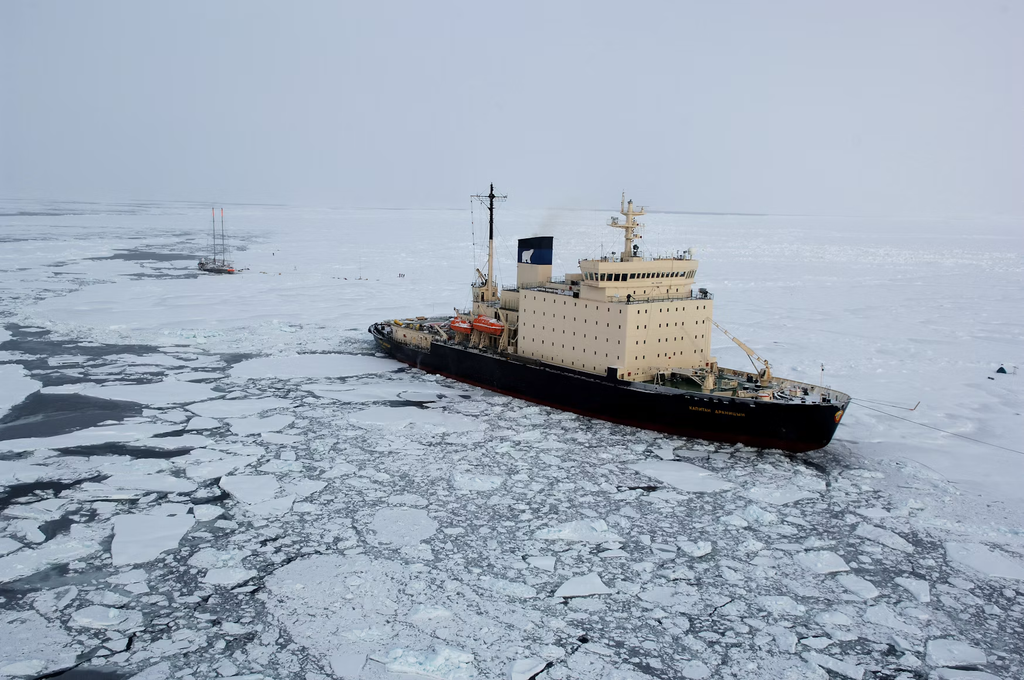
The accelerating retreat of Arctic sea ice and shifting global supply chain dynamics have transformed the Northern Sea Route (NSR)—the maritime corridor stretching along Russia’s Siberian coast between the Bering Strait and Northern Europe—from a speculative geographical shortcut into an active commercial frontier. While the NSR offers substantial economic appeal by reducing transit times between East Asia and Europe by more than two weeks and lowering fuel costs by roughly twenty to thirty percent compared to the Suez Canal route, its commercial viability cannot be measured through navigational distance alone. In reality, the NSR constitutes a deeply layered legal arena in which overlapping maritime jurisdictions, coastal-state regulations, polar safety and environmental mandates, international sanctions, marine insurance constraints, and private maritime contracts continuously intersect.
The August 2026 commercial demonstration voyage of the PanStar Acro exemplifies this pivotal transition from strategic aspiration to practical execution. Following the steady evolution of Korea’s Arctic policy—from its 2013 comprehensive promotion plan and the 2021 Polar Activities Promotion Act to the 2026 Special Act on Promoting the Utilization of the Northern Sea Route and Fostering Related Industries—a Korean shipping operator acquired and deployed the PanStar Acro. Departing from Busan New Port with commercial cargo, the vessel transited Russian Arctic waters via the Bering Strait and called at major European ports in the United Kingdom, the Netherlands, and Poland before returning, thereby generating vital empirical data on transit durations, fuel consumption, and operational stability.
Beyond its symbolic milestone as an inaugural commercial demonstration run, however, this voyage exposed the intricate legal challenges confronting non-Arctic user states. Because the PanStar Acro was operated by a Korean enterprise while registered under the Panamanian flag, transited coastal waters subject to Russian domestic legislation, and entered European ports governed by strict port-state and European Union environmental regimes, a single transit triggered a multi-jurisdictional web of rights, duties, and potential liabilities. Evaluating the long-term feasibility of the NSR therefore requires a rigorous, integrated examination of both the public international law governing Arctic waters and the technical, environmental, geopolitical, and commercial regimes regulating polar shipping.
International Legal Status, UNCLOS Article 234, and Multilayered Jurisdiction
A foundational legal challenge surrounding the NSR lies in the fact that it is neither a uniform Russian internal waterway nor an unrestricted international shipping lane. Along its vast expanse, a transiting vessel passes sequentially through internal waters, territorial seas, contiguous zones, exclusive economic zones (EEZs), and strategic straits used for international navigation. Under the 1982 United Nations Convention on the Law of the Sea (UNCLOS), coastal-state sovereignty and foreign navigational rights vary substantially across each maritime zone. While foreign vessels enjoy the right of innocent passage in the territorial sea—as well as in waters newly enclosed as internal waters by straight baselines under UNCLOS Article 8(2)—and freedom of navigation within the EEZ, Russia exercises extensive administrative control over the NSR through mandatory prior authorization, vessel reporting, icebreaker escort rules, and compulsory ice-pilotage administered by the Main Directorate of the Northern Sea Route under Rosatom.
To justify this stringent regulatory architecture under international law, Russia relies primarily on UNCLOS Article 234, the sole provision in the Convention explicitly addressing ice-covered areas. Article 234 empowers coastal states to adopt and enforce non-discriminatory laws and regulations for the prevention, reduction, and control of marine pollution from vessels in ice-covered areas within the limits of the EEZ, where severe climatic conditions and the presence of ice for most of the year create exceptional navigational hazards and heightened ecological vulnerability. Nevertheless, Article 234 does not confer unfettered sovereignty or unilateral control over Arctic navigation. Rather, its legitimate exercise is strictly bounded by legal requirements of non-discrimination, reasonableness, and proportionality to the specific objective of marine environmental protection.
Consequently, persistent legal friction has emerged between major maritime states and Russia regarding the precise boundary between environmental protection and navigational freedom. Maritime powers contend that key Arctic straits are governed by the non-suspendable regime of transit passage under UNCLOS Part III, whereas Russia invokes Article 234 to enforce prior licensing and mandatory icebreaker accompaniment. Even if Article 234 were construed to extend to territorial seas or international straits, coastal states remain barred under UNCLOS Articles 24 and 34(2) from arbitrarily suspending innocent passage or converting transit passage into a discretionary permission system. Furthermore, as the European Court of Justice (ECJ) emphasized in the Bosphorus Queen ruling regarding coastal-state enforcement under UNCLOS Article 220(6), detaining or sanctioning foreign vessels in the EEZ requires clear objective evidence of a discharge causing or threatening major damage, rather than speculative concern. Accelerated climate change further destabilizes Article 234’s legal premise: as multi-year sea ice retreats and navigable seasons lengthen, the foundational requirement of ice presence for “most of the year” becomes increasingly contested, eroding the legal certainty of unilateral coastal restrictions.
Compounding these spatial and textual ambiguities is the multilayered structure of authority governing commercial vessels operating on the NSR. As illustrated by the PanStar Acro, contemporary maritime transport routinely separates the nationality of the commercial operator from the vessel’s flag state. While Korea provided policy support and operational management, Panama—as the flag state—retained primary international legal jurisdiction and supervisory responsibility over the vessel’s nationality, seaworthiness, and compliance with international maritime conventions. Simultaneously, Russia asserted coastal-state legislative and enforcement jurisdiction along the Siberian coast, while British and EU authorities exercised port-state jurisdiction upon arrival in European ports. In the event of a collision, grounding, or pollution incident, this convergence of flag-state, coastal-state, port-state, and operational jurisdictions—further complicated by the diverse nationalities of cargo owners, charterers, and insurers—generates acute conflicts of law and competing adjudicatory claims.
Navigating this complex jurisdictional landscape requires non-Arctic user states to avoid both reflexive acquiescence to expansive coastal claims and confrontational legal challenges that disrupt practical operational cooperation. Instead, user states must pursue calibrated legal diplomacy grounded firmly in UNCLOS. Rather than treating Russian regulations as an indivisible monolith, maritime states should scrutinize the international legal validity and proportionality of individual administrative rules while utilizing existing bilateral instruments—such as the 2010 Korea–Russia Agreement on Marine Transport—alongside multilateral platforms like the International Maritime Organization (IMO). By systematically documenting administrative procedures, icebreaker operations, and port inspections during demonstration runs, non-Arctic states can establish objective legal benchmarks to safeguard navigational freedoms and contribute constructively to the progressive development of polar maritime governance.
Polar Safety, Environmental Liability, Sanctions, and Contractual Risk Allocation
Beyond public international law, commercial transit through the NSR is governed by specialized technical, environmental, and commercial regimes designed for extreme polar conditions. The cornerstone of international polar maritime regulation is the IMO’s International Code for Ships Operating in Polar Waters (Polar Code), which entered into force in 2017 and operates alongside the International Convention for the Safety of Life at Sea (SOLAS) and the International Convention for the Prevention of Pollution from Ships (MARPOL). Adopting a risk-based regulatory philosophy, the Polar Code classifies vessels into Categories A, B, and C according to their structural capacity to operate in ice, mandating a Polar Ship Certificate and a vessel-specific Polar Water Operational Manual (PWOM). Under the PWOM, shipmasters bear heightened legal responsibilities to alter course, divert, or suspend transit whenever sea-ice or meteorological conditions exceed the vessel’s certified operational limits.
Equally essential to polar operational safety are specialized seafarer qualifications under the STCW framework, reliable sea-ice forecasting, and coordinated Search and Rescue (SAR) planning, given the vast distances and sparse emergency response infrastructure in the High North. In ice-infested waters, mariners must accurately interpret dynamic ice concentrations, calibrate vessel speed, and respond swiftly to sudden weather shifts, elevating polar training from internal corporate instruction to a binding international competency standard. During the PanStar Acro demonstration, classification society verification of polar fitness confirmed baseline technical compliance with these requirements. However, scaling up from isolated demonstration voyages to regular liner services requires institutionalizing comprehensive, end-to-end safety management systems reinforced by harmonized port-state control across Arctic and Northeast Asian ports.
Environmental protection imposes an equally stringent layer of legal accountability upon polar operators. In sub-zero Arctic waters, spilled oil or hazardous chemical substances biodegrade extremely slowly and inflict long-lasting damage on fragile marine ecosystems, while severe logistical constraints on spill recovery magnify cleanup and compensation liabilities. Consequently, preventive mandates under MARPOL and the Polar Code—including strict prohibitions on oil and noxious liquid discharges alongside tightening restrictions on the use and carriage of heavy fuel oil (HFO)—are paramount. Moreover, vessel emissions of black carbon accelerate sea-ice melt by reducing surface albedo, linking polar shipping directly to global decarbonization and greenhouse gas regulations. When commercial container vessels carry regulated chemicals or dangerous goods governed by the International Maritime Dangerous Goods (IMDG) Code, packaging, stowage, and documentation duties intersect directly with strict environmental liability regimes, requiring empirical fuel-burn and emissions data rather than theoretical distance savings to verify genuine environmental sustainability.
While technical and environmental rules govern physical operations, the most immediate legal barriers to regular NSR commerce stem from geopolitics, economic sanctions, and marine insurance. Following Russia’s invasion of Ukraine, sweeping Western sanctions targeting Russian state entities, financial institutions, and maritime infrastructure have created severe compliance hazards for foreign carriers. Even if innocent transit through Russian Arctic waters remains lawful under international law, utilizing mandatory Russian icebreaker services operated by sanctioned entities such as Rosatom’s Atomflot, remitting transit fees, or accessing Russian port services risks triggering primary or secondary sanctions. Sanctions exposure directly destabilizes marine insurance: hull and machinery policies, Protection and Indemnity (P&I) club coverage, and cargo insurance routinely incorporate sanctions exclusion clauses that automatically void coverage or block claim settlements if a voyage involves prohibited entities. Simultaneously, acute physical hazards—including low-temperature equipment failure and satellite navigation degradation where high-latitude geometry increases positioning errors by twenty to fifty percent—drive up insurance premiums and restrict seasonal underwriting through risk assessment methodologies such as POLARIS.
To insulate commercial operations against these converging physical and geopolitical uncertainties, private maritime contracts of carriage must evolve beyond standard charterparty and bill-of-lading templates. Contracting parties must draft specialized ice clauses and bespoke force majeure or frustration provisions that explicitly allocate financial responsibility for transit delays, weather or ice deviations, mandatory icebreaker escort fees, port closures, and sudden regulatory or sanctions interventions. Furthermore, given the multiplicity of involved jurisdictions and heightened security tensions across strategic maritime chokepoints such as the GIUK Gap, maritime contracts must establish unambiguous governing law and international arbitration clauses to prevent parallel multi-jurisdictional litigation and guarantee enforceable dispute resolution.
Toward a Predictable and Sustainable Arctic Maritime Order
The commercial demonstration voyage of the PanStar Acro marks a decisive milestone, proving that East Asian–European container transit via the NSR is operationally achievable. Yet the voyage equally demonstrates that sustainable Arctic shipping cannot be built solely on shortened transit times or theoretical fuel-cost calculations. Rather, the NSR constitutes a deeply interconnected legal ecosystem in which UNCLOS navigational freedoms must be harmonized with coastal-state environmental jurisdiction under Article 234, technical safety and pollution standards under the Polar Code, geopolitical sanctions compliance, marine insurance underwriting, and precise contractual risk allocation.
For user states such as Korea, the central policy task ahead is to translate empirical data gathered from demonstration voyages—encompassing ice conditions, fuel consumption, satellite communications, icebreaker coordination, and port operations—into coherent domestic legislation and integrated polar risk-management frameworks. By aligning national maritime statutes with evolving international norms, institutionalizing Polar Code certification and seafarer training, and establishing rigorous sanctions due diligence alongside standardized polar contract templates, user states can provide commercial carriers and cargo owners with essential legal predictability.
Ultimately, non-Arctic maritime nations need not remain passive observers of Arctic governance. By leveraging advanced capabilities in eco-friendly shipbuilding, low-carbon marine propulsion, digital sea-ice monitoring systems, and multilateral diplomacy at the IMO, user states can act as constructive norm enablers. Through sustained legal calibration and international cooperation, Korea and fellow maritime nations can help forge a transparent, environmentally responsible, and rules-based maritime order across the rapidly transforming Arctic frontier.