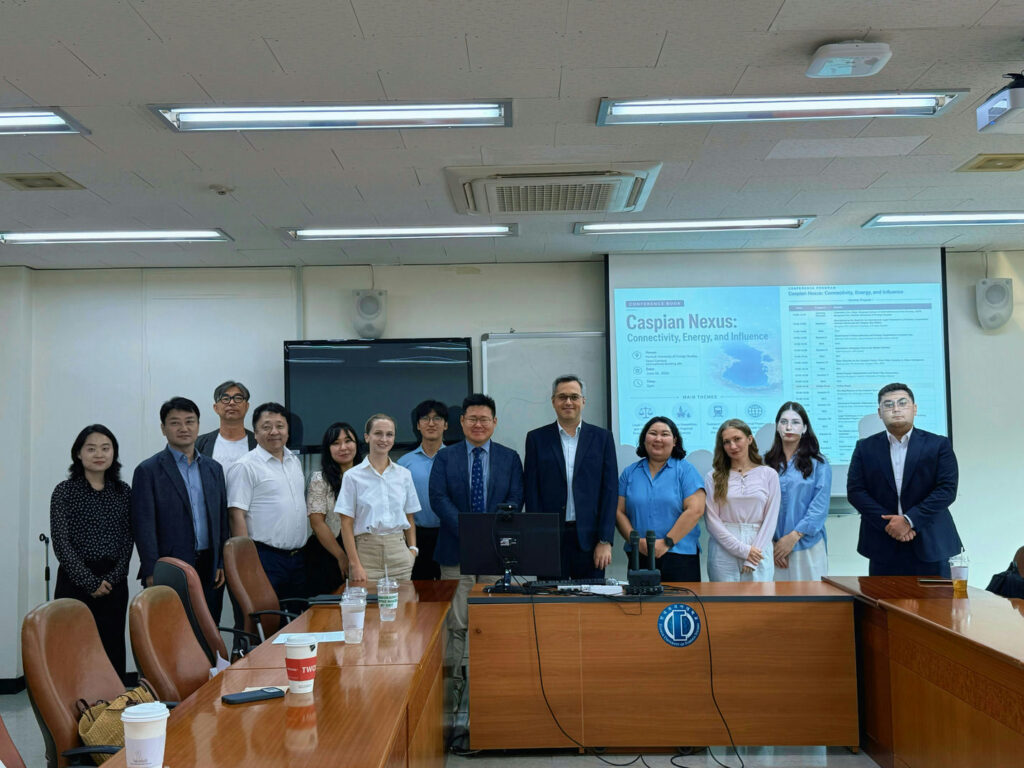
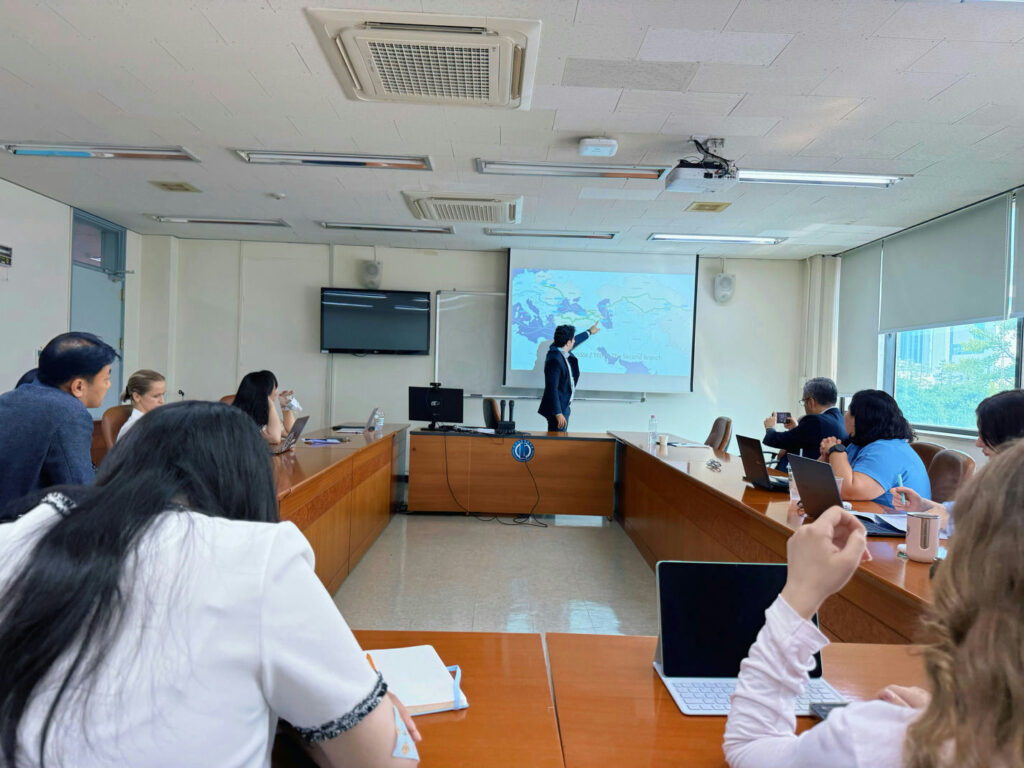
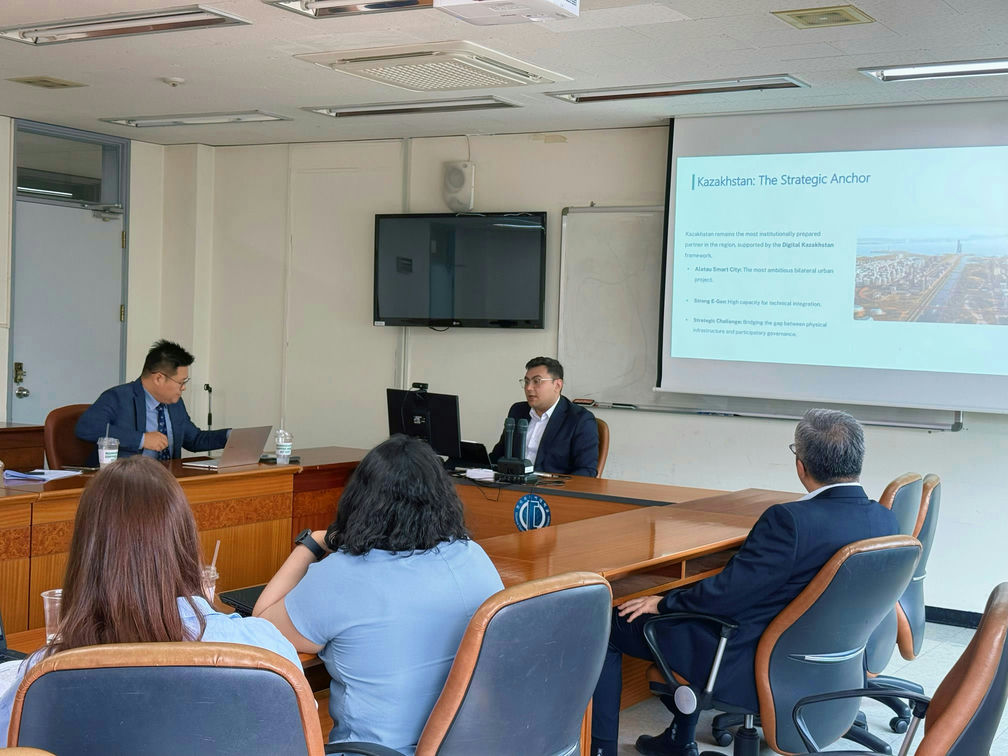
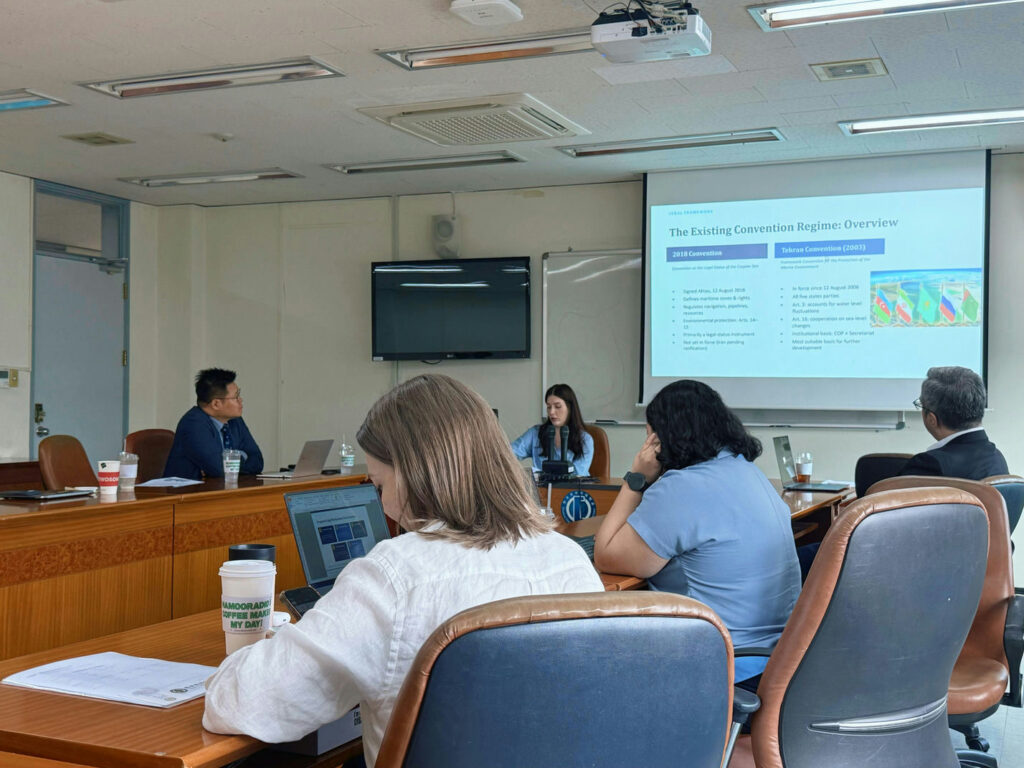
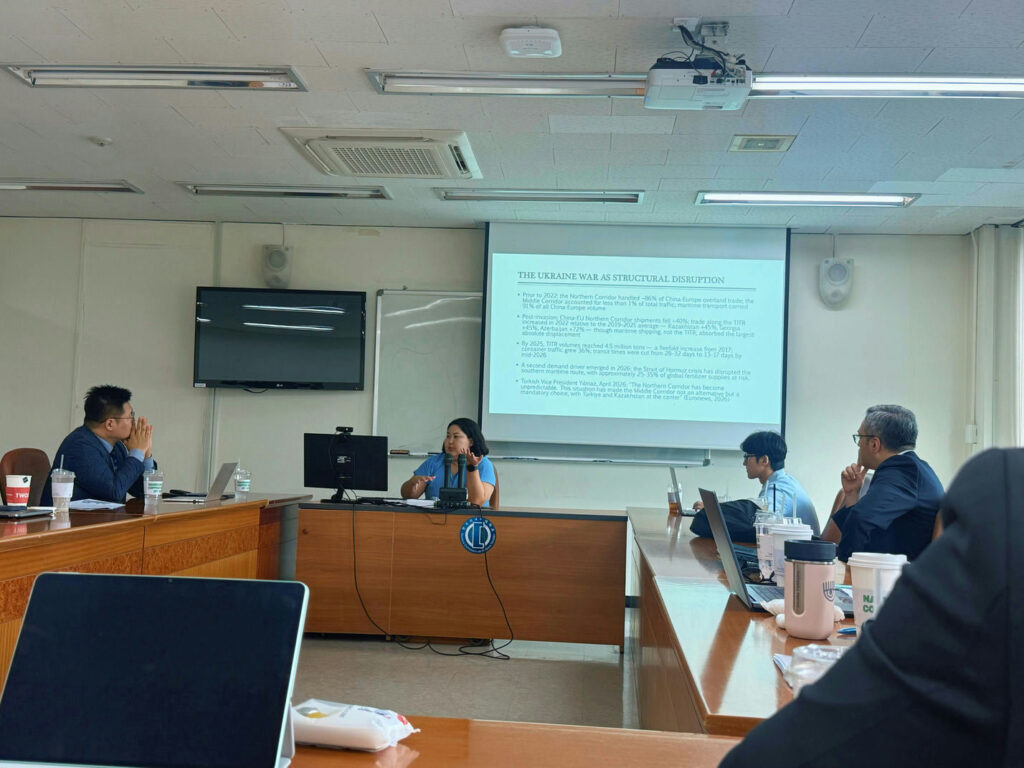
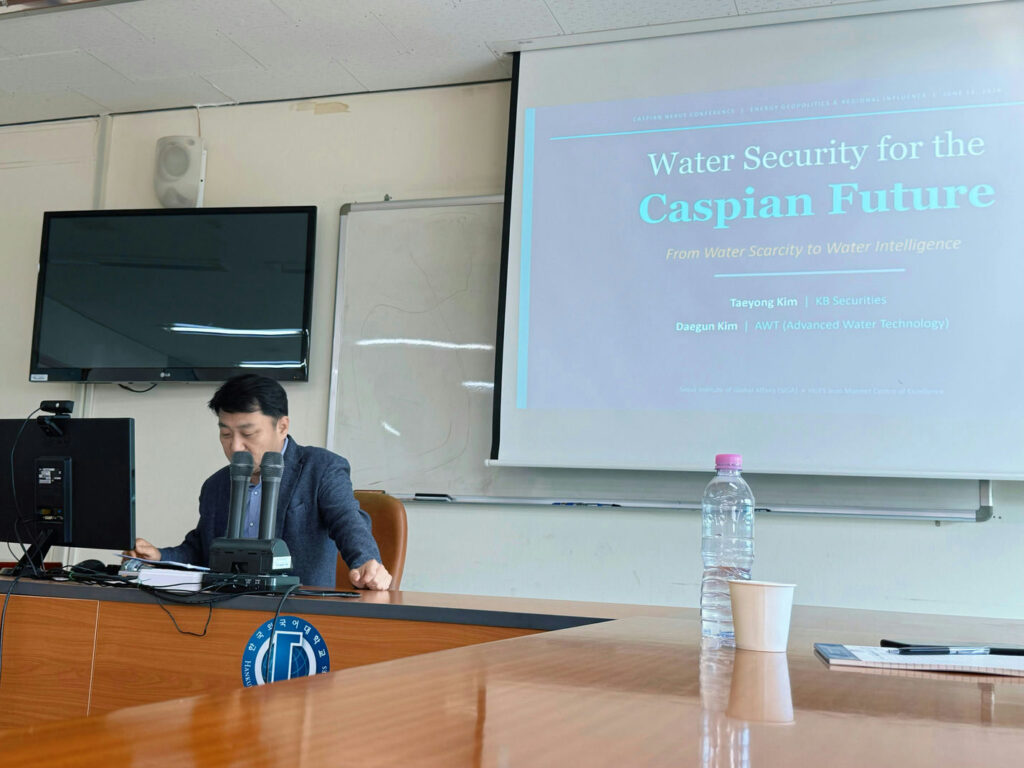
The “Caspian Nexus: Connectivity, Energy, and Influence” conference was held on June 16, 2026, at Hankuk University of Foreign Studies in Seoul. Organized as a platform to examine the growing strategic importance of the Caspian region, the program brought together scholars and experts working on international law, energy security, critical minerals, connectivity, digitalization, water security, and regional diplomacy.
The program opened with remarks by Prof. Dr. Chanwahn Kim, Dean of the Graduate School of International and Area Studies at Hankuk University of Foreign Studies. In his opening speech, he emphasized the increasing relevance of the Caspian region in global affairs and underlined the importance of academic cooperation in understanding the region’s changing geopolitical and economic dynamics.
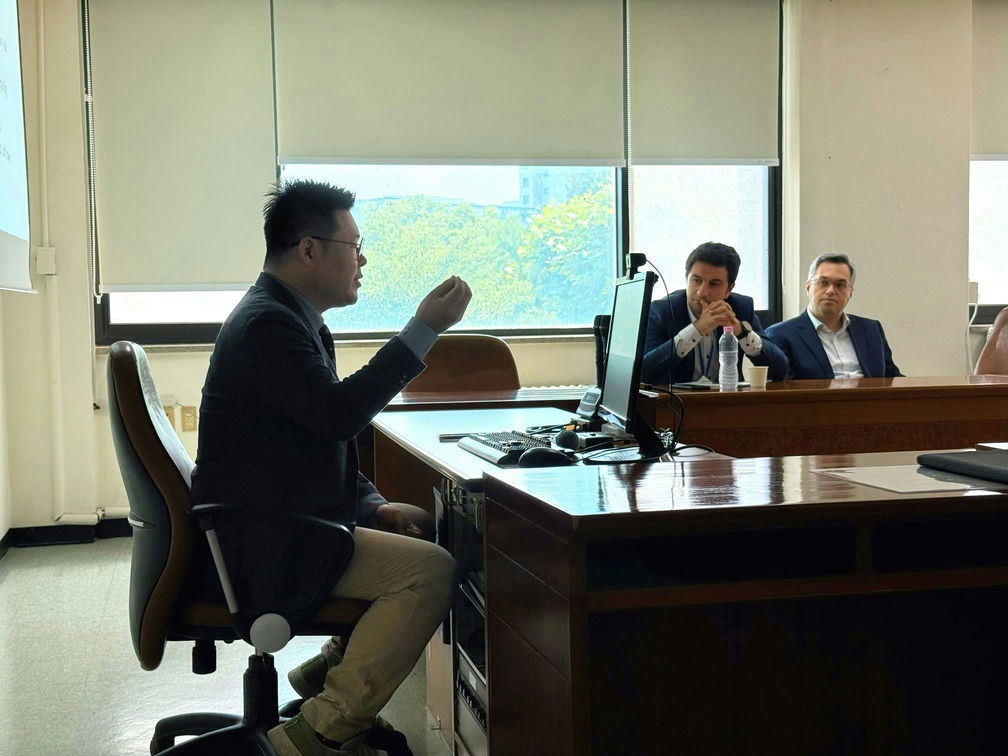
Following the opening remarks, SIGA Director Prof. Dr. Bongchul Kim delivered a presentation titled “Strengthening the Need for an International Legal Framework to Enhance Cooperation between Korea and the Caspian Sea States.” His presentation focused on the importance of developing a more comprehensive international legal framework to support cooperation between Korea and the Caspian Sea states.
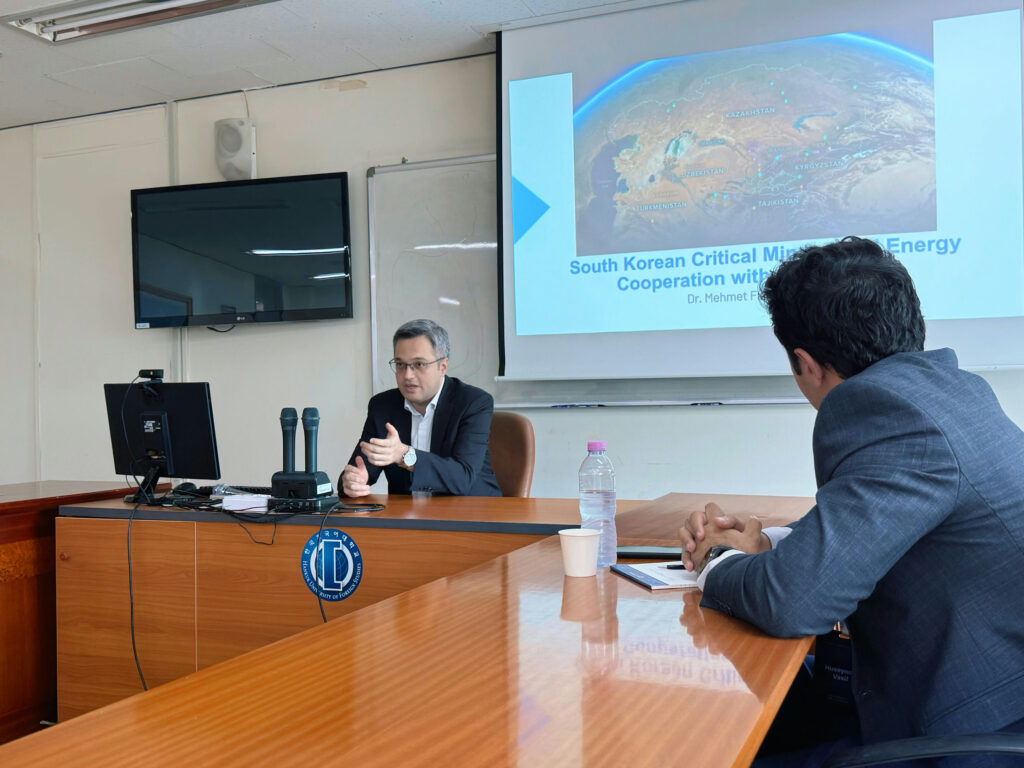
After Prof. Dr. Kim’s presentation, SIGA Deputy Director Dr. Mehmet Fatih Oztarsu delivered a presentation titled “South Korea’s Critical Minerals and Energy Cooperation in Central Asia.” He discussed South Korea’s growing need to diversify its critical minerals supply chains and strengthen its energy partnerships with Central Asian countries.
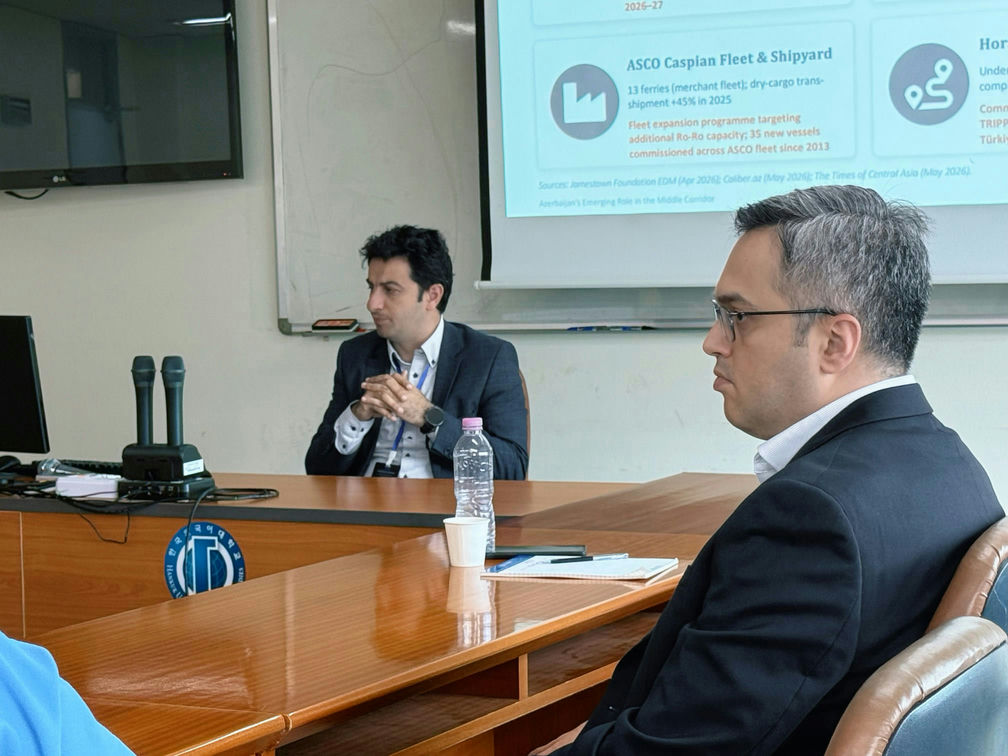
The program then continued with a presentation by Dr. Vasif Huseynov from the AIR Center in Azerbaijan, titled “Azerbaijan’s Emerging Role in the Middle Corridor.” Dr. Huseynov explained Azerbaijan’s increasing importance as a strategic transit hub connecting Asia and Europe.
The program also featured presentations on water security, digitalization, smart city cooperation, China’s foreign strategy toward the Caspian Sea, Germany’s diplomatic approach to the region, environmental challenges in the Caspian Sea, Kazakhstan’s response to Russian transit leverage, and Kazakhstan’s economic strategy in the changing geopolitical environment.
Throughout the seminar, participants discussed how the Caspian region is gaining new importance at the intersection of connectivity, energy security, legal cooperation, digital transformation, and great power competition. The discussions showed that the region is not only a transit space, but also an emerging strategic platform for cooperation between Korea, Central Asia, the South Caucasus, and Europe.