
Introduction
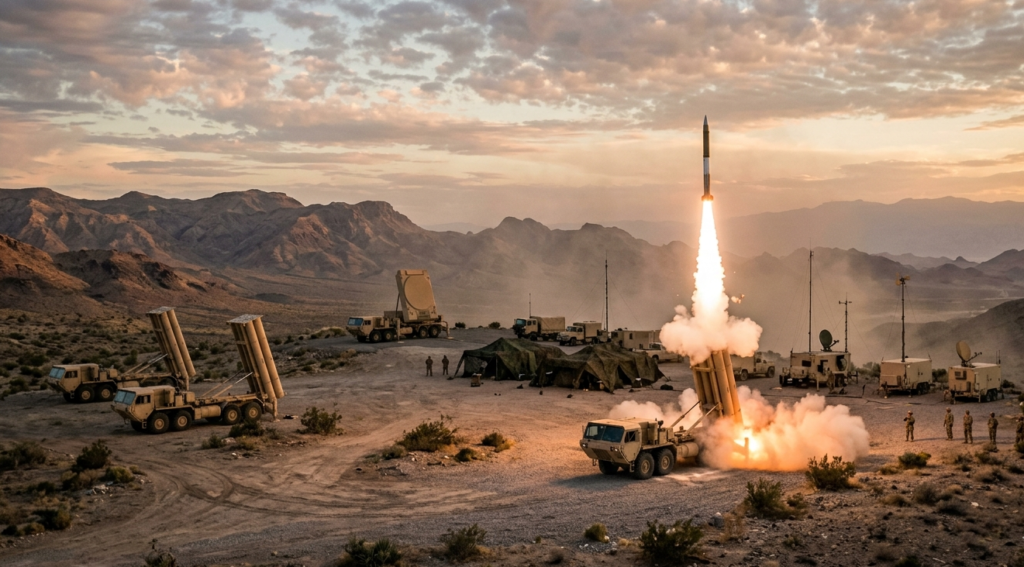
The Korean nuclear debate has been among the hidden political taboos in the Korean political agenda and inter-Korean relations for more than five decades. Yet, President Trump’s decision to re-deploy the U.S. Terminal High Attitude Area Defense (THAAD) system from the Seongju base to the Middle East and North Africa (MENA) have considerable implications not merely for the Korean national security. It is a challenge to the balance of power in Northeast Asia for two reasons. One is the exacerbated security dilemma between the two Koreas with Seoul now facing the prospect of being vulnerable to the Pyongyang regime’s coercive nuclear rhetoric, while the other refers to the consistent rapprochement between the North and the Russian Federation. Furthermore, the weakening of the U.S. deterrent on the Korean Peninsula undermines the credibility of the 2023 Washington declaration and the U.S. – ROK Nuclear Consultative Group. A logical dilemma thus arises from the latest shifts in the balance of power on the Korean Peninsula: to what extent the United States would maintain the capability of projecting extended nuclear deterrence over its Korean ally in a region, where Washington’s interests oppose to those of three nuclear – weapon states: China, Russia and North Korea.
How did inter-Korean relations get from a security to a prisoner’s dilemma?
Cooperation between different parties in a security equation is the cornerstone for all security dilemmas. However, when the decrease of cooperation induces shifts in the strategic postures of the actors, potentially resulting in a situation, where they could find themselves prisoners of that very equation. Since North Korea already acquired weapons of mass destruction (WMD) and South Korea enjoys the ironclad reassurances of the United States under the U.S. nuclear umbrella, the likelihood of both parties to confront seemed like a distant perspective for the Biden administration. The decision of the Korean government not to pursue a policy of nuclear armament introduced Seoul’s firm compliance with the U.S. Foreign Policy of deterrence in Northeast Asia, while the deterrent force of the deployed THAADs served as a basic deterrent to Kim Jong Un’s nuclear ambitions.
The ongoing war in Iran changed that. Facing the legal pressure of the Qualitative Military Edge (QME) policy, the U.S. President Donald Trump partially re-deployed parts of the U.S. THAAD antimissile system, previously based on Korean soil. Although the North Korean leadership has not yet showed signs of seizing the opportunity to threaten Seoul, China’s stance towards the Taiwan issue, combined with Tokyo’s harsh political rhetoric towards Beijing creates structural preconditions for a regional crisis. Paradoxically, Pyongyang turns out to be the winner of this situation, while Seoul finds itself locked between the security challenges arising from the U.S. military preoccupation with Iran, China’s move towards reunion with Taiwan and Takaichi’s aspirations to balance between keeping Japan’s strategic alliance with America, while rethinking the Yoshida doctrine.
The security dilemma, dividing the Korean Peninsula thus transforms into a prisoner’s equation, where the strategic postures of Seoul and Pyongyang tilts from cooperation to confrontation. The reason lies not merely in their willingness to confront. What the West cannot understand about the Korean conflict is that the people of North Korea have never been perceived by South Korea as enemies. It is the leadership of the North, whose assertive nuclear policy could lead the region to the brink of a nuclear crisis. By acquiring weapons of mass destruction, Kim Jong Un’s regime has unilaterally favored confrontation over cooperation and the only variable, which has imposed defensive postures to Pyongyang was the United States and its commitments to Seoul. With a balance of power so fragile – any sign of weakening would make the North Korean leadership even more assertive in its actions. The latter makes South Korea’s task terribly difficult because South Korean policymakers now face the choice of either reassuring the unpredictable, nuclear-armed North in the positive future of the inter-Korean dialogue or switch to offensive stance.
President Trump’s Squid Game: What the United States cannot get about Korea?
It will be truly misleading to assume that Washington has lost political incentives to provide Korea with the ultimate deterrent. However, it is important to distinguish between having the political will to secure your allies and the objective capability for achieving it. If we assume that the United States are still in possession of the resources to consult and support their Korean allies in case of an imminent danger, then manifestation of military power and joint U.S. – Korean drills, involving U.S. aircraft carriers would be the best way for the Trump administration to proceed with Freedom Shield 2026. Aside from the demonstration of power, however, there three aspects of inter-Korean relations that have been consistently neglected by many Presidential administrations.
The first one refers to the nature of the Korean conflict. It can no more be described as a frozen conflict, with one party having nuclear missile, able to strike the South Korean capital. It is now a game of survival. Although the North Korean regime is fully aware of the consequences, Washington underestimates the sense of invulnerability and infallibility, commonly attributed to Kim Jong Un and his inner circle. Only South Korean decision-makers are capable of assessing relevant trends in the regime’s dynamics and more particularly – its fear that without its nuclear weapons the Kim’s dynasty will lose its power and supreme status to oppress the North Korean people. The latter is extremely important since Western analysts typically omit the cognitive factor when calculating the probability of an inter-Korean conflict.
This leads us to the second misconception, commonly present in the current U.S. perceptions – labeling Kim Jong Un as a tough guy and dismissing concerns about human rights in North Korea sends a bad signal to all Koreans. Although American policymakers consider political jokes as part of their dictionary, such rhetoric harms the sensitive perceptions of South Korean strategic culture, deeply rooted back to the Korean war. The same logic applies to any potential dialogue with Pyongyang, which would be pragmatic and productive only if the United States acknowledges Seoul’s position.
Finally, many U.S. administrations require South Korea to blindly follow the American foreign policy by firmly confronting with China and aligning with the U.S. global strategic interests. Such demands will have detrimental implications for the image of the United States in the eyes of the Korean people – including Korean policymakers. The concept of sadae is unique feature of the Korean diplomatic tradition with a centuries old tradition that could not be mechanically dissolved in one particular foreign policy line.
From Unilateral Assertiveness to Peaceful Coexistence: EU’s North-South Political Dialogue
History shows that multilateral formats, based on cooperation and dialogue could alleviate security dilemmas and even initiate security transformations in regional complexes, where strategic postures have been exacerbated due to different historical, cultural, and political realities. Such is the case with the two world wars that Europe suffered, being a regional complex of former colonial empire, which have been deadlocked in decades of strategic competition. The end of World War II gave birth to the European Coal and Steal Community (ECSC) – a suis generis economic organization that later evolved into the most advanced supranational entity in global security – the European Union. Even some of the most notable realist scholars admit that supranationalism secured peace on the European Continent by bringing together all former enemies into an economic framework of mutual interdependencies.
The peaceful coexistence and the inter-Korean dialogue have always been the cornerstone of South Korean politics as it is evident from the consistent effort of the Ministry of Unification since its foundation in 1969. That being said, Minister Chung Dong-young concept of a 2+1 Inter-Korean Political Dialogue, mediated by the European Union introduces a new chapter in the Ministry’s mission to secure peaceful co-existence between Seoul and Pyongyang. It is a concept of robust foundations because the process of mediation is based on a simple rule: both parties need to accept the third party as an acting mediator between them. Neither Washington, nor Beijing could enjoy such trust due to objective reasons, deeply rooted in the history of the Northeast Asian regional security complex, although the United States and China are equally interested to avoid a potential further inter-Korean distrust and hostility.
Europe, however, might have that chance because its post-WWII institutionalization experience could reconcile the strategic postures on the Korean Peninsula and bring down the dilemma back to a dormant state, in which an enhanced inter-Korean cooperation paves the way to structural transformations in the regional balance of power. Some opponents of the Sunshine Policy could criticize mediation based on cultural differences between Europe and Korea. However, if in 1914 someone has mentioned to the Germans and the French that they would trade and march together some decades later, Europeans would hardly have believed it. Last but not least, a European-driven mediation for the inter-Korean relations would not seek to either “Europeanize” or “Westernize” Korea. It will merely lay the foundations for a two-plus-one political dialogue that could make war between Korean people far less likely.
Conclusion
Although firm generalizations will not be of help when assessing the present security equation on the Korean Peninsula, it is evident that the preoccupation of the United States with another crisis in MENA sets a dangerous signal for the weakening of their deterrent. The other factors, introduced in this paper in relation to China, Japan, and Russia imply the opening of another stage in the Korean nuclear debate. It might be a step, as void as the previous ones, but it could be also a way to achieve a dichotomous advantage by supporting the U.S. deterrent on the Peninsula, and by balancing the common U.S. – ROK adversaries in Asia.
Potential scenarios about the inter-Korean security dilemma involve three options. First one is a dormant security dilemma, in case of a successful inter-Korean dialogue with consistent European efforts. The future of this option is highly dependent on whether North Korea perceive Europe as an acting mediator. Paradoxically, favorable preconditions for such perceptions are present due to two reasons. One is the policy of balancing that Europe adopts towards America and China, seeking to address challenges coming from the policy of the Trump administration and secure economic ties with Beijing. The other is the Euro-Atlantic tensions that escalated after President Trump threatened to withdraw the United States from NATO – a step that could have severe consequences for the European security.
Alternately, the dilemma could be exacerbated by a similar U.S. weakening in strategic commitments to the Asian allies, setting the preconditions for a military conflict in the region. The dilemma then could be easily ameliorated if the United States are not able to put enough pressure on Pyongyang not to pursue an assertive policy towards South Korea. In such a dangerous situation, the absence of a security dilemma could trigger a spiral model of a military confrontation. Here, it is essential to highlight that even in the possession of the political will to defend its allies, America might find itself in a situation where it could not with much of its strategic resources being depleted by the Iran war.
Finally, the long-running debate about the Republic of Korea, acquiring nuclear weapons thus points into the policy of nuclear hedging. Being one of the few durable democracies in Asia, Korea would not need international approval for adopting a policy of nuclear latency – a step, that has been already taken by dictatorship regimes for the sake of their one survival. The latter is particularly indicative for the difference between Kim Jong Un’s leadership and the democratic governance policy and its consistent principle of building a functioning, pluralistic, and working Korean democracy. A political formula Europe calls “united in diversity”.