The South Caucasus and the wider Caspian region are experiencing a period of rapid geopolitical transformation shaped by shifting power balances, regional connectivity projects, energy diplomacy, and increasing competition among global and regional actors. Recent developments surrounding the Middle Corridor, post-Soviet regional dynamics, the Russia-Ukraine war, and growing tensions involving Iran have further elevated the strategic importance of Eurasia in international politics.
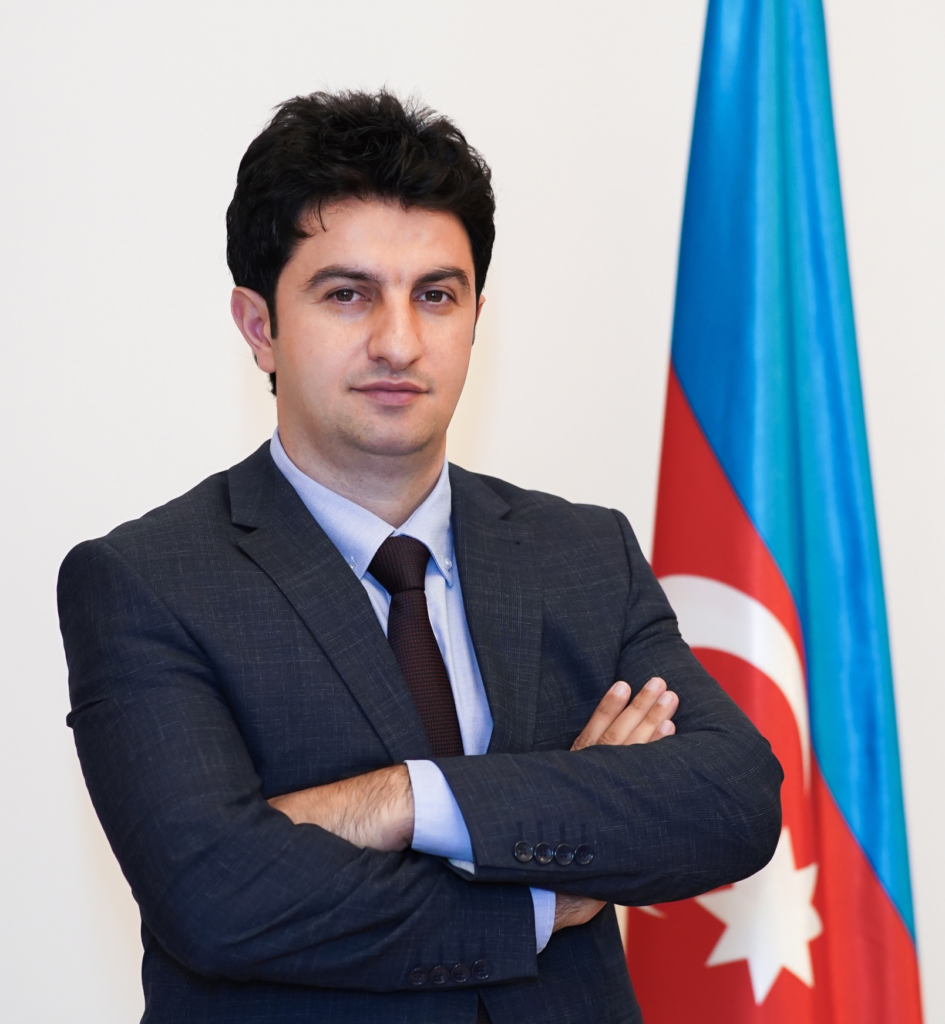
To better understand these developments, we spoke with Dr. Vasif Huseynov, head of department at the Center of Analysis of International Relations (AIR Center), specializing in post-Soviet affairs, regional security, the South Caucasus, and Caspian geopolitics. In this interview, he shares his assessments on the evolving regional order, connectivity initiatives, great power competition, and the broader implications of current crises for the Caucasus and Eurasia.
Q1. In recent years, the South Caucasus has undergone major geopolitical transformations following the Second Karabakh War. How do you assess the current regional order emerging between Azerbaijan, Armenia, and external powers?
The Second Karabakh War of 2020 and, even more decisively, the September 2023 restoration of Azerbaijan’s full sovereignty over the territories formerly occupied by Armenia, fundamentally reset the structural parameters of regional politics. For three decades, the unresolved conflict served as the central organizing principle around which every other regional dynamic, including security alignments, infrastructure choices, external power engagement, was calibrated. That era is over. What we are witnessing now is an accelerated but still incomplete transition toward a genuinely new regional order, one whose final contours are not yet settled.
The most consequential shift has been in the balance between external patrons and regional agency. Russia, which had positioned itself as the indispensable security guarantor and mediator, has suffered a structural credibility collapse in the region. The CSTO, which existed primarily as a Russian instrument for maintaining Armenian dependency, has been effectively abandoned by Yerevan. The August 2025 Washington Joint Declaration, initialled by Armenia’s Prime Minister Nikol Pashinyan and Azerbaijan’s President Ilham Aliyev under US mediation, confirmed that the peace process has largely escaped Moscow’s control. This is an extraordinary reversal in a region where Russia had been the dominant external actor for the past two centuries.
For Azerbaijan, the post-war period has opened strategic options that were structurally unavailable before 2020. The restoration of territorial integrity has removed the principal obstacle to normalization with Armenia and to the operationalization of transport connectivity across Azerbaijani territory, including a land passage (i.e. Zangezur corridor) that will connect mainland Azerbaijan with its Nakhchivan exclave via the southern Armenian territory. Azerbaijan has simultaneously deepened its energy partnership with the European Union — the 2022 Memorandum of Understanding on strategic energy partnership, the subsequent expansion of Southern Gas Corridor supplies, and the emerging Green Corridor renewable energy initiative all reflect a deliberate Azerbaijani strategy of embedding itself as an indispensable European energy and connectivity partner before the post-conflict political architecture fully solidifies.
The role of external powers is in rapid flux. The United States has re-entered the South Caucasus as an active diplomatic force, with the TRIPP initiative and the Armenia-Azerbaijan peace process serving as its primary instruments. The European Union remains the region’s largest economic partner but is institutionally divided — the gap between the EU executive’s pragmatic energy and connectivity engagement with Azerbaijan and the European Parliament’s politically driven resolutions has created a structural incoherence that both Baku and Brussels are struggling to manage. Türkiye has consolidated its role as a direct stakeholder through the Shusha Declaration (2021) and deepening military cooperation with Azerbaijan. And China is emerging as a significant commercial player, particularly through Middle Corridor investment and its Anaklia port consortium involvement in Georgia.
The emerging regional order is therefore not a return to any prior configuration. It is something genuinely new: a South Caucasus in which the largest unresolved conflict is moving toward conclusion, in which multiple external powers are competing on connectivity, energy, and economic terms rather than primarily through security frameworks.
Q2. The Caspian region is increasingly discussed not only as an energy hub but also as a connectivity corridor linking Europe and Asia. Do you think the Middle Corridor can become a sustainable strategic alternative to northern and southern trade routes?
I believe the Middle Corridor has already crossed the threshold from a political aspiration to a commercially viable alternative route — and the trajectory is pointing toward further consolidation rather than retreat. The question is no longer whether the corridor can function, but how rapidly its capacity constraints can be resolved and how durably its political foundations can be secured.
The numbers speak to genuine momentum. Container traffic through the Middle Corridor reached 76,900 TEU in 2025, a 36 percent increase over 2024. Azerbaijan Railways handled 350 block trains from China via Central Asia in 2025, up 34 percent year-on-year. The Baku International Sea Trade Port at Alat processed nearly 97,000 TEU in the first eleven months of 2025, a 40.8 percent increase on the same period in 2024. The completion of the Baku-Tbilisi-Kars railway’s Georgian segment upgrade has raised line capacity considerably. These are not projections — they are documented throughput figures reflecting real commercial decisions by freight operators who have concluded that the corridor is reliable enough to route business through it.
The structural drivers of this growth are durable. The EU ban on cargo transit through Russia, the disruptions to the Red Sea shipping lanes, and European supply chain diversification imperatives have all simultaneously pushed freight operators toward alternatives. The Middle Corridor’s comparative advantage — a sanctions-free, politically stable route that does not depend on Russian infrastructure at any point — becomes more valuable, not less, as the geopolitical environment remains unsettled. The EU Global Gateway initiative has committed €12 billion for Central Asia, with around €3 billion specifically earmarked for Middle Corridor transport connections. The Trump administration’s C5+1 framework and the Kazakhstan tungsten mining agreements signal US commitment to the corridor’s western approach.
To answer your question directly: yes, the Middle Corridor can become a sustainable strategic alternative, and it is already functioning as one.
Q3. The concept of TRIPP — the Trump Route for International Peace and Prosperity — has attracted growing attention. What opportunities and risks do these initiatives create for the Caspian basin and wider Eurasia?
TRIPP is, in my assessment, the most strategically consequential connectivity initiative in the South Caucasus since the Baku-Tbilisi-Ceyhan oil pipeline. It is significant not only because of what it would physically connect — mainland Azerbaijan through Armenia to Nakhchivan and onward to Türkiye — but because of what its operationalization would optimize the Europe-Asia land road connectivity by reducing transit time and offering an alternative to traditional routes.
The opportunity it creates is multidimensional. For Azerbaijan, TRIPP resolves a long-standing geographic fragmentation by creating a contiguous land corridor between the main territory and the Nakhchivan exclave, opening direct rail and road connectivity to Türkiye without dependence on Iranian or Georgian transit. For Armenia, it provides what no other connectivity arrangement can: a western route to international markets that directly connects the country with a NATO member. For the wider corridor system, TRIPP adds a second east-west spine through the South Caucasus, increasing the Middle Corridor’s total capacity and reducing its vulnerability to disruption at any single point.
The geopolitical opportunity is equally significant. The TRIPP Implementation Framework, announced by Secretary Rubio and Armenian Foreign Minister Mirzoyan in January 2026, signals that Washington has formalized its commitment to the corridor’s operationalization. Combined with the August 2025 Washington Joint Declaration and the Armenia-Azerbaijan peace process, TRIPP is the centerpiece of a US strategy to anchor both countries into a Western-oriented connectivity architecture before the political window closes.
The risks are also substantial and deserve honest assessment. The primary risk is political: the corridor’s Armenian segment requires a stable Pashinyan government to proceed, and the victory of the radical-minded and revanchist opposition groups in the upcoming parliamentary elections in Armenia (June 7) may seriously undermine the Armenia-Azerbaijan peace process, including the implementation of the TRIPP project. A pro-Russian coalition in Yerevan would not merely delay the corridor — it would likely re-escalate the Armenia-Azerbaijan conflict, collapsing the peace process on which TRIPP’s legal and political foundation rests. Azerbaijan’s section of the TRIPP route is nearing completion; Armenia’s stretch is scheduled to begin in the latter half of 2026, but this timeline is contingent on the political conditions that the June election will determine.
On balance, TRIPP represents a genuine structural opportunity for both peace consolidation and connectivity development in the South Caucasus.
Q4. Russia’s influence across the region appears to be decreasing after the Ukraine war. How has Moscow’s changing regional posture affected the South Caucasus and Central Asia?
Russia’s regional influence has not simply decreased — it has undergone a structural transformation that is qualitatively different from the fluctuations we observed in previous periods. What we are witnessing is not a temporary retreat that Moscow can reverse when the Ukraine war ends; it is an accelerating erosion of economic leverage as regional states pursue diversification strategies that were previously impractical or politically too costly.
Russia retains the 102nd Military Base in Gyumri and economic leverage over Yerevan, but both instruments are becoming less effective as Armenia’s strategic calculus shifts. In Georgia, Russia’s influence operates through a different mechanism and here Moscow appears to be more successful. Azerbaijan stands out as the most independent actor in this context, given the fact that Azerbaijan is the only post-Soviet country in Eastern Europe and South Caucasus in which there are no Russian troops and its economy is not dependent on one single actor.
In Central Asia, the picture is more complex. Russia’s economic leverage through labor migration remittances, the EAEU framework, and Gazprom’s energy infrastructure remains substantial. But the regional states have used the Ukraine war and Russia’s international isolation as a window to accelerate diversification — toward China, Türkiye, the Gulf, the EU, and the United States simultaneously.
Q5. Azerbaijan has recently expanded its cooperation with the Central Asian states under the ‘C6’ (Central Asia + Azerbaijan) consultative framework. How do you evaluate Azerbaijan’s role in this new initiative?
Azerbaijan’s formal accession to the Consultative Meetings of the Heads of State of Central Asia — transforming the C5 into a C6 format at the Tashkent summit of November 2025 — is one of the most consequential institutional steps in Baku’s foreign policy of recent years. It formalizes what had been growing de facto connectivity and positions Azerbaijan as the South Caucasus anchor of what Uzbekistan’s President Mirziyoyev has described as a ‘solid bridge’ between Central Asia and the wider world.
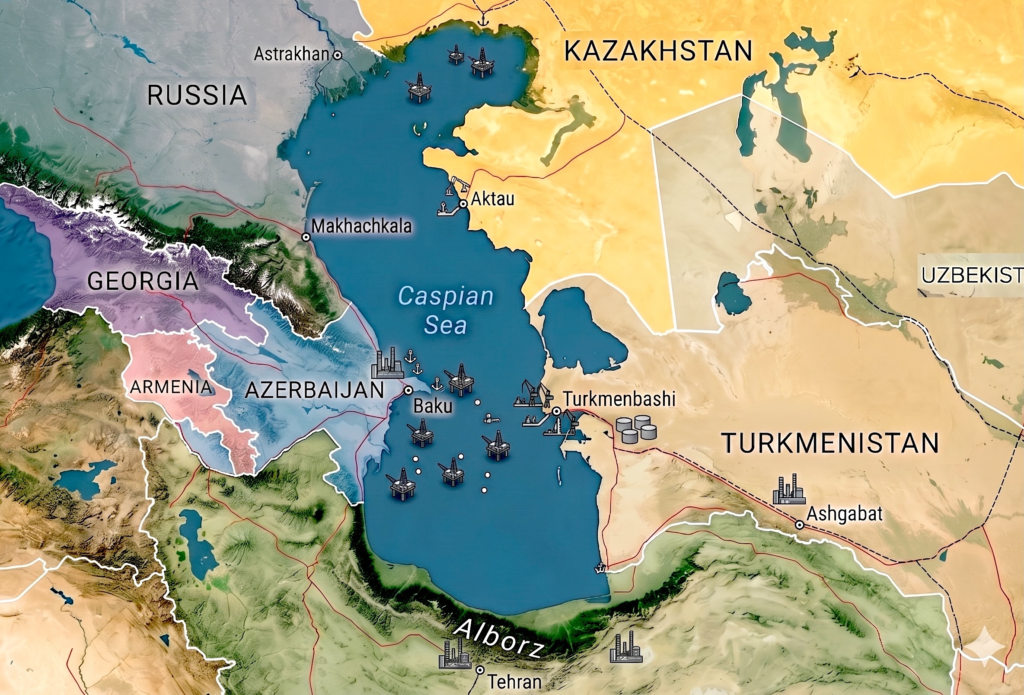
Azerbaijan’s value proposition within the C6 is structural rather than political. Baku sits on the western shore of the Caspian, offering Central Asian landlocked states their most direct access to Turkish ports, the Southern Gas Corridor, European energy markets, and the Baku-Tbilisi-Kars railway. The Alat Free Economic Zone and the Baku International Sea Trade Port function as the natural western terminus of the Trans-Caspian corridor.
What distinguishes Azerbaijan’s C6 membership from a simple bilateral upgrade is the agenda-setting dimension. As a full member rather than an invited partner, Azerbaijan now co-authors the framework’s priorities rather than responding to them. This matters particularly for infrastructure coordination, corridor governance, and the harmonization of trade and transit rules — domains where Baku’s interests align with Central Asia’s westward connectivity aspirations and where the C6 can develop into a genuine institutional voice in negotiations with external partners including the EU, China, and the United States.
Q6. Competition among global powers in the post-Soviet geography is intensifying once again. In your opinion, what role will actors such as China, the European Union, and Türkiye play in shaping the future of the Caspian and South Caucasus regions?
The South Caucasus and Caspian basin are no longer a periphery of great power competition — they have become one of its principal arenas. The convergence of energy security, critical mineral supply chains, Eurasian connectivity, and the post-Soviet political realignment created by the Ukraine war has concentrated the strategic attention of every major external actor on a region that, for much of the post-Cold War period, was treated as a secondary theatre.
The European Union’s engagement has deepened significantly, though it remains structurally complicated by its internal divisions. At the executive level, the EU has bet heavily on Azerbaijan as an energy diversification partner: the 2022 MoU committed to doubling Azerbaijani gas supplies to the EU, additional bilateral agreements on strategic partnership have expanded cooperation into security, digital, and transport domains.
European Council President António Costa’s March 2026 visit to Baku, and the succession of senior European leaders who have visited in recent months, reflect a genuine executive-level commitment to the partnership. The European Parliament’s parallel production of critical resolutions — fourteen since May 2021, by Azerbaijan’s count — represents an institutional incoherence that damages both EU credibility and the partnership’s political sustainability. The tension between these two Europes is one of the defining features of the current moment.
China’s role is expanding rapidly, but through commercial rather than geopolitical instruments. Beijing’s interest in the Middle Corridor is structurally aligned with the corridor’s own expansion logic: China needs westward export routes that do not depend on Russian transit, and the Trans-Caspian corridor provides one. The selection of the China Communications Construction Company (CCCC) consortium as the preferred partner for Georgia’s Anaklia deep-sea port project — if the deal is eventually finalized — would provide China with a Black Sea gateway for the Middle Corridor and a major commercial foothold in Georgian transit infrastructure. Simultaneously, Chinese investment in Kazakhstan’s port facilities at Aktau and in the Kyrgyz-Chinese railway creates complementary infrastructure along the corridor’s eastern approach.
Türkiye’s role is perhaps the most comprehensively consolidated of any external actor. Ankara sits at the western terminus of the entire Eurasian connectivity architecture: the BTK railway, the BTC pipeline, the Southern Gas Corridor, and the TRIPP route all terminate in or transit through Turkish territory. Türkiye is simultaneously a NATO member, a close Azerbaijani ally through the Shusha Declaration framework, a major trade partner for Central Asian states through the Organization of Turkic States, and the primary market access point for any Central Asian country seeking to reach European markets without Russian or Chinese mediation. The normalization process between Armenia and Türkiye opens the possibility of Ankara becoming a direct stakeholder in the Armenian segment of the regional architecture as well, further deepening its strategic position.
The interaction among these three actors produces a competitive dynamic that resists simple characterization. What is clear, however, is that the South Caucasus and the Caspian basin have become a region where no single external power holds unchallenged dominance, and where the very multiplicity of competing interests creates space for regional states to exercise genuine strategic agency.
For Azerbaijan, this environment is more navigable than it might appear: Baku’s multi-vector foreign policy tradition, its indispensable position in the energy and connectivity architecture, and its demonstrated capacity to manage relationships with the EU, Türkiye, Russia, and China simultaneously give it a degree of strategic optionality that few states of comparable size enjoy. The central challenge for the coming decade is not choosing between these external partners but ensuring that their competing engagements deepen Azerbaijan’s and the region’s economic foundations and institutional capacities rather than reducing regional states once again to arenas of rivalry over which they exercise little control.
Q7. Looking ahead to the next five to ten years, what are the main political, economic, and security trends that scholars and policymakers should closely monitor in the wider post-Soviet space?
I would identify three trends that I consider structurally defining for the post-Soviet space over the next decade, and which deserve sustained scholarly and policy attention that they are not yet receiving in proportion to their importance.
The first is the institutionalization of multi-vector foreign policies across the post-Soviet space. The Ukraine war has demonstrated, conclusively and at enormous cost, the dangers of dependence on a single external patron. Every regional state — including those that remain formally aligned with Russia through the CSTO or the EAEU — has drawn this lesson and is actively building relationships with alternative partners. Kazakhstan’s simultaneous EAEU membership, C6 participation, C5+1 engagement with the US, and Belt and Road cooperation with China is the most visible example, but the pattern is generalized. Policymakers in Brussels, Washington, and Beijing should monitor whether this multi-vectorism produces genuine strategic autonomy or merely more sophisticated forms of dependence.
The second trend is the critical minerals dimension of Eurasian connectivity. Central Asia possesses one of the world’s largest accumulations of critical mineral reserves — tungsten, uranium, rare earths, lithium — whose strategic importance is only beginning to be reflected in Western policy attention.
The Trump administration’s USD 1.1 billion Kazakhstan tungsten agreement and the EU’s EUR 12 billion Global Gateway Central Asia package both reflect an emerging understanding that securing supply chains for the energy transition and defense industrial base requires engagement in post-Soviet Central Asia. The bottleneck is transit: Central Asian minerals are strategically consequential only if they can reach Western markets through routes that bypass Russian and Chinese territory. The Middle Corridor is the only viable option — which is precisely why Russia’s strategy of degrading Georgian and Armenian reliability is, at one level, a strategy aimed at severing Western access to Central Asian critical mineral supply chains.
The third trend — and in some respects the most encouraging one — is what I would call the emergence of genuine regional ownership over South Caucasus and Central Asian affairs. For most of the post-Soviet period, regional states were primarily objects of external power competition rather than architects of their own strategic environment. That is changing. The C6 format, Azerbaijan’s active role in shaping the Middle Corridor’s institutional architecture, the Armenia-Azerbaijan peace process reaching a framework agreement through direct bilateral negotiation supported by — rather than dictated by — external mediators, and the growing coordination among Central Asian states on shared infrastructure, environmental, and security challenges all point toward a qualitatively different regional dynamic.
The Armenia-Azerbaijan Washington Declaration of August 2025 is perhaps the clearest illustration: the two countries initialled an agreement not because Russia or the EU imposed a settlement, but because their own strategic interests had sufficiently converged to make a negotiated outcome preferable to continued confrontation. Regional ownership does not mean the absence of external engagement — on the contrary, it means that regional states are increasingly capable of selecting, shaping, and conditioning that engagement rather than simply receiving it. Scholars and policymakers should monitor whether this trend consolidates into durable institutional forms, or whether external power competition succeeds in fragmenting it before it matures.
About Dr. Vasif Huseynov:
Dr. Vasif Huseynov is Head of the Western Studies Department at the Center of Analysis of International Relations (AIR Center) in Baku and Adjunct Professor at Khazar University. He holds a PhD in Political Science from the University of Göttingen (cum laude) and is the author of a monograph on geopolitics and the South Caucasus published by Ibidem/Columbia University Press (2019). His research focuses on post-Soviet affairs, regional security, EU-Azerbaijan relations, and Eurasian connectivity.