
Over the past two decades, Turkey has quietly constructed one of the most effective soft power instruments in the broader Middle East. This influence has not been built through conventional diplomacy or military presence, but through cultural production, particularly television dramas and films. Across the Arab world, Turkish series and movies have evolved into a powerful shaping perceptions, consumer behavior and even political discourse.
The scale of this phenomenon is striking. Turkish television productions today reach close to one billion viewers across nearly 170 countries, placing Turkey among the top global exporters of scripted content. Especially in the Arab world, their penetration has been both early and deep. Surveys have shownthat global demand for the Turkish dramas increased by 184%after 2020.
The Breakthrough Moment and Cultural Reach
The turning point came in 2008 with the broadcast of Gümüş (known as Noor in Arabic). Its episodes attracted around 80million viewers in the Arab world, an extraordinary figure that rivaled major global sporting events. This was not an isolated success but the beginning of a sustained cultural wave.
Since then, dozens of Turkish productions such as Deli Yürek, Muhteşem Yüzyıl, Fatmagül’ün Suçu Ne?, and Diriliş: Ertuğrul have gained massive audiences from Saudi Arabia to Moroccoand the Gulf states. The Arab world has consistently remained the largest export market for Turkish television content.
Today, roughly 75 Turkish drama series are aired across Arab television networks, cementing their role in everyday cultural consumption. Even during moments of political strain, such as when some Gulf broadcasters temporarily pulled Turkish content, audience interest did not fade. Instead, viewers migrated to online platforms and streaming services, demonstrating the strength and persistence of their engagement.
Soft Power Through Familiarity and Difference
The success of Turkish productions in Arab societies is rooted in a finely tuned interplay between cultural familiarity and nuanced distinction. Turkish dramas portray a social landscape that is recognizably Muslim, yet comparatively more liberal and flexible in certain dimensions. This duality fosters both a sense of identification and a compelling curiosity among viewers.
Studies on Arab audiences suggest that Turkish series actively reconfigure perceptions of modernity, gender dynamics, and everyday lifestyles. Characters frequently grapple with the friction between inherited traditions and contemporary ways of living, an experience that deeply resonates in societies undergoing parallel social transformations. This cultural affinity extends into tangible soft power effects. The popularity of theseries has demonstrably influenced tourism flows, with noticeable increases in travel from Arab countries to Turkeyfollowing the broadcast of widely watched shows. Iconic settings such as Istanbul, Pamukkale, Mardin, Ephesus, Trabzon and Cappadocia have evolved into widely recognized cultural signifiers across the Arab world.
The economic dimension further amplifies this trajectory. Turkey’s television export revenues have exceeded $1 billionannually, with projections approaching $2 billion. This growth underscores not only the global reach of Turkish media but also the increasing commodification of cultural influence.
What began as a market-driven phenomenon has gradually acquired strategic significance. Turkish policymakers increasingly recognize the role of media exports in shaping regional perceptions. Television dramas and films function as informal ambassadors, projecting narratives of Turkish identity, history and social values.
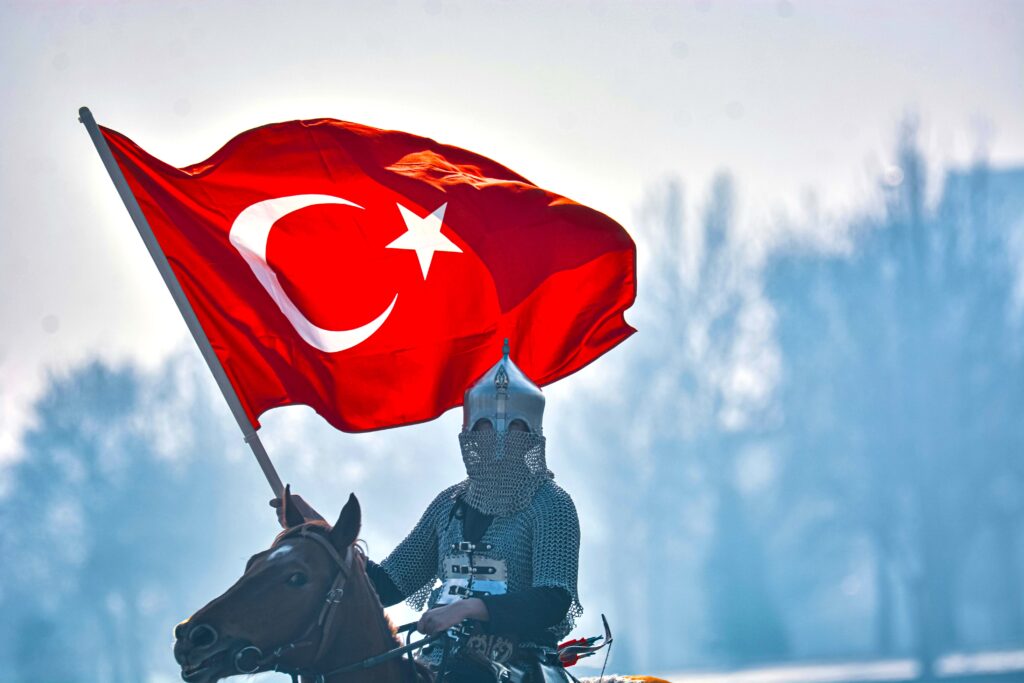
This is particularly evident in historical productions such as Diriliş: Ertuğrul, which emphasize themes of leadership, justice, and Islamic heritage. Such narratives resonate in parts of the Arab world and also Pakistan where identity politics and historical memory remain central to public discourse. At the same time, contemporary dramas portray lifestyles, family culture and rituels, and professional environments that normalize Turkish cultural models. This narrative strategy allows Turkey to appeal simultaneously to traditional and modern sensibilities.
Expanding Beyond Television
The impact of Turkish media now extends far beyond conventional television. Online platforms like YouTube, Netflix, and MBC have significantly expanded its audience, especially among younger viewers in Gulf nations. Turkish productions have secured a strong position within Middle Eastern broadcasting, standing in direct competition with Western, Korean, and local content.
This transformation carries notable consequences. It weakens state control over media distribution while giving audiences greater freedom to choose what they watch. Consequently, Turkish series and films continue to circulate even in regions where political sensitivities might otherwise restrict them. In addition, the popularity of Turkish dramas has started to shape Arab media production. Local adaptations of Turkish dramas have appeared in Arabic, signaling both appreciation and rivalry. This trend indicates that Turkish media is not merely watched, but also absorbed and reimagined within different cultural settings.
Social and Political Reactions
The spread of Turkish media has not been without controversy. In some Arab countries, religious authorities and conservative voices have criticized certain series for promoting values perceived as incompatible with local norms. The dramas sparked public debates mostly in Saudi Arabia and Egypt, illustrating how cultural influence can provoke resistance alongside acceptance. The Turkish officials criticized these attempts of being politically motivated.
Yet these reactions have often had limited long-term impact. The persistence of demand suggests that Turkish media has established a durable presence that is difficult to reverse through policy measures alone.
Consumer behavior has also been affected. Fashion, interior design, women appearance and even culinary preferences featured in Turkish productions have found audiences in Arab markets. There are some specific academic researches focusing on this issue. This creates indirect economic benefits, reinforcing Turkey’s broader commercial engagement with the region. At the societal level, Turkish media contributes to the circulation of new ideas about family structures, gender roles, and social mobility. While the extent of this influence varies across countries, it represents a form of cultural interaction that operates below the level of formal politics.
A Sustainable Soft Power Asset?
The long-term resilience of Turkey’s media-based soft power will hinge on a combination of structural and strategic factors. Sustained investment in high production standards, genre innovation, and diversified storytelling will remain critical, as will the ability to expand into new distribution channels and co-production networks. At the same time, competition is becoming more complex, not only from established Western and Korean industries, but also from increasingly sophisticated Arab productions that are narrowing the quality gap.
Political dynamics will continue to influence the conditions under which Turkish media circulates. Although cultural products often travel beyond the constraints of formal diplomacy, prolonged political frictions could complicate licensing agreements, partnerships, and market access. Even so, Turkish content retains a distinctive advantage: it occupies a hybrid cultural space, merging elements of Western-style production with themes and values that resonate strongly across Middle Eastern societies.
Another emerging dimension is the role of digital fan communities and transnational audiences. Social media engagement, fan activities and informal circulation networks have further embedded Turkish series into everyday cultural consumption. This participatory layer strengthens audience attachment and extends influence beyond what traditional broadcasting alone could achieve.
Ultimately, Turkey’s media influence is not defined solely by export volume but by its capacity to connect with viewers across cultural and emotional registers. Its productions skillfully navigate contrasts between the familiar and the novel, the local and the global, while embedding subtle social and cultural cues. This flexibility makes Turkish media both far-reaching and resilient.