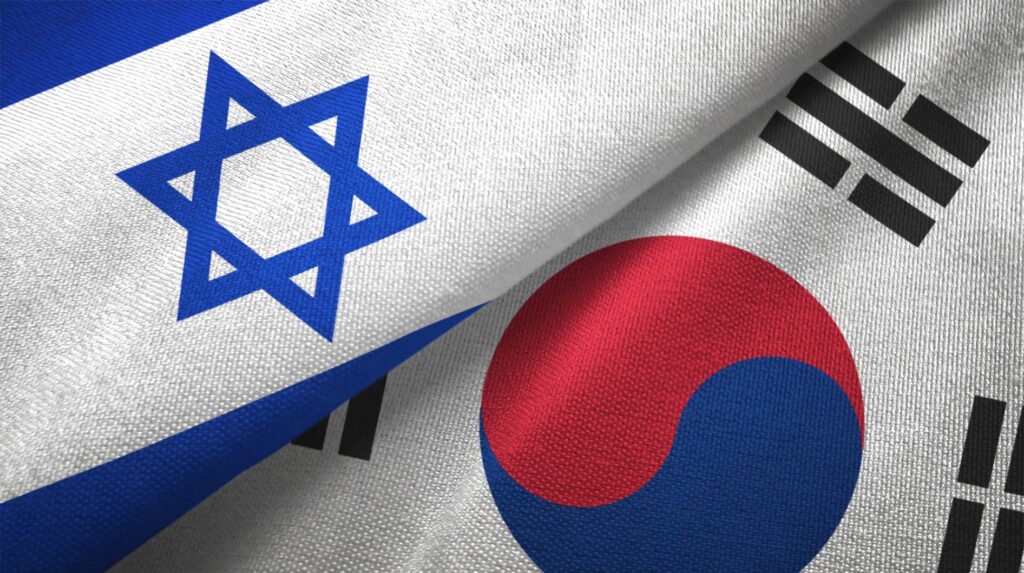

A new diplomatic tension has emerged between South Korea and Israel in recent days. It began after President Lee Jae-myung publicly criticized Israel on social media over alleged human rights violations, sharing a video and drawing comparisons to historical atrocities such as Japan’s colonial crimes and the Holocaust. Israel responded sharply, accusing Seoul of misrepresenting the situation and unnecessarily escalating the dispute.
What makes this tension significant is not only the dispute itself, but the fact that it came from the highest political level in Seoul. South Korea has traditionally maintained a cautious and carefully balanced position on Middle Eastern conflicts, particularly as a close U.S. ally and a country heavily dependent on the region for energy imports. Lee’s unusually direct language marked a notable departure from Seoul’s conventional diplomatic tone.
That shift did not emerge in isolation. Since the Iran war began, Seoul has faced increasing pressure from Washington on both security and alliance coordination. The most consequential moment came in March 2026, when the U.S. planned to transfer air defense systems stationed in South Korea to the Middle East. President Lee openly expressed his opposition over the move and made clear that Seoul had opposed the transfer, even while assuring the public that deterrence against North Korea remained intact.
The symbolism was difficult to ignore: air defense systems long justified as part of the peninsula’s security posture were suddenly redirected to another theater. For Seoul, the issue was not solely operational. It raised serious questions over how quickly alliance priorities could be reordered under U.S. wartime demands.
The pressure intensified when President Donald Trump publicly criticized South Korea’s limited support for U.S. operations linked to the Iran war. The remarks focused on allied contributions and the burden of protecting shipping routes in the Gulf. This was significant because it moved alliance disagreement into the public domain. Washington was signaling that alliance expectations could now reach into the Middle East as well. For the Lee administration, this created a sensitive balance. It could not afford a direct rupture with Washington, yet it also had to respond to growing domestic concerns as the conflict began to affect South Korea’s economy.
Energy Vulnerability and Strategic Pressure
The economic dimension is what transformed the war from a regional crisis into a direct national challenge. South Korea remains heavily dependent on the Strait of Hormuz for crude oil and petrochemical imports. Once the conflict began to threaten flows through this route, the domestic consequences followed quickly.
According to a report by the National Assembly Budget Office of Korea, the country remains structurally vulnerable to instability in the Middle East, with 72.7% of its crude oil imports sourced from the region in 2024, while the Strait of Hormuz continues to serve as the country’s most critical energy lifeline.
The report warns that if tensions escalate further and oil prices rise to around $100 per barrel, South Korea’s trade balance could deteriorate by $40.8 billion, while inflation could rise by 1.3 percentage points. In a worst-case scenario involving severe disruption of Hormuz and oil prices reaching $130 per barrel, the trade balance shock may deepen to $81.5 billion, with inflation rising by 2.0 percentage points.
This explains why the government moved rapidly toward supply diversification and emergency stabilization measures: for Seoul, the crisis is no longer only diplomatic, but macroeconomic and strategic.
Seoul aggressively began diversifying its resource procurement, securing oil from Kazakhstan, Oman, and Saudi Arabia. It has also taken the controversial step of resuming naphtha imports from Russia. The decision to resume imports of 27,000 tons of Russian naphtha reflects the degree to which domestic industrial stability has become a policy priority during the crisis. This internal focus is further evidenced by the government’s unprecedented emergency relief package, which provides up to 600,000 won ($420) in oil crisis subsidies to citizens to prevent social unrest during this period of economic volatility.
As an export-driven and energy-importing economy, Seoul cannot treat instability in the Middle East as a distant geopolitical matter. Once supply chains and fuel security come under pressure, the crisis directly affects inflation, industrial production, and broader market confidence.
The Legacy of Survivalist Diplomacy
This pursuit of strategic autonomy is a revival of a survivalist tradition deeply embedded in South Korean history. During the 1970s oil crisis, the Park Chung-hee administration faced a remarkably similar energy-security nexus. When the global oil shock threatened the nation’s heavy industrial core, Park pursued a policy of diplomatic diversification.
By 1979, the government sought closer relations with the Palestine Liberation Organization (PLO) to secure stable oil supplies from Arab states. This rapprochement with the PLO was a calculated bargaining chip used to safeguard national security and promote a self-reliant defense policy. In a move that marked a shift in diplomatic relations, the Israeli embassy in Seoul was closed in 1978 amid political sensitivities and Seoul’s diplomatic realignment toward Arab oil-producing states.
The historical parallel is striking because the underlying structural pressures remain largely unchanged. In the late 1970s, the rift was exacerbated by the Carter administration’s focus on American troop withdrawals. Today, the return of transactional rhetoric from figures like Donald Trump has revived the “free-rider” narrative and deepened the erosion of strategic trust.
The Middle Power Ascendant
All developments point to more than a temporary diplomatic dispute. They reveal a South Korea that is increasingly willing to defend its own strategic interests even when they do not fully align with Washington’s immediate priorities. The sharper tone toward Israel, Seoul’s visible discomfort over the redeployment of U.S. defense assets, and its rapid move to secure alternative energy routes all suggest a country seeking greater room for independent action.
This is where South Korea’s role as a middle power becomes most visible. Rather than acting as a passive ally, Seoul is signaling political confidence and a growing readiness to shape its own external posture in response to crises that directly affect its economy and security. In this sense, Seoul is not merely managing a crisis, but actively redefining its diplomatic space and strategic agency on the international stage.
This article was originally published at The Diplomat
https://thediplomat.com/2026/04/south-koreas-harder-line-on-israel-amid-energy-shock/