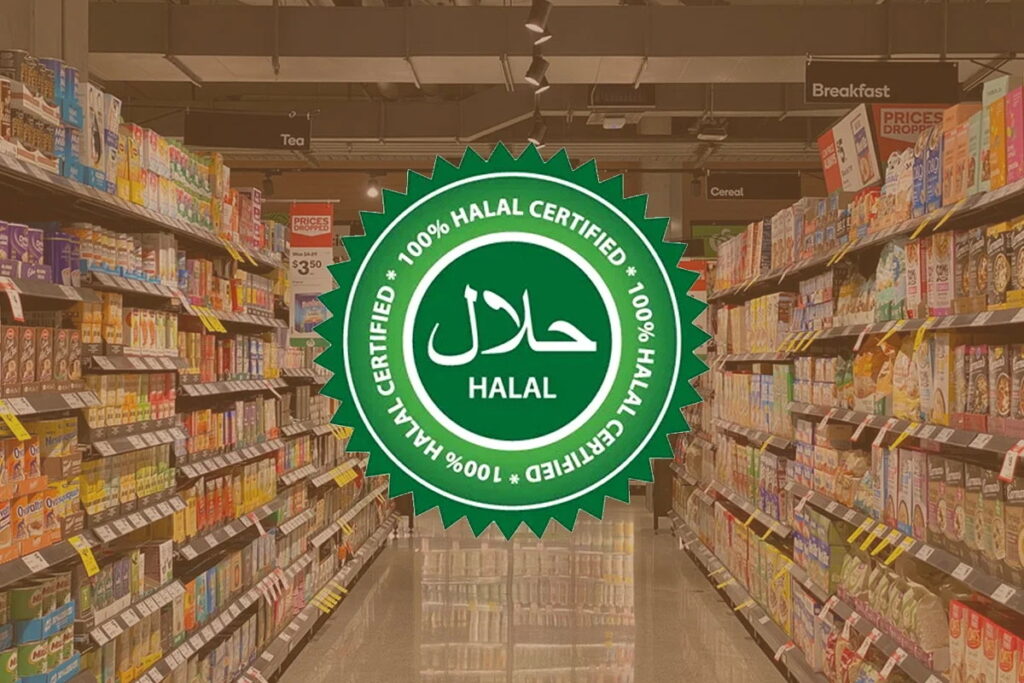
The rapid expansion of the Korean Wave has significantly increased global demand for Korean food products. Indonesia, as the world’s largest Muslim-majority country, represents a major export opportunity for South Korea. However, halal certification presents both a regulatory requirement and a market-entry challenge. This article examines how South Korea’s government and food companies transformed halal compliance into a competitive business strategy. By analysing the interaction between government support, corporate adaptation, and market demand, this article highlights the political economy behind South Korea’s successful expansion into Indonesia’s halal food market.
The global expansion of South Korea’s food industry is deeply linked to the evolution of the Korean Wave (Hallyu). In Indonesia, public interest in South Korean culture began in the early 2000s following the broadcast of hit television dramas such as Endless Love. Over the past two decades, media consumption has surged, and reports indicate that Indonesia currently ranks as the third-largest global consumer market for K-dramas and K-pop.
Frequent exposure to Korean food through television, social media, and online content increased public interest in and consumer demand for Korean food products. Statistical assessments confirm that Korean food has become one of the most popular cultural exports in Indonesia, achieving a 52.5 percent popularity rating among surveyed consumers. Furthermore, over 70 percent of respondents showed strong enthusiasm for and regular interest in consuming K-food products, placing food alongside cosmetics and music as a top-tier cultural export.
Despite the growing popularity of the Korean Wave, popularity alone was not enough for Korean food products to enter the Indonesian market successfully. The main challenge came from Indonesia’s religious and regulatory environment. As the world’s largest Muslim-majority country, with more than 280 million people and about 87 percent of the population identifying as Muslim, Indonesia requires food products to meet halal standards. Thus, halal certification is not simply a consumer preference but an essential requirement for market entry. In Indonesia, halal standards have developed beyond a religious obligation and have also become an important part of the country’s food regulations, serving as a quality-assurance system for consumers. To obtain halal certification, food products must comply with specific requirements covering ingredients, production processes, manufacturing facilities, and distribution.
However, many Korean processed food products traditionally use ingredients that do not comply with halal standards. Many processed foods contain flavour enhancers, emulsifiers, or preservatives derived from pork, while traditional Korean seasonings often use cooking wine (mirin). These ingredients prevent products from meeting Indonesia’s halal requirements without reformulation. Under the regulations established by Indonesia’s BPJPH and MUI, a finished food product cannot achieve halal certification merely by omitting pork from its final recipe. The standards mandate end-to-end supply-chain integrity, requiring raw-material sourcing, processing aids, storage facilities, and transportation channels to maintain zero risk of cross-contamination. To address this issue, structural reorganisation is needed in both government support mechanisms and corporate production practices.
From Market Opportunity to Regulatory Challenge
Although Indonesia offered a promising market for Korean food exports, obtaining halal certification posed significant financial and administrative challenges, particularly for small and medium-sized enterprises (SMEs). Since overseas certification requires substantial costs and compliance with foreign regulations, government intervention became necessary to reduce these barriers and improve firms’ competitiveness in international markets. To address this issue, the South Korean government introduced support programmes covering part of the costs of obtaining overseas certifications, including halal certification. These programmes were designed primarily for SME exporters, reducing the financial burden associated with entering overseas markets. The government initially supported around 50–70 percent of certification costs through its overseas certification assistance programmes for SMEs.
In December 2025, Ministry of Agriculture, Food and Rural Affairs (MAFRA) established the Overseas Export Support Centre within the Korea National Food Cluster to provide integrated assistance, including pre-assessment, technical verification, local certification, and market-entry support. One month later, in January 2026, the government reorganised its halal food export consultative body by involving exporting companies alongside halal certification organisations. MAFRA also announced an increase in the overseas food-certification budget from KRW 6 billion to KRW 7 billion. At the same time, certification support ratios were expanded from 70 percent to as high as 80–90 percent, while consulting services from local experts were introduced to help Korean exporters navigate overseas regulatory systems.
How Korean Companies Adapted
While government support reduced institutional barriers, successful market entry ultimately depended on how Korean food companies adapted their products and production systems to Indonesia’s halal regulations. First, companies focused on product reformulation. Korean companies searched for alternative raw materials and replaced non-halal components with plant-based or synthetic options. They carefully verified every ingredient, flavour enhancer, and additive to ensure that all raw materials fully satisfied Indonesia’s halal standards. Beyond reformulating products, companies also invested in production facilities dedicated to halal exports. Samyang Foods, for example, completed an export-only production line in Miryang in 2022 to respond more efficiently to growing overseas demand. The company also strengthened its halal strategy by obtaining halal certification and developing products specifically for international markets. As a result, in 2024 Samyang Foods recorded approximately USD 700 million in exports, demonstrating the commercial potential of combining halal compliance with expanding global demand.
In the short term, these coordinated efforts have strengthened South Korea’s position in Indonesia’s halal food market. Government support reduced the financial burden of obtaining halal certification, while companies adapted their products and production systems to meet local regulatory requirements. As a result, Korean food products became more accessible to Muslim consumers and gained greater acceptance in the Indonesian market. This halal recognition helps build consumer trust, encouraging long-term customer loyalty rather than one-time curiosity. In addition, it has contributed to increasing export opportunities for Korean food manufacturers, particularly SMEs that previously faced difficulties entering overseas markets because of certification costs and administrative procedures.
In the long term, relying only on the popularity of the Korean Wave is not enough because cultural trends can change over time. By providing clear halal support programmes and dedicated manufacturing lines, South Korea helps food companies build a stable business model for overseas markets. This approach allows Korean exporters to open new trade opportunities in Muslim-majority countries across Southeast Asia and the Middle East. Over time, closer partnerships between South Korean agencies and foreign regulatory bodies can also help simplify certification steps for future exporters. Furthermore, this halal strategy can also be applied to other export products, such as Korean cosmetics (K-beauty), which face similar halal regulatory requirements in target markets.
Despite these achievements, maintaining halal certification requires continuous compliance with changing regulations, regular audits, and additional production costs, especially for smaller companies with limited resources. At the same time, competition in the global halal food market is becoming increasingly intense as more countries and international brands target Muslim consumers. Nevertheless, significant opportunities still exist, as Indonesia continues to offer strong market potential because of its large Muslim population and sustained interest in Korean culture. If South Korea continues to combine government support with corporate innovation and effective market adaptation, its halal food industry is likely to strengthen its position not only in Indonesia but also in the broader global halal market.
South Korea’s expansion into Indonesia’s halal food market demonstrates that international market success depends not only on consumer demand but also on coordination between government policies and corporate strategies. While the Korean Wave created strong demand for Korean food products, halal certification initially posed a significant institutional barrier to market entry. Through financial assistance, certification-support programmes, and closer cooperation with regulatory institutions, the South Korean government helped reduce these barriers. At the same time, Korean food companies adapted their products and production systems to comply with Indonesia’s halal requirements, allowing them to access one of the world’s largest Muslim consumer markets.
Looking ahead, maintaining this competitiveness will require continuous cooperation between government agencies, regulatory institutions, and private companies. As halal standards continue to evolve and competition in the global halal food market intensifies, innovation and regulatory adaptation will remain essential. South Korea’s experience demonstrates that successful international expansion depends not only on responding to consumer demand but also on building effective strategies that align business practices with the regulatory environment of target markets. More broadly, this case suggests that international competitiveness is increasingly influenced by a country’s ability to adapt to different regulatory environments. For export-oriented economies such as South Korea, understanding local institutions and consumer expectations is becoming just as important as product innovation itself. The experience of entering Indonesia’s halal food market therefore offers valuable lessons for future export strategies in other Muslim-majority economies.
Khalisha Zukhrufa Hayya Risatmoko
Researcher