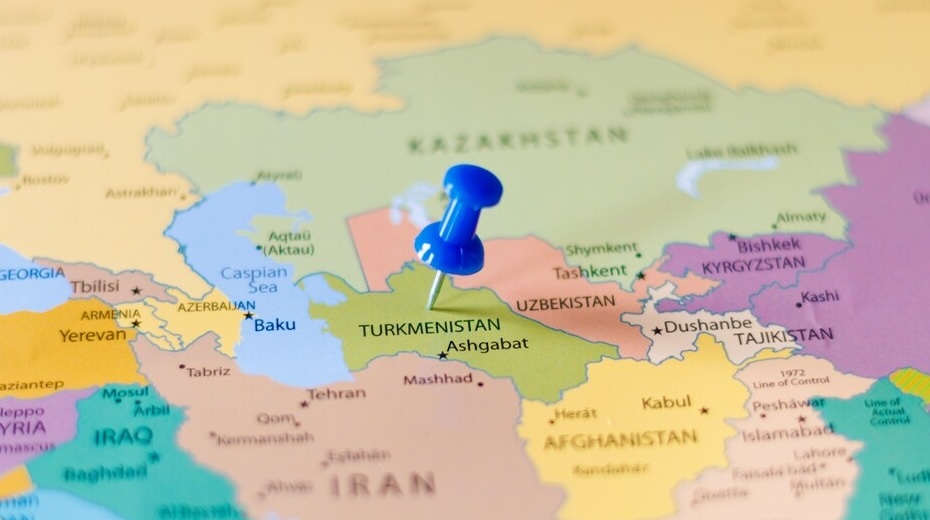

The escalating tensions in the Middle East have once again exposed the fragility of regional order across Eurasia. As airspace closures, disrupted logistics networks and emergency evacuations reshaped mobility between Asia and Europe, Turkmenistan emerges as a rare anchor of stability. By opening transit corridors for foreign nationals exiting Iran and maintaining secure and functional airspace, the country positioned itself as both a humanitarian gateway and a logistical hub at a moment of acute crisis. The growing reliance on Central Asian routes demonstrate that Turkmenistan’s neutrality is not a passive stance but an operational asset with global implications.
This contemporary relevance is rooted in a foundational decision taken on 12 December 1995, when the United Nations General Assembly formally recognized Turkmenistan’s status as a permanently neutral state. Since then, neutrality has evolved into a comprehensive doctrine shaping the country’s foreign policy, security architecture and economic strategy. Rather than aligning with competing power blocs, Ashgabat has pursued a deliberate path of strategic autonomy, insulating itself from geopolitical rivalries while selectively engaging with external actors on the basis of mutual benefit.
Furthermore, the presence of the United Nations Regional Centre for Preventive Diplomacy for Central Asia in Ashgabat further reflects the country’s role as a platform for dialogue and conflict prevention. The selection of the Turkmen capital as the base for this mission was a global recognition of the country’s role as a neutral mediator. By providing a stable venue for dialogue, Turkmenistan has helped mitigate regional water disputes and border tensions among its neighbors without ever becoming a party to the conflicts itself.
The Security Dividend and Economic Development
At the security level, neutrality has generated what can be described as a “stability dividend.” Unlike some other regional countries that have integrated into security frameworks such as the Collective Security Treaty Organization or the Shanghai Cooperation Organization, Turkmenistan has maintained a strict policy of non-alignment and has legally prohibited the presence of foreign military bases on its territory. This distancing has prevented the country from becoming entangled in great power competition and has significantly reduced its exposure to external threats.
The effectiveness of this approach is particularly evident along the country’s 800-kilometer border with Afghanistan. Despite decades of instability and regime change in Kabul, Turkmenistan has maintained a pragmatic and functional relationship with Afghan authorities. Instead of securitizing the border through militarization, it has emphasized trade, infrastructure and energy cooperation. This strategy has allowed Turkmenistan to avoid the spillover of violence and radicalization that has affected other neighboring states, demonstrating that neutrality can function as an active form of risk management rather than simple isolation.
Beyond its immediate neighborhood, Turkmenistan has consistently remained detached from broader geopolitical tensions, including disputes involving Iran and protracted conflicts such as Kashmir. This deliberate distance enables the country to sustain balanced relations with competing actors such as Russia and China without being drawn into zero-sum alignments. In practice, this translates into a foreign policy that prioritizes economic cooperation over ideological positioning, allowing Turkmenistan to interpret external influence through a pragmatic, profit-oriented lens.
From an economic perspective, this stability has translated into consistent growth and resilience. Recent projections from international financial institutions suggest steady GDP growth rates exceeding six percent, moderate inflation and declining external debt levels. This approach is particularly visible in the energy sector. Turkmenistan possesses the world’s fourth-largest natural gas reserves. Rising gas export volumes also indicate that Turkmenistan’s economic model while relatively insulated, remains functional and adaptive.
Neutrality has enabled the country to develop its energy resources while maintaining diversified partnerships. China remains the primary importer of Turkmen gas, with annual volumes reaching around 40 billion cubic meters, yet Ashgabat continues to explore alternative routes and mechanisms, including the TAPI pipeline among Turkmenistan, Afghanistan, Pakistan and India, and gas swap arrangements involving regional partners. In the aftermath of the Ukraine war and the subsequent restructuring of global energy markets, Turkmenistan has gained increased attention as a potential supplier for European diversification efforts.
Additionally, for the U.S. and the EU, Turkmenistan has evolved from a peripheral energy state into a cornerstone of regional security and environmental policy, a shift underscored by specific, high-level diplomatic milestones. Washington’s engagement is anchored in the “C5+1” framework, where Turkmenistan’s role in the Global Methane Pledge has become a primary point of cooperation. This was solidified during the 2023 and 2024 bilateral climate consultations where the U.S. committed technical resources to modernize Turkmen gas infrastructure, a concrete move that integrates Turkmenistan into Western-led climate standards while ensuring its energy remains clean enough for future international markets.
Beyond the environment, the U.S. views Turkmenistan’s pragmatic border management with Afghanistan as a vital non-military barrier against regional extremism; by maintaining trade flows like the TAPI project, Ashgabat provides a stabilizing economic alternative to conflict that aligns perfectly with Washington’s long-term regional security goals.
Simultaneously, the EU has formally recognized Turkmenistan as the linchpin of its Global Gateway strategy. The EU’s approach is evidenced by the talks on the key role of the Port of Turkmenbashi. These are not merely symbolic gestures but formal political mandates aimed at securing a Trans-Caspian energy and logistics corridor that bypasses sanctioned territories. For Brussels, Turkmenistan’s neutral status provides the rare legal and political “safe zone” required for European capital to flow into the Caspian, making Ashgabat an indispensable partner in Europe’s quest for permanent energy independence.
Connectivity and Crisis Resilience
Recent crises have also underscored a less discussed but increasingly important dimension of the country’s position, namely its role as a secure transit and connectivity hub. As traditional routes through conflict-affected areas became unreliable, Central Asia has gained prominence as an alternative corridor linking East and West. Turkmenistan has capitalized on this shift through investments in transport infrastructure, digitalization of freight systems, and participation in trans-Caspian connectivity initiatives. These efforts are transforming the country from a landlocked state into a key node within emerging Eurasian logistics networks.
The aviation sector offers a particularly striking example. During the height of regional instability in the Middle East, Turkmen airspace functioned as a safe corridor for international flights avoiding conflict zones. With modern air traffic systems capable of handling aircraft from over 200 airlines, the country has become an essential component of global aviation resilience.
In theoretical terms, Turkmenistan presents an alternative model of small and middle power behavior in an increasingly multipolar world. Rather than balancing against major powers or aligning with them, it has constructed a framework based on autonomy, stability and selective engagement. This strategy minimizes vulnerability while maximizing room for maneuver, offering a form of realism that is particularly suited to geographically exposed and resource-rich states.
In conclusion, Turkmenistan’s policy of permanent neutrality has evolved into a sophisticated architecture of stability that operates across multiple levels. It secures the domestic sphere, insulates the country from regional conflicts, enables flexible economic partnerships, and increasingly contributes to global connectivity and crisis management. In a period marked by geopolitical fragmentation and uncertainty, Turkmenistan stands out not simply as a neutral state, but as a reliable safe zone whose stability generates wider regional benefits. Its experience demonstrates that neutrality, when institutionalized and strategically implemented, can serve not only as a shield but also as a source of influence and resilience in the contemporary international system.