
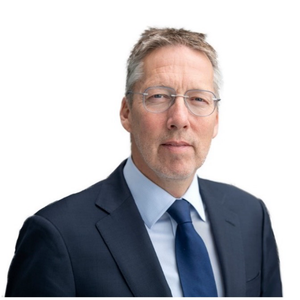
Ambassador Peter van der Vliet serves as the Ambassador of the Kingdom of the Netherlands to the Republic of Korea. A career diplomat, he joined the Netherlands Ministry of Foreign Affairs in 1990 and has extensive experience in multilateral diplomacy, humanitarian affairs, and human rights. He has served at the Netherlands Embassies in India and Jordan, as well as at the Permanent Mission of the Netherlands to the United Nations, where he held senior positions covering development, humanitarian affairs, and human rights. He later served as Director of the Multilateral Organizations and Human Rights Department at the Ministry of Foreign Affairs.
Could you briefly introduce yourself and the Netherlands to our readers? Since arriving in the Republic of Korea as Ambassador, what experience or aspect of Korean society has been particularly memorable to you?
My name is Peter van der Vliet. I am the ambassador of the Kingdom of the Netherlands to the Republic of Korea. My wife and I moved here in August 2023 from Japan. We have three children, who live abroad.
I think the fact that Korea is going through a period of unprecedented worldwide popularity of its K-food, K-pop, K-drama, K-cosmetics as well as a semiconductor super cycle is quite memorable to me. It’s a happening place!
The partnership between the Republic of Korea and the European Union has continued to deepen across a wide range of fields. In your view, what achievement best represents the current Korea-EU relationship, and in which areas should the partnership develop further?
The EU and the Republic of Korea are like-minded partners sharing similar values and common interests. 2010 in particular was a milestone year in EU-ROK relations, when the Strategic Partnership, EU-ROK Framework Agreement and the EU-ROK Free Trade Agreement were signed. This connected our countries and people like never before, marking a substantial deepening of relations across the board.
The EU-Korea relationship has thrived with a significant increase in bilateral trade thanks to our FTA and Korea becoming the first Asian Associated partner country in Horizon Europe in 2025, clearing the way for deeper R&D collaboration.
More recently, the adoption of a Security and Defense Partnership in November 2024 was an important next step, opening up avenues for closer coordination in areas such as crisis management, maritime security, and addressing hybrid and cyber threats.
In January 2026, the EU and the ROK held the first Strategic Dialogue, which led the way to the 11th Leader Summit with President Lee Jae Myung visiting Brussels in early June. During this Summit a landmark Digital Trade Agreement was signed, further cementing the close trade relationship between the EU and Korea.
More than ever, the EU and ROK taking our Strategic Partnership to the next level by enhancing cooperation and coordination on key foreign policy issues, including in security and defense as well as trade.
At a time of increasing uncertainty in the international order, what roles can the Republic of Korea and European countries play together in promoting peace, security, democracy, and a rules-based international order?
The world around us is changing rapidly. The rise of autocrats around the world means that, increasingly, pure power politics is gaining the upper hand. The role of rules and law is under pressure.
Like-minded countries will need to be more united in seeking to strengthen democratic forces, protect the open world economy and promote the international legal order. We need to stand up for our interests worldwide. We will do so on the basis of our values – democracy, the rule of law and individual freedoms.
In this changing world, we ought to take more responsibility for our own defence. That is a challenge that European countries and the Republic of Korea share, making it crucial to deepen our cooperation.
The military cooperation between North Korea and Russia in the ongoing Russian war of aggression against Ukraine illustrates how the security between Europe, and the Korean peninsula is deeply interconnected. Continuing our support to Ukraine and pursuing accountability for Russia’s war crimes is essential for deterring future aggression elsewhere, including in the Indo-Pacific region. We must work together to promote stability and security in the world.
Similarly, the conflicts in Iran and the Middle East also affect our security and prosperity. Supply chain disruptions in the Strait of Hormuz and the Red Sea demonstrate the need to reduce our dependencies and bolster our economic security. This also necessitates coordination and collective action on maritime deployments to safeguarding freedom of navigation in crucial sea lanes and protecting commercial shipping.
What role can exchanges among universities, research institutions, students, and younger generations play in strengthening the long-term foundations of relations between the Republic of Korea and European countries?
We notice that such ongoing exchanges create a lot of mutual learning and mutual understanding.
What message would you like to share with young people and readers in the Republic of Korea regarding Europe and the changing international environment?
I hope young people will see what an interesting continent Europe is.
The Republic of Korea and the Netherlands have strengthened their Strategic Partnership while also sharing a historical bond through the Netherlands’ contribution during the Korean War. What should be the next major goal of the bilateral relationship?
As geopolitical strategic partners, the Netherlands and the Republic of Korea are strengthening and expanding their economic cooperation to contribute to global peace, prosperity and security as well.
We are natural partners in economic security, in part due to our unique roles in the global semiconductor supply chain. We are working closely together to reduce our strategic dependencies while boosting our technological competitiveness and leadership. Another area with great opportunities is defense industry cooperation. European investment in greater autonomy in security and defense is a natural fit with South Korea’s excellent defense industry. Like I said, military cooperation between Russia and North Korea makes it crucial for us to work more closely together as trusted partners.
Semiconductor cooperation has become a defining feature of relations between the two countries. How can the emerging semiconductor alliance support joint research, workforce development, supply-chain resilience, and long-term cooperation between companies and universities?
The Netherlands excels in upstream R&D and foundational precision engineering—anchored by global leaders like ASML in advanced lithography, ASM in atomic layer deposition, and BESI in advanced packaging. Conversely, South Korea leads the world in downstream high-volume manufacturing, advanced memory, and leading-edge logic process nodes.
This creates a highly synergistic and complementary dynamic between our two ecosystems. Indeed, semiconductors already constitute the vast majority of our bilateral trade. Beyond commercial ties, our two nations are aligning policies ever more closely to navigate today’s shifting geopolitical landscape.
Future semiconductor cooperation between Korea and the Netherlands is poised to broaden significantly, particularly in photonics, advanced packaging, and metrology.
As the AI boom demands lower power consumption, better thermal management, and higher chip density, technologies like optical chip-to-chip interconnects and advanced multi-chip integration (chiplet) are becoming critical. The Netherlands holds deep core competencies in these domains. In particular, leveraging the advanced precision technology of ASML’s Tier-1 supply chain will greatly benefit Korea’s semiconductor production capabilities. Given the long R&D lead times required before commercialization, deep collaboration between our universities and research institutes is vital. We are already building momentum through joint programs like the semiconductor summer school with TU Eindhoven, while exploring dedicated bilateral cooperation alongside multilateral platforms like Horizon Europe.
Our Embassy will continue to actively facilitate and support these joint technological endeavors.
The Netherlands has globally recognized expertise in water management, offshore wind, sustainable agriculture, and smart farming. Which practical projects could combine these strengths with South Korean technology and industrial capacity?
For sustainable agriculture, South Korea is shifting from a productivity-oriented model to a sustainable one, becoming a like-minded partner for the Netherlands. Several cooperation projects between the two countries are currently underway or in the planning stages: for instance, the recycling of food waste for insect protein production; R&D for cultivated meat; the development of sustainable energies for agriculture, such as waste heat and aquathermal energy; and the introduction of animal welfare facilities for pigs and chickens.
As for smart farming, the Netherlands is already contributing significantly to high-tech horticulture through climate control, energy, water and nutrition management, and biological control. It also contributes to the smart livestock sector via climate control, milking robots, feeding systems, and health-check systems. Recently, South Korea has been making national efforts toward AI transformation in these areas by developing relevant technologies. Both countries can learn from each other to create synergy in this development.
In water management, the Netherlands and Korea could strengthen collaboration by pairing the Dutch ‘Room for the River’ concept, which gives rivers more space through floodplain restoration and dike relocation, with Korea’s digital twin and AI platforms that enable real-time monitoring, flood forecasting and optimized dam operations. Dutch know-how in nature-based, multi-benefit river planning can guide physical interventions, while Korean smart water systems provide the digital backbone to simulate scenarios, test designs and support rapid decision-making during extreme events.
Offshore wind has become a strong area of cooperation, supported by complementary strengths across the supply chain. Korea excels in substructures, towers and subsea cables, while the Netherlands brings extensive experience in engineering, installation and operations. This alignment has enabled efficient and mutually beneficial collaboration. As offshore wind takes on a larger role in Korea’s renewable energy transition, Dutch expertise can help accelerate offshore wind development in Korea. The partnership also could create opportunities to expand jointly into European and other global markets.
South Korea and the Netherlands have both contributed to international discussions on responsible artificial intelligence, including its use in the military domain. How can the two countries continue to shape global norms for trustworthy AI, cybersecurity, and emerging technologies?
Over the past years the Netherlands and the Republic of Korea have cooperated closely on the topic of the responsible Artificial Intelligence in the military domain. First through the co-hosting of the REAIM Summits and later on also by introducing the Artificial Intelligence in the Military Domain (AIMD) resolutions at the United Nations. Through these processes and resolutions the Netherlands and the Republic of Korea ensured greater international attention for this pressing topic, while ensuring maximum international and multi-stakeholder buy-in.
Furthermore, these initiatives have laid the groundwork for further action through the most recent outcome document ‘Pathways to Action’ and the Global Commission REAIM report ‘Responsible by Design’. Contained in these documents are concrete steps that the international community can take in ensuring that AI is used responsibly within the military domain. Additionally, the processes themselves have also garnered greater international attention and cooperation on this particular topic. This outcome will prove vital in the years ahead to build greater confidence amongst stakeholders and through it move towards a more internationally accepted approaches to responsible AI in the military domain.
Taking into account the uninterrupted and rapid pace of technological developments, it will remain imperative that like-minded middle powers like the Netherlands and the Republic of Korea continue to collaborate on new and emerging technologies. Only through a collaborative and inclusive approach can we guarantee that new technologies – like for instance AI and quantum computing – are used responsibly and to the benefit of the international community. The REAIM process provides an excellent example of how to realize such cooperation.
Dutch museums, design, architecture, and contemporary creative industries are highly regarded in South Korea. What cultural partnerships, artist exchanges, or youth mobility initiatives could create more reciprocal and long-term engagement between the two societies?
From the Dutch perspective, the most promising way to deepen cultural relations with South Korea is to combine public presentations with sustained opportunities for artists and institutions to work together. Exhibitions, performances and showcases remain important because they introduce audiences to new work and often provide the first point of contact. At the same time, our priority is increasingly to create the conditions where Dutch and Korean artists and cultural organizations can build relationships, develop projects together and sustain those relationships over time. The Dutch International Cultural Policy places particular importance on reciprocity. Cooperation should respond to the local context, take place on an equal footing and allow different perspectives to contribute to the development of knowledge and artistic practice.
Meaningful reciprocity begins with recognizing the intrinsic value of culture and respecting artistic autonomy. Cultural partnerships should not be assessed only in terms of immediate visibility, economic benefit or diplomatic value. Artists and creative professionals should be able to identify the questions they wish to explore and to shape their own forms of collaboration. We therefore find it important to also support intiatives whose results may not be immediately visible, by making room for research and development and by opening up opportunities for emerging artists and cultural organizations, alongside established, high-profile artists and institutions.
An example is the Netherlands – Korea documentary co-production fund, established by the Embassy together with the DMZ International Documentary Film Festival last year and now in its second year. The Netherlands has a strong international documentary ecosystem, including International Documentary Film Festival Amsterdam, and a strong tradition of participating in international co-productions. Korea has a wealth of talented filmmakers who use cinema to engage with important social issues and create compelling forms of storytelling. There are also many Korean visual artists and filmmakers based in the Netherlands who have built strong networks. The fund builds on these complementary strengths. Its value lies not only in the completed films, but also in enabling Dutch and Korean creative professionals to develop shared concerns, exchange perspectives and help one another connect to broader international target. Film production often takes several years and requires considerable investment. Projects may change direction or not be realized exactly as initially envisioned. Nevertheless, we believe it is important to accept a degree of uncertainty and create a platform where genuine co-creation can develop, eventually contributing to the cultural industries of both countries.
We have also seen similar long-term effects in artist-in-residency programs and institutional partnerships, such as the MMCA Changdong Residency – Mondriaan Fund fellowship and Arts Council Korea’s partnerships with the Rijksakademie and the Jan van Eyck Academie. These sustained relationships have enabled artists and cultural professionals to understand one another’s working environments and build networks that can lead organically to further collaborative initiatives. Our cultural strategy for Korea has therefore consistently identified residencies, research and institution-to-institution exchanges as important foundations for sustainable cooperation.
Interview conducted via email by Hayann Lee (Deputy Director, HUFS Jean Monnet Centre of Excellence)