On 6 July 2026, Canadian Prime Minister Mark Carney announced that Germany’s Thyssenkrupp Marine Systems (TKMS) had been selected as the preferred supplier for the Canadian Patrol Submarine Project (CPSP). Through this program, the Royal Canadian Navy (RCN) intends to acquire up to twelve new submarines to renew and expand their current fleet. South Korea’s Hanwha Ocean, alongside HD Hyundai Heavy Industries, was named the reserve supplier should talks with TKMS fail. PM Carney has described it as the largest defense procurement in Canadian history, with the submarine project alone estimated at around 20 to 30 billion Canadian dollars. And understanding the reasoning behind this decision is crucial for future Korean bids.
Canadian officials have framed the outcome as a close call between two qualified platforms rather than a clear win. Carney himself described it as “a difficult, close decision between two highly qualified suppliers,” noting that both the TKMS and Hanwha proposals met the RCN’s capability requirements. Several factors led to this decision, including the Type 212CD’s alignment with Canada’s stated Arctic-surveillance and anti-submarine warfare (ASW) mission set, the interoperability benefits of adopting the same design already being built for NATO allies Germany and Norway, and TKMS’s commitment to match Canada’s investment with its own industrial spending. On the other side, South Korea’s KSS-III Batch II model is generally seen as the more heavily armed and operationally proven design. This shows that technological capacity alone is not the only factor taken into consideration, but factors such as compatible military doctrines and alliance integration play a crucial part in decision-making as well.
A Fleet Renewal Driven by Climate Change
The CPSP originated due to a capability gap. Canada’s four Victoria-class submarines, purchased from the United Kingdom in the 1990s, are expected to leave service in the mid-to-late 2030s. As of today, only one remains available for operations, while the other three remain on standby or undergo maintenance. On top of this, Canada borders the Atlantic, Pacific, and Arctic oceans, and its current fleet cannot sustain patrols or operations in more than one theater simultaneously.
As Arctic ice retreats and the region becomes more accessible and contested by other powers, the Department of National Defence has identified stealth, lethality, persistence, and Arctic deployability as the core requirements for the next-generation fleet, including the ability to operate for extended periods under ice. These priorities shaped the bargaining table from the start, which is one reason why Sweden, France, Norway, and Japan withdrew or were not selected, leaving Germany and South Korea as the two finalists by August 2025.
Two Different Design Philosophies
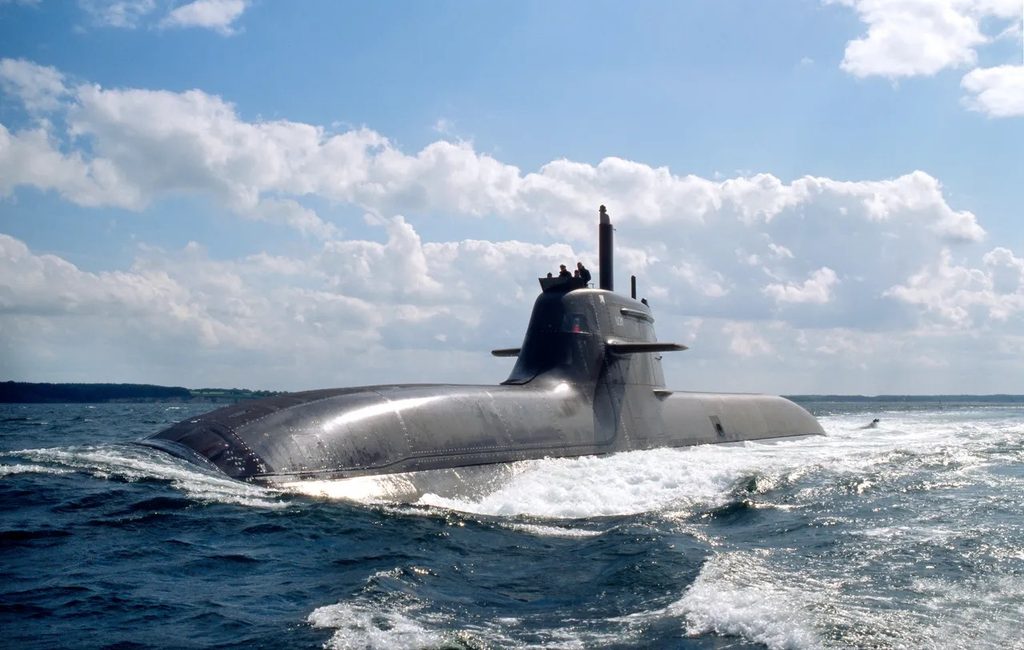
The two designs reflect different naval doctrines. TKMS’s Type 212CD uses a diamond-shaped hull intended to scatter active sonar returns, along with non-magnetic hull materials and a fuel-cell air-independent propulsion (AIP) system optimized for quiet, long-duration submerged operation. Its armament is limited to 533-mm torpedo tubes, with no vertical launch system (VLS). This design is focused on stealth, surveillance, and anti-submarine warfare rather than land-attack strikes.
On the other hand, Hanwha Ocean’s KSS-III Batch II is larger, with a displacement of around 3,600 tonnes surfaced against the Type 212CD’s approximately 2,800 tonnes, and it is equipped with lithium-ion battery-based AIP that enhances high-speed and submerged endurance. It is also already in active service with the Republic of Korea Navy, which reduces the risk of technical and schedule delays while the Type 212CD remains in early production. Most notably, the KSS-III carries a ten-cell vertical launch system capable of firing land-attack cruise missiles and, in South Korean service, submarine-launched ballistic missiles. Essentially, there is a clear contrast in firepower between the two designs.
On paper, KSS-III’s payload and proven service record represent a larger set of capabilities than the Type 212CD provides. But capability and suitability are not the same measure. Canada’s own procurement documents listing RCN requirements emphasize under-ice patrol, surveillance, and persistence over land-attack strike. Thus, evaluation is not made based on each design’s overall theoretical capability, but on how they fit the intended purpose. Analysts have also disagreed over how the RCN would value the KSS-III’s VLS: with some arguing that the added weight, cost, and hard offensive power are not well suited to Canada’s ASW and surveillance-focused doctrine. Meanwhile, others emphasize that securing that additional firepower would have given the RCN a wider range of possibilities for future missions. Whether Ottawa in fact read the VLS as a liability rather than an asset has not been confirmed by Canadian officials; it remains an interpretation based on this wider debate rather than an official declaration for TKMS’s selection.
Weighing Capability Against Fit
It would be an oversimplification to attribute Canada’s choice to geopolitics alone. TKMS’s Type 212CD is being built with the same design as the submarines acquired by Germany and Norway, which Carney mentioned would allow Canadian vessels to “operate seamlessly alongside NATO allies”. TKMS also pledged to match Canada’s spending with industrial investment of its own, alongside efforts to optimize its design to better fit RCN’s ASW and Arctic-patrol mission prioritized by Canada. At the same time, ensuring alliances through interoperability and reduced integration risk are themselves valid criteria for procurement, which does not necessarily mean that capability was disregarded; Canadian officials assessed both platforms as meeting the RCN’s requirements before the decision was finally made.
All in all, the more defensible explanation is not that Germany won on geopolitics while Korea offered the technically superior platform, but that the German bid was judged to align more closely with the specific combination of doctrine, delivery risk, and alliance integration Canada was looking for. That being said, the KSS-III’s firepower and proven service record remain real advantages that kept South Korea competitive enough to be named reserve supplier.
Lessons for South Korea’s Defense Export Strategy
South Korea’s position as a reserve supplier confirms that Korean naval shipbuilding is becoming increasingly competitive in the global market, contending directly for an already established European builder’s biggest defense contract. Nonetheless, the outcome highlights some lessons worth considering for future bids for Western, NATO-tied buyers:
First, focus on aptitude rather than pure capacity. Fast delivery timelines and proven service records are strengths that helped secure Korean ground weapons systems sales in Eastern Europe. However, those carry less weight for naval platforms, where buyers evaluate how closely a design matches a specific doctrine, especially if it is expected to last for decades.
Second, align the proposal to the buyer’s doctrine. Offensive features such as VLS and long-range strike can be key assets for some buyers. Yet, it can prove to be a harder sell for others whose procurement documents emphasize surveillance and defensive patrol. Emphasizing aspects that fit the buyer’s interests is likely to receive a more favorable response.
Third, build deeper institutional ties with other NATO members. Formal bilateral defense-industrial agreements with NATO members can help ensure technical capability meets the alliance integration needs that weighed in Canada’s decision.
Fourth, remain on stand-by as reserve supplier. Canada’s agreement ensures Hanwha’s position as a backup to enter negotiations if talks with TKMS do not lead to the formalization of a contract. Maintaining production and financial readiness for that possibility remains necessary.
Broadly speaking, the CPSP outcome suggests that future attempts to expand further into Western defense markets for major contracts will require South Korean shipbuilders to present not only raw capability and delivery speed, but a proposal that is compatible with the buyer’s current military doctrine and alliance infrastructure.
Jongwoo Baek
Researcher