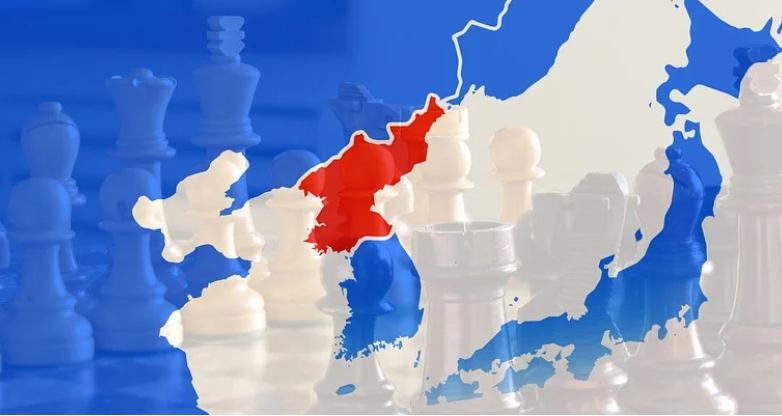

North Korea’s withdrawal from the Treaty on the Non-Proliferation of nuclear weapons in 2003 and its first nuclear test in 2006 fundamentally changed the security environment on the Korean Peninsula. Since then, diplomatic negotiations, international sanctions and political pressure have failed to produce the complete denuclearization of North Korea. The United Nations Security Council has established an extensive sanctions regime targeting North Korea’s nuclear and ballistic-missile programmes, while the European Union has implemented these measures and introduced additional autonomous sanctions of its own. Nevertheless, North Korea has continued to develop its nuclear capabilities.
This does not mean that sanctions have caused North Korea’s nuclear development or that the international community should accept North Korea permanently as a nuclear-weapon state. Sanctions remain important for restricting access to technology, finance and materials, as well as for demonstrating that nuclear proliferation carries political and economic consequences. However, the coexistence of increasingly comprehensive sanctions and an expanding North Korean nuclear programme demonstrates that pressure alone has not produced nuclear rollback.
Under present circumstances, therefore, complete denuclearization should remain a long-term objective but should not be treated as the only acceptable starting point for negotiations. A more pragmatic strategy would initially prioritize a verified halt to the further development of North Korea’s nuclear capabilities. This would involve freezing the production of additional fissile material, preventing further nuclear tests, limiting the expansion of relevant facilities and prohibiting the transfer of nuclear materials or technology.
Such an agreement would not resolve the nuclear issue. Nor would it legitimize North Korea’s existing arsenal. It would instead represent an interim risk-reduction arrangement intended to prevent the problem from becoming progressively more dangerous while creating conditions for subsequent negotiations. Europe could support this process through diplomatic engagement, humanitarian cooperation, technical expertise and carefully designed projects in areas of shared material interest. Its role, however, would be supportive rather than decisive: the central security negotiations would necessarily continue to involve North Korea, South Korea, the United States, China and other principal regional actors.
The Limitations of a Denuclearization-First Strategy
North Korea’s nuclear programme cannot be explained exclusively as a reaction to international isolation. Pyongyang has repeatedly made strategic decisions to develop nuclear weapons, violate international obligations and resist meaningful verification. Nuclear weapons appear to serve several functions for the North Korean leadership: deterring external intervention, increasing its diplomatic leverage, reinforcing domestic legitimacy and compensating for weaknesses in its conventional military and economy.
At the same time, it is necessary to understand the security perceptions that influence North Korean behaviour. From Pyongyang’s perspective, nuclear weapons provide protection against military intervention and forced regime change. The examples of states that abandoned weapons programmes but later experienced foreign intervention have probably reinforced this perception. Consequently, demands that North Korea surrender its principal deterrent before receiving substantial political, economic or security benefits are unlikely to be persuasive.
Previous negotiations demonstrate both the possibilities and limitations of reciprocal diplomacy. Under the September 2005 Joint Statement of the Six-Party Talks, North Korea committed itself to abandoning its nuclear weapons and existing nuclear programmes. In return, the other parties offered economic and energy assistance, movement toward normalized relations and security assurances. The 2007 implementation agreements subsequently connected the disabling of North Korean nuclear facilities with reciprocal assistance from the other participating states.
These agreements eventually collapsed, and responsibility cannot be attributed entirely to one side. Disputes over verification, sanctions, sequencing and the scope of the parties’ obligations undermined trust. North Korea also failed to provide the transparency necessary for a sustainable agreement. Nevertheless, this history demonstrates that Pyongyang has, under certain conditions, been willing to accept limits on parts of its nuclear programme in exchange for tangible and gradually delivered benefits.
A new approach should therefore avoid two extremes. The first is the assumption that sanctions and isolation will eventually force North Korea to surrender its entire nuclear programme without major reciprocal concessions. The second is the belief that economic engagement will naturally persuade North Korea to abandon nuclear weapons. Neither assumption is sufficiently supported by past experience. A more credible policy must combine pressure, conditional engagement, verification and incremental reciprocity.
Prioritizing a Verified Nuclear Freeze
The concept of “halting nuclear development” must be clearly defined. A meaningful freeze could include five principal commitments.
First, North Korea would suspend nuclear explosive testing. Second, it would stop producing additional weapons-grade plutonium and highly enriched uranium. Third, it would cease the construction or expansion of facilities associated with the production of fissile material. Fourth, it would provide an initial declaration of agreed nuclear sites and materials, establishing a baseline against which future compliance could be assessed. Finally, it would commit itself not to export nuclear weapons, fissile material or related technology.
These commitments would require verification. Depending on the political agreement, verification could begin with remote monitoring, satellite imagery, seals, cameras and inspections at selected declared facilities. More intrusive access could be introduced gradually as reciprocal confidence developed. The International Atomic Energy Agency would be indispensable in designing and eventually implementing a credible monitoring arrangement. The Agency has been unable to conduct verification activities inside North Korea since 2009, illustrating why renewed access would itself constitute an important achievement.
In return, North Korea could receive phased and reversible incentives. These might include expanded humanitarian exemptions, agricultural and public-health assistance, energy support, limited diplomatic normalization, the establishment of liaison offices and the suspension of selected sanctions that are not directly connected to weapons proliferation. Each benefit should be linked to a verified action by North Korea rather than delivered entirely in advance.
The arrangement would also need a mechanism for restoring suspended sanctions if North Korea violated its commitments. Such a “snapback” provision would help reassure governments concerned that engagement could provide North Korea with resources while allowing it to continue clandestine nuclear development.
A freeze would admittedly leave North Korea in possession of nuclear weapons. This is the proposal’s most serious political and ethical difficulty. However, the existing policy has also left North Korea with nuclear weapons while permitting it to produce additional material and improve its delivery systems. The relevant comparison is therefore not between a freeze and immediate complete disarmament, but between a verified limitation and the continued unconstrained expansion of the programme.
From Low-Politics Cooperation to Conflict Transformation
The original theory of European integration offers a useful – but limited – conceptual framework for understanding how practical cooperation might contribute to conflict transformation. Neo-functionalism, most closely associated with Ernst Haas, proposes that cooperation in one sector can generate pressures and incentives for cooperation in related areas. This process is commonly described as spillover.
Spillover should not, however, be treated as automatic. Economic or technical cooperation does not necessarily transform political interests. Governments can isolate cooperation within one sector, terminate projects during political crises or benefit materially without changing their fundamental security calculations. The collapse or suspension of previous inter-Korean projects demonstrates this vulnerability.
Nevertheless, cooperation in areas of “low politics” can still serve several useful purposes. It can create regular communication channels, establish professional relationships, generate information about the other side’s behaviour and provide practical benefits that could be lost if relations deteriorated. These effects may not produce denuclearization directly, but they can reduce uncertainty and make broader negotiations more sustainable.
Suitable areas for gradual cooperation could include disaster preparedness, environmental monitoring, forestry, agriculture, infectious-disease control, water management and assistance for persons with disabilities. These issues affect ordinary people, are less ideologically sensitive than military security and can be organized with safeguards to minimize the diversion of resources to prohibited programmes.
The objective would not be to “buy” North Korean denuclearization through development assistance. Rather, it would be to reduce the almost exclusive identification of North Korea’s international relations with nuclear confrontation. When every interaction is subordinated to an immediate demand for complete disarmament, there are few opportunities to establish the communication, information and limited confidence necessary for more difficult security negotiations.
Europe’s Potential Contribution
European integration provides an important historical example of institutionalized cooperation, but the analogy must be used carefully. The European Coal and Steel Community was created in the early 1950s by six Western European states: France, West Germany, Italy, Belgium, the Netherlands and Luxembourg. It was a supranational organization designed to place economically and strategically important industries within a common institutional framework. It did not bring the Western and Eastern blocs together during the Cold War.
The relevance of this experience to Korea is therefore not that the European model can simply be transferred to Northeast Asia. The geopolitical circumstances are fundamentally different. Europe’s experience instead demonstrates a more limited principle: carefully institutionalized cooperation in strategically important sectors can contribute to transparency, repeated interaction and the gradual reduction of conflict.
The European Union is not positioned to serve as the principal mediator in the North Korean nuclear dispute. It cannot offer the security guarantees that North Korea primarily seeks from the United States, nor does it possess China’s economic leverage or South Korea’s direct stake in inter-Korean relations. Exaggerating Europe’s influence would therefore weaken the argument.
Nevertheless, the EU has several relevant assets. It has pursued a policy of “critical engagement” toward North Korea, combining sanctions and political pressure with a willingness to maintain dialogue. The European Community established diplomatic relations with North Korea in 2001, while the EU had already begun political dialogue in 1998. The EU and its member states have also provided humanitarian and development assistance, particularly in food security, agriculture and support for vulnerable communities.
This experience could support a gradualist strategy in four ways.
First, the EU could help maintain diplomatic and technical communication during periods when dialogue among the principal security actors is suspended. Several European states have diplomatic experience with North Korea, and European institutions may be perceived as less directly threatening than the United States.
Second, Europe could provide technical knowledge in nuclear verification, export controls, sanctions implementation and the conversion of sensitive scientific activities toward civilian purposes. Such expertise would be most useful after the principal parties reached a political agreement.
Third, the EU could support carefully monitored cooperation in agriculture, public health, environmental protection and disaster management. These programmes should be designed to assist North Korean communities without strengthening prohibited military activities.
Fourth, Europe could provide locations and institutional support for Track 1.5 and Track 2 dialogues involving officials, technical experts and academics. Such meetings would not replace official negotiations, but they could clarify positions, develop verification proposals and preserve communication during diplomatic breakdowns.
European engagement must remain critical as well as cooperative. It should not require silence concerning nuclear proliferation, human rights violations or North Korea’s failure to comply with international obligations. The strength of the EU’s approach lies precisely in its potential combination of principled pressure and conditional dialogue. The EU already describes critical engagement as a policy that maintains communication while supporting non-proliferation, reduced tensions and improvements in human rights.
Obstacles and Counterarguments
The proposed strategy faces significant obstacles. North Korea might use negotiations to obtain sanctions relief without accepting effective verification. It might disclose only selected facilities while continuing undeclared production elsewhere. Political changes in South Korea, the United States or European countries could also disrupt long-term commitments. Finally, China, Russia and the United States may disagree over the appropriate balance between pressure and engagement.
These risks make conditionality and sequencing essential. Assistance and sanctions relief should be incremental, proportional and reversible. Verification should become more demanding as the benefits provided to North Korea increase. Humanitarian assistance should not be used as a political reward, but broader economic concessions should depend on measurable compliance.
It is equally important to avoid overstating the transformative power of engagement. Cooperation may reduce tensions and create opportunities, but it cannot by itself eliminate the North Korean leadership’s security concerns. Nuclear weapons will become less valuable to Pyongyang only if a wider security arrangement addresses the risk of conflict, the future of diplomatic relations, conventional military tensions and the credibility of external guarantees.
The purpose of a freeze is therefore not to assume that nuclear weapons will quietly become obsolete. It is to stop the continued deterioration of the situation and create a structured process through which the perceived value of the arsenal might gradually be reduced.
Conclusion
Complete, verifiable denuclearization remains the most desirable long-term outcome for the Korean Peninsula. Yet a policy becomes ineffective when its ultimate objective is also treated as the minimum requirement for beginning meaningful negotiations. Given North Korea’s existing capabilities and the strategic importance the regime attaches to nuclear deterrence, immediate complete disarmament is unlikely.
The international community should therefore prioritize a verified freeze on nuclear testing, fissile-material production, facility expansion and nuclear transfers. In exchange, North Korea could receive phased, conditional and reversible incentives. Such an agreement would not recognize North Korea as a legitimate nuclear-weapon state or abandon the longer-term objective of denuclearization. It would reduce immediate dangers while creating opportunities for further negotiations.
Europe cannot resolve the North Korean nuclear issue. Its material leverage and security role are too limited. It can, however, make a meaningful supporting contribution through critical engagement, diplomatic communication, technical expertise, humanitarian assistance and cooperation in carefully selected areas of shared interest.
A realistic strategy should neither demonize North Korea as wholly irrational nor romanticize engagement as an automatic path to peace. It should recognize North Korean agency, preserve pressure against proliferation and acknowledge the security perceptions that make nuclear weapons valuable to the regime. The most practical first step is not to promise an immediate solution to the entire conflict, but to prevent it from becoming even more dangerous.