

Different Protests, Shared Frustration
In October, Italy’s streets became the meeting point for a series of protests that, at first glance, appeared to have little in common. Students marched against the cost of living and underfunded schools. In the South, truck drivers and farmers blocked roads over rising diesel prices, disrupting deliveries and leaving some supermarkets and petrol stations short of supplies. Workers joined demonstrations over wages and living costs, while other protesters opposed increased military spending and Italy’s involvement in international conflicts.
The protests were different in their immediate demands, but they exposed a common frustration: the growing difficulty of making a living in Italy. The government has treated the unrest largely as a problem of public order and temporary economic relief. But the demonstrations point to a broader question: how long can households, workers and small businesses absorb rising costs when their incomes and resources offer so little room for manoeuvre?
The Pressures Behind the Protests
Fuel Prices and the Transport Sector
The most immediate trigger in the transport sector was the increase in fuel prices. Diesel became significantly more expensive following the war in the Middle East, placing particular pressure on hauliers and farmers, whose operating costs depend heavily on fuel. The problem intensified on 6 October, when the latest temporary reduction in fuel excise duties expired. The replacement mechanism, known as accise mobili, was not yet in force, leaving motorists and businesses facing higher prices without the promised adjustment.
For transport companies, this was not simply a matter of paying more at the pump. Hauliers operate with tight margins and cannot always pass sudden cost increases on to customers. Their protests spread across parts of southern Italy, where roadblocks disrupted the movement of goods. The consequences reached beyond the transport sector: a week-long truckers’ protest contributed to shortages in supermarkets and at petrol stations in Naples and other parts of the South. The disruption showed how dependent everyday supply chains remain on road transport.
The government’s response came under pressure as the disruption spread. It announced a package of €175.2 million in support for truck drivers, farmers and fishermen affected by higher fuel costs. The measures offered some immediate relief, but they did not resolve the underlying uncertainty over fuel prices and operating costs. Nor did they prevent the protests from becoming a wider expression of dissatisfaction with the government’s economic priorities.
Students, Housing and the Cost of Education
The student demonstrations reflected a different dimension of the same pressure. Young people took to the streets over the cost of living, housing and the condition of public education. Their complaints were not limited to tuition fees or rents. They also concerned the quality of school buildings, insufficient resources and the difficulty of imagining an independent future when accommodation and basic expenses consume such a large share of available income. In Rome, university students described rents reaching 650€ a month for a single room. For many, the problem is straightforward: education is presented as a route to a better future, but the cost of studying and living in major cities makes that route increasingly difficult to follow.
These demands should not be confused with those of hauliers and farmers. A student protesting over rent does not face the same immediate problem as a transport company struggling with diesel costs. Yet both groups are reacting to a loss of economic security. One cannot afford the conditions needed to study and become independent; the other struggles to keep a business operating when essential costs rise sharply. Their grievances converge around the question of who bears the cost of economic shocks.
Political Demands and the Government’s Response
The demonstrations also brought political demands into the streets. Some protesters opposed increased defence spending and called for public resources to be directed towards schools, housing and social services. Others expressed solidarity with Palestine or criticised Italy’s role in international conflicts. These positions are not shared by every demonstrator, and it would be misleading to present the protests as a single movement with one political programme. Their significance lies instead in the way different groups used the demonstrations to challenge the government’s priorities.
There is, however, a legitimate argument that the government cannot control international oil prices and that temporary support cannot compensate every household or business for every increase. Italian diesel prices, for example, have been lower than those in some other major European economies. But this does not remove the domestic policy question. The expiry of the fuel-tax reduction before the replacement mechanism was ready made the increase more difficult to absorb. More importantly, it exposed the limits of relying on temporary discounts when businesses and households need predictable conditions to plan their expenses.
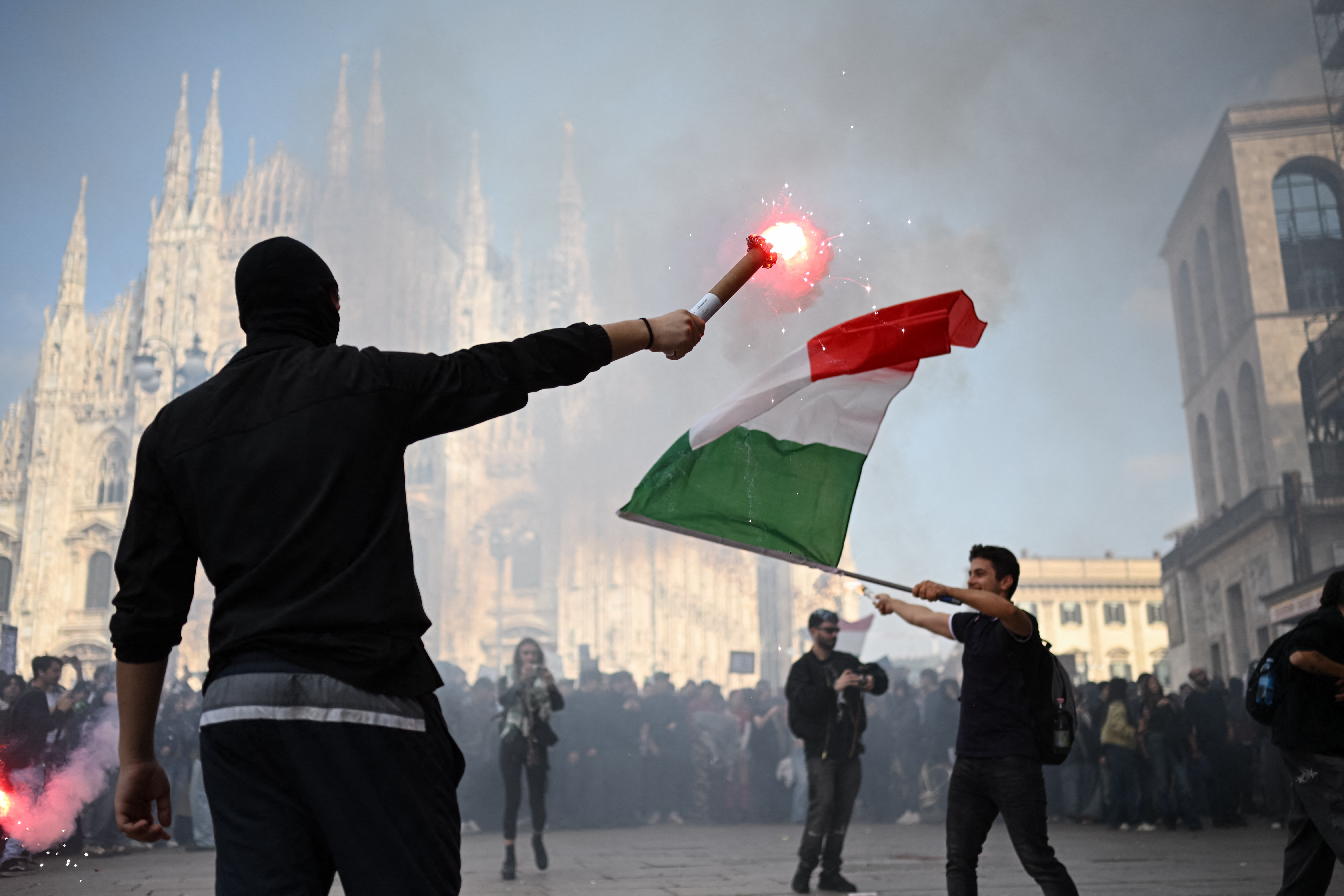
The government’s response has also raised questions about how it intends to manage dissent. Following violent incidents in Milan and other cities, the authorities strengthened measures concerning public demonstrations. Protecting public safety and preventing violence are legitimate responsibilities. But a response focused on public order cannot substitute for addressing the demands that brought people into the streets. The majority of demonstrations on 30 October remained peaceful, despite tensions and isolated clashes.
Restoring Order Is Not Enough
Italy’s protests should therefore not be reduced to a reaction to expensive diesel, nor should every grievance be treated as part of one general revolt. They involve distinct problems: fuel costs for transport and agriculture, unaffordable housing and underfunded education for students, and declining purchasing power for workers. What connects them is the perception that the costs of economic and political decisions are being passed down to people and businesses with limited capacity to absorb them.
The test for the government is not simply whether it can restore normal traffic or contain demonstrations. It is whether its policies can offer more than short-term relief: predictable support for sectors exposed to sudden fuel-price increases, meaningful investment in education and student accommodation, and measures that address the pressure on household purchasing power. The protests have made one point difficult to ignore. Restoring order may bring the streets back to normal, but it will not make the economic pressures that brought people there disappear.