Türkiye and South Korea have long described each other as “brother countries” due to their historical ties and shared memories. In recent years, however, relations between the two countries have entered a new phase shaped not only by diplomacy and trade, but also by growing cultural, academic, and social interaction. The rising influence of the Korean Wave (Hallyu) in Türkiye, increasing interest in Korean language education, and expanding cooperation between universities are among the most visible examples of this transformation. In this interview, we speak with Dr. Eun Kyung Jeong, whose academic work at Istanbul University focuses on Korean Studies. We explore the cultural dimension of Türkiye–South Korea relations, the future of academic cooperation, the growing interest among younger generations, and the new opportunities emerging between the two countries.
Türkiye and South Korea are often described as “brother countries” because of their historical ties. In your opinion, how has this relationship evolved culturally and socially over the last two decades?
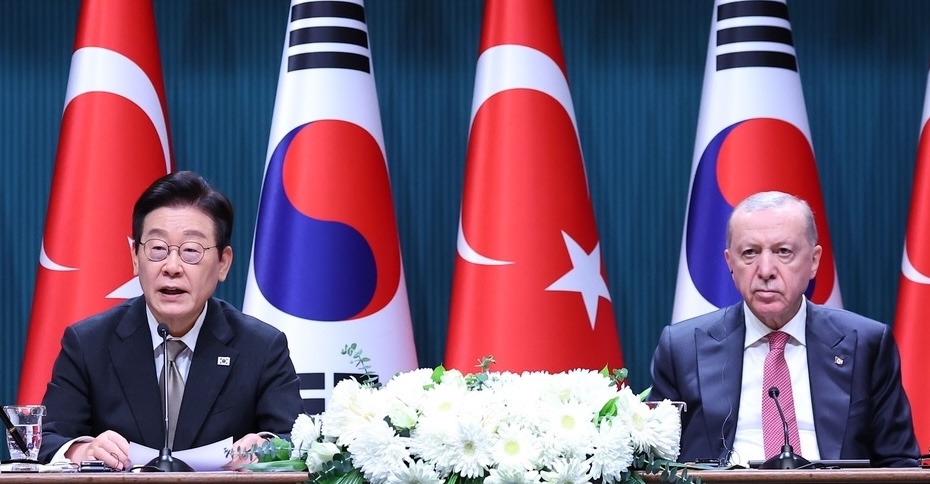
Over the past two decades, the camaraderie displayed during the third-place play-off of the 2002 World Cup has served as a catalyst for reaffirming the friendly ties between South Korea and Türkiye, a relationship that had remained relatively distant following the Korean War. A decade later, in 2012, the bilateral relationship was elevated to a “strategic partnership,” and cooperation has since deepened across political and economic spheres through the participation of Korean companies in major national infrastructure projects, including the construction of Istanbul’s third bridge, the Eurasia Tunnel, and the Çanakkale Bridge. Furthermore, expanded people-to-people exchanges, driven by the “Korean Wave” (Hallyu), which has spread rapidly across Türkiye since 2010, as well as by an increase in Korean tourism, have enabled the citizens of both countries to gain a deeper cultural understanding of one another. Above all, South Korea’s active humanitarian assistance following the 2023 Hatay earthquake marked a pivotal moment, transforming the relationship from a primarily diplomatic partnership into a genuine bond of cultural and social solidarity.
Your research focuses on Korean Studies and Korean language education. What are the biggest changes you have observed in Turkish students’ interest in Korea and Korean culture in recent years?
In recent years, the most significant shift in Turkish students’ and young people’s interest in Korean culture is that it has expanded far beyond the mere consumption of K-dramas and K-pop. It has broadened into more substantive and in-depth areas, such as learning the Korean language, reading Korean literature, and pursuing study or employment opportunities in Korea. A key trend I have witnessed locally is the boom in Korean language learning. When I worked as a researcher at the Consulate General of the Republic of Korea in Istanbul in the early 2010s, we introduced the TOPIK (Test of Proficiency in Korean) to the city for the first time. Back then, it was difficult to find test-takers. Despite personally visiting universities and language academies to promote the exam, we could barely recruit 30 to 40 applicants. Recently, however, more than 500 candidates have registered for each TOPIK session in Istanbul alone. This indicates a growing number of people who are translating their interest into concrete future plans, such as enrolling in formal Korean language courses, seeking employment at Korean companies, or pursuing studies at Korean universities.
The Korean Wave (Hallyu) has become highly influential among Turks through K-dramas, K-pop, and digital media. How do you think this cultural phenomenon contributes to long-term relations between the two countries?
The Korean Wave is expected to further enhance mutual understanding and cultural affinity between Türkiye and Korea in the long term, driven by the competitiveness of original content, the use of digital platforms, cultural traits that resonate with Turkish sensibilities, and an emotional appeal that bridges tradition and modernity. Furthermore, as Turkish culture and historical sites are increasingly showcased in Korea by celebrities and influencers, this foundation of cultural resonance is fostering positive perceptions and exerting both direct and indirect influence on economic and industrial cooperation.
In your studies, you have examined how Korea and Koreans are represented in Turkish media. How has the perception of Korea changed within Turkish society over time?
In fact, Turks and Koreans share historical ties dating back to the 6th and 7th centuries, as reflected in the relationship between the Göktürks and Goguryeo. However, the sense of a “blood-forged brotherhood” truly came to the fore following the deployment of Turkish troops during the Korean War in 1950. Since then, Korea’s image has evolved. Following the 2002 World Cup and the more recent “Korean Wave” (Hallyu), driven by K-dramas and K-pop, Korea has come to be seen as a cultural powerhouse, gaining a positive reputation across generations. However, despite these ancient historical roots and the perception of a “blood alliance,” the vast geographical distance meant that, until the 1990s, mutual public awareness was largely limited to knowing of the other country’s existence, with little interpersonal exchange or mutual understanding.
Nevertheless, the sight of the two national teams cheering for each other during the third-place play-off at the 2002 Korea-Japan World Cup left a profound impression on both nations and significantly fostered a sense of closeness. Since 2010, the “Korean Wave” and K-content have served as a catalyst for the Turkish public to perceive Korea as a familiar and friendly country. In other words, Korea, once viewed as an impoverished country in need of Türkiye’s assistance, has now captured the attention and interest of many Turkish people through its rapid economic growth and rich cultural content. Above all, while the consumption of the Korean Wave was previously concentrated among teenagers and young adults in their twenties, engagement with the Korean language, literature, and dramas has now expanded to encompass all age groups.
Beyond popular culture, what opportunities do you see for deeper cooperation between the countries in education, academia, and cultural diplomacy?
To strengthen the foundation for mutual research and provide a platform for academic exchange at the non-governmental level, it is necessary to expand Turkish studies programs at Korean universities and Korean studies departments at universities in Türkiye. Currently, with such departments established at only two universities in Korea and three in Türkiye, the infrastructure for cultivating the next generation of scholars remains inadequate.
Furthermore, cooperation in the education sector should be strengthened, including through the Global Korea Scholarship (GKS) program, to foster next-generation experts through mutual study-abroad opportunities and graduate degree programs, as well as through joint academic research, seminars, and collaborative excavations of historical sites. Above all, although Korean was adopted as a second foreign language in Turkish high schools in 2017, there remains a severe shortage of high schools offering formal Korean language instruction. This is an area that requires concerted efforts from both governments. In parallel, greater government support is needed to revitalize youth-oriented exchange programs, such as visits to historical sites and humanities-focused tours, for young people in both countries.
Young people in both countries are becoming increasingly interested in each other’s languages and traditions. What cultural similarities between Turkish and Korean societies do you think create this strong connection?
South Korea and Türkiye share a cultural affinity and an emotional bond rooted in the importance placed on empathy and ‘Jeong’ (정), a deep sense of emotional connection and affection. Both cultures share traditions of respecting elders and extending warm, attentive hospitality to guests. There is also a similar family-oriented mindset. Just as in Korea, terms for older siblings, aunts, and uncles are naturally used in Türkiye to address people outside one’s immediate family or circle of relatives. Furthermore, both cultures value warm interpersonal relationships built on mutual affection. Linguistically, the two languages share the same word order and similar grammatical structures, and they often employ comparable expressions and sentiments in idioms and proverbs. Thanks to these linguistic similarities and the sense of familiarity they foster, it is believed that learning each other’s language can progress more quickly than learning many other languages.
What are the main challenges facing Korean Studies and intercultural academic cooperation in Türkiye today, and what kind of support is needed for further development?
While the structure of undergraduate-level Korean studies in Türkiye is becoming increasingly organized, there is still a limited pool of local master’s and doctoral degree holders and specialized researchers capable of conducting in-depth studies. Educational and research activities tend to focus heavily on popular culture and basic Korean language instruction, resulting in a lack of balanced academic research across the humanities and social sciences, including history, society, politics, and economics. Furthermore, the development of advanced Korean language textbooks, specialized academic publications, and digital archival resources remains in its infancy, while the overall educational and academic infrastructure is still inadequate.
Above all, the lack of long-term funding and institutional frameworks to support the independent operation of university-based Korean studies institutes forces individual researchers to secure funding independently from sources in Korea or abroad. Therefore, to foster the future development of Turkish studies in Korea and Korean studies in Türkiye, it is essential to revitalize government-supported initiatives, such as the distribution of specialized academic texts, bilateral research exchanges, and joint seminars. Furthermore, since most Korean language textbooks currently used in Turkish universities were originally designed for foreigners studying in Korea and have become outdated, there is an urgent need to develop customized intermediate- and advanced-level textbooks and related materials tailored to the local culture and context.
Looking ahead, what are your expectations for the future of Turkish-Korean relations, particularly in terms of cultural exchange, creative industries, and youth collaboration?
As digital technology becomes an integral part of daily life across all generations, the nature of engagement is shifting from the one-way consumption of K-dramas and K-pop toward more interactive, people-to-people exchange programs that actively involve young people from both countries. These include local K-pop cover dance contests, Korean cooking competitions, and performances showcasing both traditional and contemporary arts. Furthermore, Türkiye, a major exporter of television dramas, has recently begun remaking and airing Korean dramas and films, while both countries are expanding opportunities for co-production and investment across the creative industries, including gaming, webtoons, and media. Given Türkiye’s young and dynamic domestic market and skilled digital workforce, cooperation in the content sector is also expected to grow.
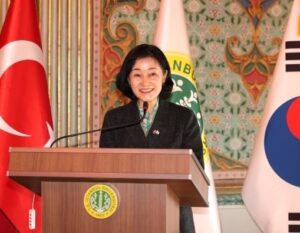
Who is Eun Kyung Jeong? Eun Kyung Jeongis a faculty member in the Department of Korean Language and Literature at Istanbul University. She specializes in Korean Studies, focusing on modern Korean history and culture. Recently, her research has focused on Korean diaspora in Turkey, Korean popular culture and the cultural similarities between Korea and Türkiye.