
Introduction
Bilateral social security agreements are essential in today’s globalized world to guarantee expatriates’ welfare, facilitate international labor mobility, and promote global cooperation. They prevent migrant workers from paying social security contributions in two countries at the same time, coordinate the provision of benefits abroad, and allow equal treatment for workers employed in countries other than their own.
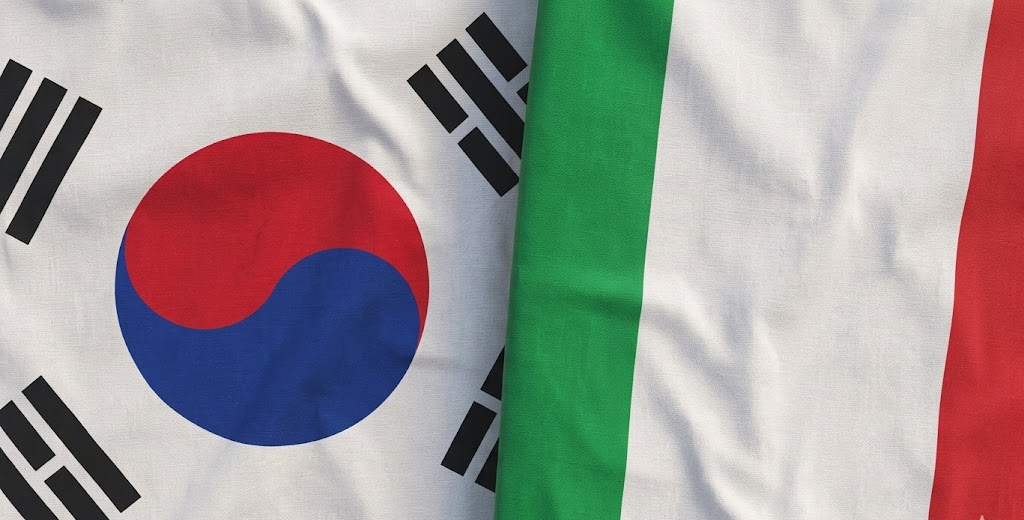
Italy, having a long history of migration and diasporas, has established these agreements with several countries throughout the years. However, Italy’s bilateral agreements on social security vary significantly in scope and depth depending on the contracting partner. With some countries, such as Argentina, Italy’s agreements are more comprehensive and include provisions such as pension portability and totalization. With other countries, such as South Korea, the agreements are more limited, covering only portability benefits and avoidance of dual coverage.
This difference is not only technical. It reveals how Italy approaches different bilateral relationships and how it balances expatriate welfare, corporate interests, migration patterns, historical ties, and administrative costs. In the case of South Korea, the current agreement reflects a limited model that supports short-term mobility and business interests, but does not fully protect Italians who live, work, study, or build long-term careers in Korea.
From Diplomatic Recognition to Strategic Partnership
Italy and South Korea have developed increasingly strong relations over the past century. The two countries established diplomatic relations 140 years ago, and their relationship has grown through political cooperation, trade, and cultural exchange. Their bilateral relations started in 1884 with the Treaty of Friendship, Commerce and Navigation. These ties were interrupted during the Japanese colonization of the Korean peninsula and later re-established in 1956. During the Korean War, Italy also sent medical support through the Red Cross, even though the country was not part of the United Nations.
Until the 1980s, the two countries were not on equal footing. They shared similar values and ideology, but geopolitically they were far apart. This changed in the late 1980s, when South Korea experienced rapid economic growth. Together with the globalization of production and trade in the 1990s, trade relations between Italy and South Korea increased remarkably. This also influenced political and diplomatic ties, culminating in the first state visit of South Korean President Kim Dae-jung to Italy in 2000. The visit marked an important step because the president was accompanied by ministers, economic and security advisers, and 53 businessmen, showing that the South Korean government was keen to develop and consolidate economic relations with Italy.
The relationship intensified further during the Roh Moo-hyun presidency. President Roh visited Italy in 2007 and met the Italian president Carlo Azeglio Ciampi to deepen cooperation between the two countries. On that occasion, Italy and South Korea signed an agreement for political cooperation and cultural exchange.
Expanding Trade, Culture, and People-to-People Mobility
Trade relations have also prospered in recent years, reaching unprecedented levels in 2022. This growth has been historically connected to increasing cultural exchanges. Italy has long been appreciated by South Koreans for its heritage, culture, cuisine, and tourism. At the same time, South Korea’s contemporary culture, especially Korean music, dramas, food and cosmetics, has gained popularity among younger Italians.
The movement of people between the two countries has also changed. Historically, the number of Koreans living in Italy has always been higher than the number of Italians living in South Korea. According to the Overseas Korean Foundation, around 4,499 Koreans were living in Italy in 2023. By contrast, the number of Italians in South Korea has been historically lower. However, in recent years, there has been a notable increase. From 2016 to 2024, the Italian population in South Korea rose 103.30%, reaching 1,281 Italians residing in Korea in 2024, according to the Korean immigration statistics.
This increase reflects a broader transformation in people-to-people relations. Since 2014, more Italians have come to Korea with working holiday visas or to study, and many wish to remain and find full-time positions in the country. The Korean embassy in Italy has also recorded an increase in working, studying, research, and spouse visas granted to Italian citizens. In particular, working visas increased from 1,662 in 2000–2009 to 7,131 in 2010–2019, before decreasing during the Covid pandemic.
More recently, Italy and South Korea have moved beyond traditional trade and cultural exchange toward strategic industrial cooperation. In January 2026, South Korean President Lee Jae Myung and Italian Prime Minister Giorgia Meloni agreed to strengthen cooperation in artificial intelligence, semiconductors, aerospace, and critical minerals, also signing a memorandum of understanding on semiconductor and AI collaboration. This confirms that the bilateral relationship is becoming more strategic.
A Limited Agreement for a Changing Mobility Context
Despite these growing diplomatic, economic, cultural, and human connections, the bilateral social security agreement between Italy and South Korea remains limited in scope. The current agreement recognizes reciprocal pension benefits and guarantees the avoidance of double contributions for dispatched workers. This means that workers sent to South Korea or Italy for a project do not have to pay pension contributions in the foreign country, but can continue paying contributions in their country of residence.
This arrangement is useful for temporary workers and companies. It reduces financial and administrative burdens for Italian businesses operating in South Korea and Korean companies operating in Italy. It facilitates short-term labor mobility and supports international corporations that need to move skilled workers across borders.
However, the agreement does not include totalization. This is the central problem. Totalization allows workers to combine contribution periods paid in two different countries in order to meet pension eligibility requirements. Without this mechanism, Italians who work in South Korea but do not remain long enough to reach the minimum contribution period may not be able to use their pension contributions effectively.
In South Korea, the minimum contribution period for pension eligibility is ten years. In Italy, it is generally twenty years. Many Italians in Korea may work, study, conduct research, or live in the country for several years without reaching the Korean minimum contribution period. If they later return to Italy or move elsewhere, their contributions may become unusable for pension retribution once they reach pension age. In other words, the money that Italian workers paid to the Korean National Pension Fund may be lost if they cannot qualify for benefits.
This creates a gap between the reality of Italy–South Korea mobility and the structure of the existing agreement. The agreement was designed mainly to avoid double contributions and support temporary mobility. Yet the profile of Italians in Korea is changing. They are not only dispatched corporate workers. They also include students, researchers, spouses, young professionals, and workers who may stay for longer periods but still not long enough to meet pension eligibility requirements.
Italy’s Uneven Social Diplomacy
This limitation also shows how Italy’s approach to bilateral social security agreements changes depending on the partner country. Historically, Italy has not followed a single model. With France and Switzerland, Italy’s early strategy was rooted in social diplomacy. The goal was to protect Italian emigrant workers abroad by securing equal treatment, better labor conditions, healthcare access, workplace safety, and social protection. In the case of Switzerland, Italy also negotiated inspectorate rights, allowing the Italian consulate to oversee the working conditions of Italian immigrants.
With North African countries such as Tunisia, Morocco, and Egypt, Italy’s approach was different. These agreements focused more on seasonal labor migration, short-term labor demand, border management, repatriation programs, and reducing irregular migration. They included some provisions on pension portability and avoidance of double contribution, but their broader purpose was more pragmatic and transactional. They reflected Italy’s need for foreign workers in seasonal sectors, while also linking cooperation to migration control.
Argentina represents another model. Italy’s agreement with Argentina is more comprehensive because it recognizes broader reciprocal pension benefits and includes totalization measures. This allows citizens to combine the years of contribution paid in both countries when applying for pension. The broader agreement reflects the historical importance of the Italian diaspora in Argentina, where Italian immigration deeply shaped the country’s economy, culture, language, and society.
The contrast with Argentina is important because it shows that Italy can adopt more comprehensive social security agreements when historical and diasporic ties are strong. With South Korea, however, Italy has maintained a more limited model, despite the growth of trade relations, cultural exchange, and Italian mobility toward Korea. This suggests that economic partnership alone is not always sufficient to produce a comprehensive social security agreement.
Corporate Mobility or Expatriate Welfare?
From a rational cost-benefit perspective, the limited scope of the Italy–South Korea agreement can be understood as a pragmatic choice. It minimizes long-term financial obligations while supporting economic efficiency and short-term labor mobility. From a capitalist perspective, the agreement also benefits corporate interests by reducing costs for multinational firms and simplifying cross-border labor arrangements. Italian firms in South Korea can deploy employees without incurring additional pension costs, while Korean companies in Italy can benefit from the same mechanism.
However, this corporate-centered approach leaves some expatriates, particularly long-term Italians in South Korea, without sufficient social security protection. The agreement supports mobility, but mainly the kind of mobility that is temporary, business-oriented, and administratively convenient. It does not fully address the needs of individuals whose lives and careers are increasingly transnational.
Rethinking Social Protection in Italy–South Korea Relations
This is why the Italy–South Korea social security agreement should be reconsidered. As bilateral relations deepen, social protection should not remain limited to a framework designed mainly for temporary workers and corporate mobility. If Italy and South Korea are developing stronger diplomatic, economic, cultural, and people-to-people ties, their social security agreement should also reflect this deeper relationship.
Including totalization would be an important step. It would allow Italian and Korean workers to combine contribution periods and reduce the risk of losing pension rights. It would also make the agreement more consistent with the reality of contemporary mobility, where people often study, work, move, return, and relocate across countries throughout their careers.
Conclusion: Toward a More Complete Social Partnership
Italy’s bilateral social security agreements show that welfare policy is also foreign policy. These agreements define how a state protects its citizens abroad, how it manages labor mobility, and how it values different bilateral relationships. In the case of South Korea, the current agreement reflects a relationship that has grown economically and culturally, but whose social protection framework has not kept pace.
The challenge is therefore not only administrative. It is strategic. If Italy considers South Korea a solid partner in Asia, then the bilateral relationship should not be limited to trade, culture, and corporate mobility. It should also include stronger mechanisms to protect the growing number of people moving between the two countries.
Bilateral social security agreements should not be treated as minor technical arrangements. They are instruments of social diplomacy. They reveal whose mobility is protected, whose contributions count, and which bilateral relationships are considered important enough to deserve deeper institutional commitment. For Italy and South Korea, updating the current agreement would mean recognizing that their relationship is no longer only about economic cooperation, but also about the people who increasingly connect the two countries.