
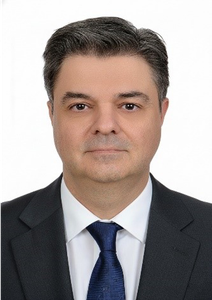
Ambassador Loukas Tsokos serves as the Ambassador of Greece to the Republic of Korea. He holds a degree in Law from the University of Aix-en-Provence and a Master’s degree in Public International Law from the University of Paris I. Since joining the Greek Ministry of Foreign Affairs in 1998, he has served in various key directorates at headquarters and held diplomatic postings in Morocco, Canada, Australia, and Hungary. Most recently, he served as Consul General of Greece in Tampa, Florida, from 2021 to 2024, before assuming his current role as Ambassador to the Republic of Korea in 2025.
Could you briefly introduce yourself and Greece to our readers? Since arriving in the Republic of Korea as Ambassador, what experience or aspect of Korean society has been particularly memorable to you?
Throughout my diplomatic career, I have had the privilege of representing Greece abroad, and it is a great honor for me to serve as Ambassador of the Hellenic Republic to the Republic of Korea. I consider my current posting especially meaningful, as Greece and South Korea are two countries that, despite their geographical distance, share a deep bond forged by the Korean War and nowadays based on democratic values and the commitment to international peace and stability.
Greece is often described as the cradle of democracy, philosophy, and the Olympic Games. Nevertheless Greece is a modern European country with a dynamic economy, a strong maritime tradition, world-class tourism, and an increasingly vibrant ecosystem in technology, research, and the creative industries. As a member of the EU, Greece is committed to promoting international cooperation, peace, and dialogue, values that also underpin our excellent bilateral relationship with the Republic of Korea.
Since my arrival in Korea, I have been deeply impressed by the country’s remarkable ability to combine cutting-edge technological innovation with a profound respect for its cultural heritage. Equally memorable has been the warmth, courtesy, and sense of community shown by the Korean people. I have also been struck by the strong emphasis placed on education and the genuine curiosity many Koreans have about Greece. These qualities have made my experience here both professionally rewarding and personally enriching, and they continue to inspire our efforts to further strengthen the friendship between our two countries
What role can exchanges among universities, research institutions, students, and younger generations play in strengthening the long-term foundations of relations between the Republic of Korea and European countries?
Greece attaches great importance to educational and scientific cooperation. Greek universities, such as the National and Kapodistrian University of Athens, Aristotle University of Thessaloniki, and National Technical University of Athens, are active participants in European research networks and the Erasmus+ programme, collaborating with institutions across Europe and increasingly beyond. We see significant opportunities to expand these networks to include more Korean partners through joint research projects, student mobility, dual-degree programmes, and faculty exchanges.
It is important to remember that, the students who study together today will become tomorrow’s diplomats, scientists, entrepreneurs, and leaders. By investing in educational and research cooperation, we are not only strengthening Greece–Korea relations but also contributing to a more connected, innovative, and resilient partnership between the Republic of Korea and Europe as a whole.
Greece’s participation in the Korean War created a lasting historical bond with the Republic of Korea. How can this foundation of solidarity be connected more effectively to contemporary cooperation in diplomacy, security, trade, and people-to-people relations?
Greece’s participation in the Korean War is the cornerstone of the friendship between our two nations. More than 10,000 Greek soldiers and airmen served under the United Nations Command in defense of the Republic of Korea, forging a bond based on freedom, peace, and shared values.
This legacy remains alive through places of remembrance such as the Greek Monument at the War Memorial of Korea, the Monument for the Fallen Greek Soldiers in Yeoju, and the Korean War Memorial in the cities of Athens (Papagos-Cholargos) and Thessaloniki. These memorials remind us that our friendship was forged through sacrifice and must be carried forward by future generations. The recent twinning between the cities of Yeoju and Papagos-Holargos is an excellent example of how this shared history can inspire new partnerships at the local level.
Our historical ties also create opportunities to deepen cooperation in areas of growing strategic importance, including maritime security, defense industries, advanced technologies, energy, and resilient supply chains. As leading maritime nations, Greece and Korea possess highly complementary expertise in shipping, shipbuilding, and green maritime technologies, offering significant potential for mutually beneficial partnerships.
Equally important are people-to-people connections. Preserving the memory of the Korean War through cooperation on veterans’ affairs, educational programmes, museums, and youth exchanges ensures that future generations understand the origins of our friendship. At the same time, expanding academic, cultural, and business exchanges will enable that friendship to evolve and flourish.
In diplomacy, history gives us credibility; in education, culture, and trade, it gives us momentum. Our shared past is therefore not only a source of pride but also a platform for building an even stronger, more dynamic partnership between Greece and the Republic of Korea in the decades to come.
Greece is one of the world’s leading maritime nations, while South Korea is a major shipbuilding and marine technology center. What opportunities do you see for deeper cooperation in shipbuilding, smart vessels, maritime safety, green fuels, and the decarbonization of shipping?
Greece and the Republic of Korea are natural maritime partners. Greece is the world’s leading shipowning nation, while Korea is a global leader in shipbuilding, marine engineering, and maritime innovation. As the maritime sector undergoes its green and digital transition, Greece and Korea have much to gain by working together, not only through commercial partnerships, but also through joint research, technological innovation, investment, and exchanges between universities, research institutes, and industry. By combining Greek maritime expertise with Korean technological excellence, we can contribute to making global shipping safer, smarter, and more sustainable for future generations.
This was reaffirmed during the recent official visit of the Greek Minister of Foreign Affairs to the Republic of Korea, where both sides highlighted the importance of expanding cooperation in shipping, shipbuilding, green maritime technologies, maritime security, and resilient supply chains. We also recognized the growing potential for collaboration in smart vessels, digitalization, autonomous shipping, alternative marine fuels, and the decarbonization of the global shipping industry.
Greece is developing its role as a transport, port, and energy hub linking Europe, the Mediterranean, and neighboring regions. How can South Korea and Greece cooperate in port logistics, infrastructure, renewable energy, and regional connectivity?
There is significant potential for Korean investment and technological cooperation in Greek ports, logistics centers, rail connections, and smart infrastructure. Greek ports can also provide Korean companies with efficient access to European and neighboring markets, while cooperation in digitalized port operations and resilient supply chains could strengthen connectivity between Asia and Europe.
Energy is another promising field. Greece is expanding renewable energy production, electricity interconnections, and infrastructure for LNG, hydrogen, and other low-carbon fuels. By combining Greece’s geographical advantages and growing energy network with Korea’s technological and industrial capabilities, our countries can develop projects that support both energy security and the green transition.
Such cooperation would benefit not only Greece and Korea, but also wider regional connectivity and more sustainable trade between Europe and Asia.
Greece and South Korea have strong academic interests in archaeology, history, classics, maritime studies, and contemporary regional affairs. What measures could expand joint research, student exchanges, field programs, and institutional partnerships in these areas?
Greece and the Republic of Korea possess exceptional academic strengths that are highly complementary. Greece offers unique opportunities in archaeology, classical studies, maritime history, and cultural heritage, while Korea excels in cutting-edge research, technology, maritime studies, and regional affairs. By bringing these strengths together, we can create partnerships that are both academically enriching and strategically valuable.
A practical way forward is to expand university-to-university agreements, promote greater participation in exchange programmes such as Erasmus+, and encourage joint research projects and co-supervised doctoral programmes. Summer schools, archaeological fieldwork in Greece, maritime research initiatives, and faculty exchanges would also provide students and researchers with invaluable international experience.
We are particularly encouraged by the growing interest in Greek language and classical studies at Korean universities, including Hankuk University of Foreign Studies and Seoul National University. This year marked another important milestone in our educational and cultural cooperation, as the first Greek Language Certificate Examinations were successfully held in Seoul in May, attracting an encouraging number of candidates. Likewise, we are seeing all the more Greek students and researchers studying Korean language and history.
Academic cooperation is one of the strongest pillars of our bilateral relationship. The partnerships we build today between our universities and research institutions will help educate the next generation of scholars, innovators, and leaders, ensuring that Greece–Korea relations continue to deepen for decades to come.
Greece is well known in South Korea for its ancient heritage and island tourism. What cultural diplomacy initiatives could introduce Korean audiences to a broader image of contemporary Greece, including its literature, music, cinema, gastronomy, and creative industries?
While Greece’s ancient civilization and beautiful islands are rightly admired in Korea, contemporary Greece has an equally compelling story to tell. Cultural diplomacy today should present Greece as a modern, creative, and innovative European country.
One important initiative is to expand cooperation in cinema. The Embassy is already working to promote Greek films in Korea, including through European film festivals, while also encouraging collaboration between the Greek and Korean film industries and institutions.
Literature is another promising area. Supporting translations of both classical and contemporary Greek authors into Korean, encouraging participation in international book fairs, and organizing exchanges between Greek and Korean writers would help introduce Korean audiences to Greece’s vibrant literary tradition.
Greek gastronomy festivals could also introduce Korean audiences not only to our Mediterranean cuisine but also to Greece’s exceptional wines, produced from indigenous grape varieties such as Assyrtiko from Santorini, Xinomavro from Naoussa, and Agiorgitiko from Nemea, which are increasingly gaining international recognition.
Ultimately, the goal of cultural diplomacy is to demonstrate that Greece is not only the birthplace of European civilization but also a dynamic, outward-looking country that continues to create, innovate, and contribute to Europe’s contemporary cultural landscape.
Interview conducted via email by Hayann Lee (Deputy Director, HUFS Jean Monnet Centre of Excellence)