
Since Russia’s invasion of Ukraine, Europe’s security environment can no longer be understood as a short-term crisis. Beyond the immediate military shock of the war, Europe now faces a prolonged period of strategic uncertainty shaped by intensifying U.S.–China rivalry and the increasingly transactional nature of U.S. alliance policy, as revealed by Donald Trump’s return to power. At the same time, rising tensions between the United States and Denmark over Greenland have expanded Europe’s strategic horizon beyond the eastern front and the Black Sea to include the Arctic and the North Atlantic as key geopolitical spaces.
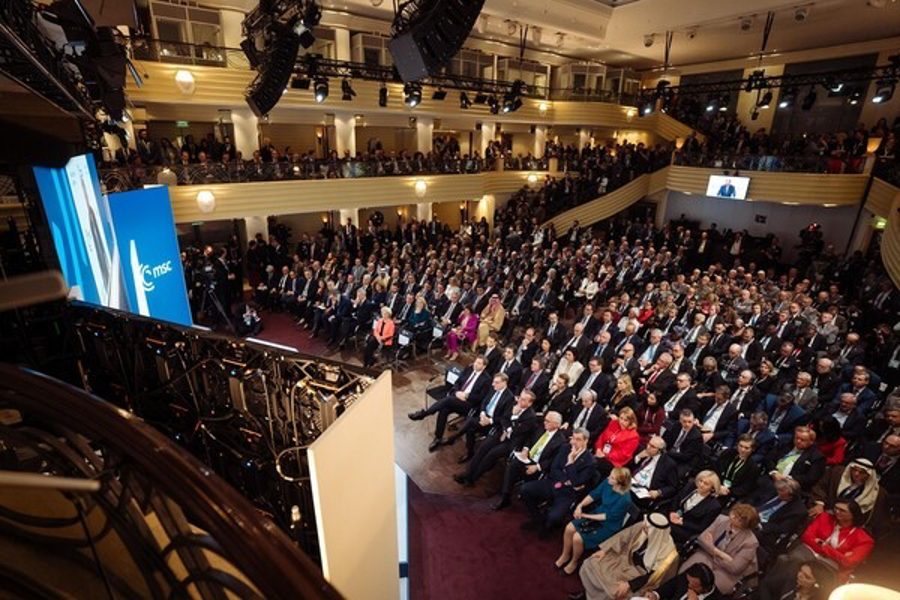
Under these complex pressures, European countries have placed the strengthening of military deterrence at the top of their security agenda and have steadily increased defence spending. At the Munich Security Conference held in February, the NATO Secretary General and EU leaders emphasized that long-term military and financial support for Ukraine would serve as a critical test of European security. They also pointed out that Europe must build the defence production capacity and resilient supply chains necessary to sustain such support.
Yet the core of the discussion was not simply about increasing military expenditure or expanding troop numbers. As emerging and disruptive technologies such as cyber capabilities, space, and artificial intelligence, as well as dual-use technologies, energy and digital infrastructure, and the defence industrial base, have become central components of security, European security can no longer be explained only through tanks and troops. The focus of the security debate is shifting from the question of “how much to spend” to the more structural question of “what kinds of science and technology, industrial capacity, and supply-chain architecture should underpin security.”
This transformation in the concept of security is not confined to policy adjustments within individual European states. It is also reshaping the relationship between NATO and the EU, as well as Europe’s cooperation with Indo-Pacific partners. Horizon Europe, the EU’s flagship research and innovation programme, and the next Framework Programme, FP10, aim to strengthen scientific and technological competitiveness and Europe’s industrial base. These objectives overlap significantly with NATO’s emphasis on artificial intelligence, cyber security, space, and emerging and disruptive technologies.
Europe’s view of its four Indo-Pacific partners, known as the IP4, is also changing. The IP4 are no longer seen merely as formal dialogue partners. They are increasingly becoming substantive partners in addressing concrete issues such as cyber defence, emerging technologies, countering disinformation, defence industrial cooperation, and supply-chain resilience.
Within this evolving structure, South Korea occupies a particularly significant position. As a member of the IP4, South Korea has expanded its cooperation with NATO beyond political dialogue to include cyber defence, emerging technologies, counter-disinformation efforts, and defence cooperation. At the same time, South Korea became the first Asian country associated with Horizon Europe Pillar II, “Global Challenges and European Industrial Competitiveness,” from 2025. This allows Korea to participate in the EU’s research and innovation ecosystem in areas directly linked to strategic industries, including digital technologies, industry, space, climate, energy, and mobility. In this sense, South Korea is positioned simultaneously as a security and defence cooperation partner within the NATO framework and as a research, innovation, industrial, and technological partner within the EU framework. This goes beyond simple diplomatic balancing. It means that Korea is situated in a position where it can help connect NATO’s security and capability demands with the EU’s technology and industrial framework.
Ultimately, the transformation of European security is no longer a matter confined to Europe alone. The expansion of defence spending, the strengthening of defence production capacity, the restructuring of research, innovation, and industrial policies, and the deepening of partnerships with the Indo-Pacific are together forming a new security architecture in which military power, technology, industry, and supply chains are increasingly intertwined. The key issue, therefore, is not participation itself, but strategic direction. Korea’s role will depend on which areas it prioritizes between NATO’s security and capability needs and the EU’s technology and industrial ecosystem, and on how actively it engages in the formation of norms, standards, and strategic agendas.