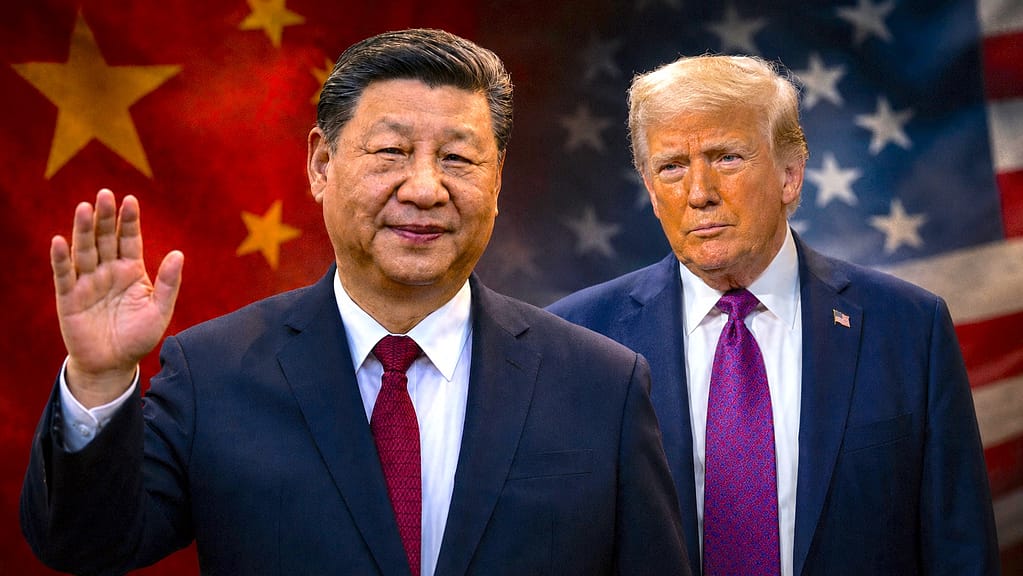

The Myth of the Multipolar Buffer in a Bipolar Reality
For a diverse, geographically dispersed array of middle powers spanning from the institutional, regulatory corridors of Brussels to the dynamic, diplomatic hubs of Jakarta and Singapore, the absolute defining strategic puzzle of the 2020s is how to safely and prosperously position themselves between a rapidly rising, increasingly assertive China and a volatile, increasingly protectionist United States (Tellis 2019; Elcano Royal Institute 2025). The prevailing, highly comforting assumption underlying much of the foreign policy commentary in both Europe and Southeast Asia is that a multipolar order is emerging. This theoretical multipolarity is believed to inherently offer secondary states greater room to maneuver, allowing them to hedge their bets, play great powers against one another for maximum economic benefit, and avoid the painful, costly necessity of choosing sides.
However, this optimistic, deeply entrenched assumption must be aggressively and thoroughly scrutinized against the harsh, unforgiving structural realities of 2026 (Lind, 2026). The international system has, for all practical purposes, hardened into effective bipolarity (Nagy 2025; Mohan 2026a). While states may successfully diversify their economic partnerships, trade flows, and diplomatic engagements, their ultimate physical security, technological viability, and sovereign independence depend on alignment choices that cannot be indefinitely deferred or masked by rhetoric of “strategic autonomy” or “ASEAN centrality”. Middle powers face persistent, intense, and often contradictory pressure from both Washington and Beijing. They are forced to navigate a treacherous geopolitical landscape where deep economic interdependence is routinely weaponized, critical global supply chains are held hostage to political disputes, and traditional security guarantees are increasingly questioned by domestic populist movements in the West (Mohan 2026b).
Chinese Statecraft: Between the Rhetoric of Shared Futures and the Reality of Coercion
To navigate this unforgiving environment, middle powers must deeply understand the profound nuances of Chinese foreign policy doctrine and the domestic academic discourse that shapes its execution. Official Chinese state documents, such as the widely promoted white papers on a Global Community of Shared Future(State Council 2023), the Global Security Initiative (GSI) (MOFAC 2023), and the Global Development Initiative (GDI) (MOFAC 2025), present China’s historic rise as a fundamentally benign, stabilizing contribution to global governance. These documents explicitly and repeatedly reject “hegemonism, power politics, and bloc confrontation,” framing China as the ultimate champion of the developing world, the defender of true multilateralism, and a partner that does not attach political strings to economic investment. Prominent Chinese scholars like Yan Xuetong frame this grand strategy through the lens of “moral realism,” arguing that China seeks legitimate, enduring global leadership through ethical statecraft and economic provision (wangdao) rather than military force (Yan 2023). Furthermore, academics heavily emphasize the strategic imperative to build China’s “discourse power” (huayuquan) to actively counter and dismantle Western-dominated international legal and human rights frameworks (Cui, 2022).
However, when measured against these lofty official declarations, the empirical evidence of China’s coercive behavior severely complicates its narrative of benign partnership. The experience of Lithuania in 2021 serves as a stark, unavoidable warning for all middle powers in Europe and Asia. When the Lithuanian government permitted Taiwan to open a representative office under the name “Taiwanese” rather than “Taipei,” Beijing did not merely halt direct bilateral trade; it launched an unprecedented, highly sophisticated secondary boycott. It pressured massive European multinational companies, particularly German auto-parts manufacturers, to completely exclude Lithuanian components from their global supply chains or face losing all access to the lucrative Chinese market (Goodman and Reynolds 2022).
This aggressive extraterritorial dimension demonstrated Beijing’s vast capacity and willingness to impose severe economic costs on small states by targeting highly integrated global manufacturing networks. It amplified punishment far beyond what minimal bilateral economic ties alone would permit. Similarly, in Southeast Asia, the Belt and Road Initiative (BRI) has provided vital infrastructure, but has also generated strategic leverage that Beijing utilizes to mute regional criticism of its expansive maritime claims in the South China Sea (Hiep et al. 2022). Chinese scholars like Cao (2021) carefully analyze the hedging (duichong) strategies of ASEAN and European states, recognizing clearly that China’s immense economic gravity gives Beijing unparalleled leverage to compel political deference, fracture collective regional responses, and enforce compliance with its core interests.
The Volatility of the American Anchor and the Limits of Autonomy
Compounding the severe, systemic threat of Chinese economic coercion is the profound volatility of U.S. foreign policy. Middle powers cannot simply default to American alignment without accepting immense, potentially catastrophic economic and political risk. The highly transactional nature of U.S. diplomacy creates genuine, structural difficulties for partners. Washington’s embrace of aggressive industrial policy—exemplified by the massive subsidies in the Inflation Reduction Act (IRA) which deeply angered European allies by drawing green technology investments away from the continent—demonstrates a willingness to prioritize domestic economic revitalization over allied cohesion (European Parliament 2023). Furthermore, sudden shifts in strategic priorities across different presidential administrations, coupled with deep skepticism of multilateral institutions like the WTO, leave partners constantly off-balance.
Allied capitals must invest massive amounts of diplomatic energy in simply managing Washington’s domestic politics rather than coordinating effectively against shared global challenges. For European states struggling desperately to rebuild depleted munitions stockpiles in the wake of continental conflict, and for Southeast Asian states heavily reliant on the U.S. Navy for freedom of navigation while managing domestic populations wary of U.S. militarism, the dilemma is incredibly acute. Rhetorical aspirations for European strategic autonomy or ASEAN centrality far outstrip actual military, institutional, and industrial capacity. Yet, dependence on the U.S. feels increasingly precarious, conditional, and subject to the whims of American voters. As Tellis (2023) notes, even substantial U.S. investment in partner capacity does not guarantee alignment when core national interests diverge, making Washington increasingly suspicious of its own partners’ hedging strategies (Kuik, 2024).
Policy Take-Homes for Middle Powers (EU & ASEAN): Forging Hardened Engagement
Middle powers in Europe and Asia must urgently abandon the comforting, outdated illusion of equidistant hedging and adopt a rigorous, unsentimental framework of “hardened engagement” (Nagy, 2026). This approach accepts deep economic interdependence with China as a reality but absolutely refuses to allow it to become a fatal vulnerability that constrains sovereign political decision-making.
First, the EU and ASEAN must prioritize the development of collective counter-coercion capacity. The Lithuanian case proved definitively that small states acting alone face insurmountable asymmetries. The EU’s recently developed Anti-Coercion Instrument (ACI) provides a vital, innovative model that must be fully operationalized, aggressively utilized when necessary, and expanded through inter-regional coordination with ASEAN and minilateral groupings like the Quad. The core principle is that a guaranteed, automatic collective response drastically raises the costs of coercion by ensuring targets are never isolated; however, this requires credible political commitment and a willingness to bear short-term economic costs in solidarity.
Second, middle powers must systematically and in a united manner implement a “small yard, high fence” approach to reduce single-point economic dependencies. This means identifying sectors critically vulnerable to coercion—such as rare earth minerals, active pharmaceutical ingredients, and legacy semiconductors—and deliberately subsidizing alternative suppliers to achieve supply chain redundancy rather than complete severance. Trade with China must be maintained to sustain economic growth, but it must be structurally redesigned so that no single partner can impose prohibitive costs through sudden interruption.
Finally, middle powers must engage Chinese perspectives with intellectual seriousness while fiercely protecting their domestic democratic institutions. Engaging frameworks like the “community of shared future” allows for identifying genuine common interests in areas like climate change and global health, but it must be paired with clear-eyed assessments of coercive behavior. Simultaneously, robust foreign agent registries, stringent investment screening mechanisms for critical infrastructure, and advanced cyber defense protocols must be implemented across both regions to deter illegitimate influence operations without chilling normal diplomatic and commercial activities.
References
- Cao, W. (Cáo, Wěi). (2021). Balancing or hedging? Asia-Pacific states’ choices under Sino–US strategic competition (Xuǎn biān háishì duìchōng—Zhōng–Měi zhànlüè jìngzhēng bèijǐng xià de Yàtài guójiā xuǎnzé) [选边还是对冲——中美战略竞争背景下的亚太国家选择]. World Economics and Politics (Shìjiè jīngjì yǔ zhèngzhì) [世界经济与政治], 2021(2), 47–77.
- Cui, W. (Cuī, Wénxīng). (2022). Global development governance and enhancing China’s discourse power in global development governance (Quánqiú fāzhǎn zhìlǐ yǔ Zhōngguó quánqiú fāzhǎn zhìlǐ huàyǔquán tíshēng) [全球发展治理与中国全球发展治理话语权提升]. International Studies (Guójì wèntí yánjiū) [国际问题研究], 2022(12), 5–31.
- Elcano Royal Institute. (2025). Shattered hegemony: The rivalry between the US and China in the new era of the polycrisis. Real Instituto Elcano. https://www.realinstitutoelcano.org/en/analyses/shattered-hegemony-the-rivalry-between-the-us-and-china-in-the-new-era-of-the-polycrisis/.
- European Parliament. (2023). EU’s response to the US Inflation Reduction Act (IRA) (In‑Depth Analysis 2023/740087). European Parliamentary Research Service. https://www.europarl.europa.eu/thinktank/en/document/IPOL_IDA(2023)740087.
- Goodman, M. P., & Reynolds, M. (2022, June 4). China’s economic coercion: Lessons from Lithuania. Center for Strategic and International Studies. https://www.csis.org/analysis/chinas-economic-coercion-lessons-lithuania.
- Hiep, L. H., et al. (2022). China’s Belt and Road Initiative in Southeast Asia: Drivers, risks, and implications. Contemporary Chinese Political Economy and Strategic Relations: An International Journal, 8(1), 1–38. https://icaps.nsysu.edu.tw/static/file/131/1131/img/2375/CCPS_11_(1)_Hiep-et-al.pdf.
- Kuik, C. (2024). Southeast Asian responses to U.S.–China tech competition: Hedging and economy–security tradeoffs. Journal of Chinese Political Science, 29(3), 509–538. https://doi.org/10.1007/s11366-024-09882-6.
- Lind, J. (2026). The multipolar mirage. Foreign Affairs. https://www.foreignaffairs.com/united-states/multipolar-mirage.
- Ministry of Foreign Affairs of the People’s Republic of China (MOFAC). (2023). The Global Security Initiative concept paper. https://en.chinadiplomacy.org.cn/pdf/The_Global_Security_Initiative_Concept_Paper.pdf.
- Ministry of Foreign Affairs of the People’s Republic of China (MOFAC). (2025). Progress report on the Global Development Initiative. https://www.fmprc.gov.cn/eng/zy/jj/GDI_140002/wj/202509/P020250928595521804956.pdf.
- Mohan, C. R. (2026a). The multipolar delusion. Foreign Affairs. https://www.foreignaffairs.com/united-states/multipolar-delusion-mohan.
- Mohan, C. R. (2026b, May 4). Middle powers can’t shape the global order: Trump’s war exposes the limits of collective action among the lesser powers. Foreign Policy. https://foreignpolicy.com/2026/05/04/middle-powers-geopolitics-global-order-trump-war-iran-china.
- Nagy, S. R. (2025, December 21). The enduring bipolarity: American power in an interregnum. Geopolitika. https://geopolitika.no/the-enduring-bipolarity-american-power-in-an-interregnum/.
- Nagy, S. R. (2026). Strategic Choices for Middle Powers Navigating U.S.-China Competition (pp. 88-115). Asia Pacific Foundation of Canada. https://www.asiapacific.ca/publication/strategic-choices-2026
- State Council Information Office of the People’s Republic of China. (2023). A global community of shared future: China’s proposals and actions. http://english.scio.gov.cn/whitepapers/2023-09/26/content_116710660.htm.
- Tellis, A. J. (2019). The return of U.S.-China strategic competition. In A. J. Tellis, A. Szalwinski, & M. Wills (Eds.), Strategic Asia 2020: U.S.-China competition for global influence (pp. 3–28). National Bureau of Asian Research.
- Tellis, A. J. (2023). America’s Bad Bet on India. Foreign Affairs, 102(3), 120-135. https://www.foreignaffairs.com/india/americas-bad-bet-india
- Yan, X. (2023). Ancient Chinese Thought, Modern Chinese Power (pp. 45-78). Princeton University Press. https://doi.org/10.1515/9781400848455