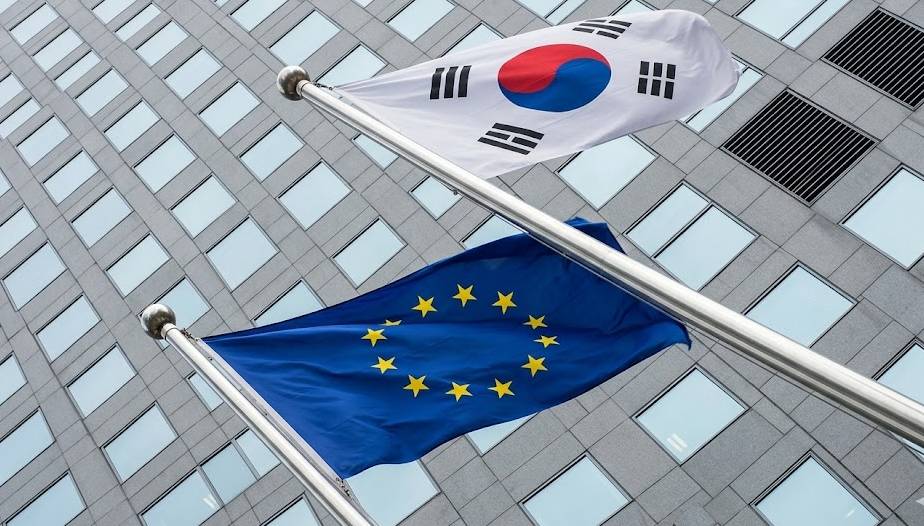

The Strategic Significance of the Korea–EU Summit
The reality that yesterday’s allies are turning into today’s adversarial partners is emerging due to the reorganisation of the international order. In this environment, it is necessary to establish relations with existing partners that reflect new changes in economic security and supply chains. Additionally, efforts to discover new partners are required, particularly cooperation with Global South countries in the areas of critical minerals and energy security.
Currently, we are in a transitional period in which the rules-based order is weakening while a new order has yet to be established. The second Trump administration has shown behaviour that rejects existing alliances, leading to the emergence of a new international environment. However, many countries remain in a state of uncertainty or interregnum as the future international system is likely to take different forms depending on the development of U.S.–China strategic competition and multipolarity making.
South Korea and the EU, as like-minded countries, should cooperate to navigate these challenges and share common interests not only in the economic sphere but also in security and defence areas. Both sides are friendly partners that have concluded major institutional agreements and partnerships, and closer coordination is required in response to unilateral diplomatic practices and transactional approach. This can also be reflected within the framework of middle-power coalition diplomacy.
Recent bilateral relations are transitioning from a focus on trade and the economy toward a comprehensive strategic partnership that includes security and defence. In the wake of the Russia–Ukraine war and the outbreak of war in the Middle East, the relationship between European and Asian security has become more closely interlinked, while regional conflicts are having broader global repercussions.
As a middle power, South Korea can use this summit as an opportunity to refine a pragmatic foreign policy based upon national interests. Europe, despite recent economic difficulties and the prolonged Russia–Ukraine war, might still be regarded as an important strategic partner for South Korea for various reason.
Currently, diplomatic demand between Korea and the EU is increasing on both sides. From Korea’s perspective, uncertainty surrounding tariff negotiations, energy security, and freedom of navigation has become increasingly important. While from the European perspective, the prolonged Russia–Ukraine conflict, instability in the Middle East, and the tech war are creating additional challenges. Therefore, this summit is expected to serve as a testbed for practical diplomacy.
Defence and Security Cooperation
The development of the ministerial-level strategic dialogue agreed upon at the 10th Seoul Summit in 2023 marked an important milestone in the EU’s approach toward Korea, and tangible discussions have continued through the security and defence partnership concluded in 2024. Korea has already strengthened defence cooperation with Eastern European countries such as Poland and Romania and has emerged as a salient partner in Europe’s remilitarisation process following the prolonged Russia–Ukraine conflict.
The second Trump administration not only demanded that European countries allocate 2% of GDP to defence spending, but recently pushed for 5% and even hinted the possibility of withdrawing from NATO, placing transatlantic relations under growing strain. Europe is therefore moving toward strengthening its own defence capabilities based on strategic autonomy, and these changes are also creating opportunities for South Korea.
Concerns have also been raised that North Korea’s deployment of troops to Russia may lead to the transfer of advanced Russian military technology to Pyongyang. In addition, China and Russia’s cooperation with Iran during the Middle East conflict has contributed to discussion surrounding the so-called CRINK axis, making joint responses by Seoul and Brussels relevant. In order to overcome these new Cold War risks, both sides have recognised the need to strengthen the alliance of democratic values, focusing on energy and defence as two major pillars.
K-defence has gained growing attention in Eastern Europe due to its efficiency, delivery reliability, cost-effectiveness, and compatibility with American weapons systems. At the same time, Europe is attempting to strengthen its own defence-industrial buildup through institutional and regulatory measures favouring European defence sectors. Under these circumstances, Korea is accelerating efforts to establish itself as an insider within the European defence ecosystem through joint ventures while utilising European SAFE Regulation.
Economic Security, Trade, and Technological Partnership
In economic and trade affairs, the focus is shifting from a norm-based trading order toward economic security and digital transformation. The Korea–EU Free Trade Agreement, which entered into force in 2011 and significantly expanded bilateral trade, now requires amendments or upgrades in order to reflect recent geopolitical and technological surroundings. As the bilateral digital trade agreement is expected to become operational in 2026, careful coordination will be necessary to ensure that EU environmental and supply chain regulations do not create excessive burdens for Korean industries.
The key point of the Draghi Report was that while recognising Europe’s technological capabilities, Europe still lags behind the United States and China in industrial scale and innovation. In this context, Korea’s strengths in semiconductors, electric vehicles, batteries, and AI are becoming increasingly important for Europe, making cooperation between the two sides highly feasible and effective.
At the same time, concerns remain regarding the EU’s increasingly protectionist tendencies. Policies such as the Carbon Border Adjustment Mechanism (CBAM), steel safeguard measures, and the Critical Raw Materials Act are areas that Korea needs to monitor with caution.
Brussels is also pursuing an Industrial Accelerator Act (IAA) similar to the U.S. Inflation Reduction Act (IRA), requiring a thorough response led by Korea’s Ministry of Trade, Industry and Energy. The act aims to strengthen manufacturing competitiveness within Europe through low-carbon and domestic content requirements in strategic industries. These developments are particularly important for Korea’s automotive, steel, and battery industries, requiring industry-government consultations.
In the fields of AI and emerging technologies, it is necessary to leverage the digital partnership between the two sides in order to promote norm leadership and governance cooperation, particularly in ensuring trustworthy AI and technological sovereignty. The EU AI Office and Korea’s Ministry of Science and ICT are currently discussing detailed guidelines through digital partnership meetings, which may contribute to more stable market access for Korean companies in Europe.
Korea’s participation in Horizon Europe as an association member carries growing significance as well. As joint research cooperation between scientists on both sides expands, greater win-win synergies are expected in areas such as AI, mobility, digital technologies, energy, and climate transition.
Toward a Broader Strategic Partnership
The upcoming Korea–EU Summit could be used as an opportunity to expand the scope of Korean diplomacy. In an era of U.S.–China strategic competition, dialogue between Seoul and Brussels is becoming more substantial, especially as both sides seek to uphold vital foreign relations within a rules-based international order. Brussels is also expanding free trade agreements and strategic partnerships with various countries amid growing uncertainty in transatlantic relations, reflecting its pursuit of strategic autonomy in response to unilateralism and great-power politics.
Korea’s strengths in semiconductors, batteries, nuclear power, shipbuilding, space, and defence industries closely align with Europe’s strategic priorities, making bilateral cooperation increasingly promising. More detailed sectoral agenda-setting is therefore required, while the ministerial-level strategic dialogue should serve as a forum for discussing not only bilateral matters but also regional and global issues. In security, joint ventures and industrial cooperation need to be expanded as the Russia–Ukraine war and instability in the Middle East further connect the security environments of both sides.
In economics and trade, the Korea–EU FTA should be upgraded in line with recent geopolitical and technological changes. Green partnerships, digital partnerships, supply chain restructuring, and changing value chains are also expected to receive increasing attention.
The EU’s role regarding the Korean Peninsula and North Korea remains meaningful. Europe has consistently supported Korea’s position and has at times been viewed as a mediator or facilitator, while the legacy of European diplomatic missions in Pyongyang and EU projects related to North Korea may continue to hold value. However, future discussions will require careful consideration of North Korea’s hostile two-state discourse, Europe’s changing perceptions following North Korea’s involvement in the Russia–Ukraine war, and U.S. strategic calculations.
More broadly, the changing international environment requires flexible and practical cooperation among middle powers through variable geometry and minilateralism. In this regard, Korea–EU relations may gradually develop into a comprehensive strategic partnership encompassing security, economic governance, advanced technologies, and regional stability. Ultimately, this summit may gain greater significance through a process of annualisation. Although the EU has often placed greater emphasis on China, Japan, and India within Asia, the current development of Korea–EU relations could provide important momentum and a steppingstone toward a new turning point for both sides.
