
Strategic Context and Policy Evolution of Korea’s Arctic Engagement
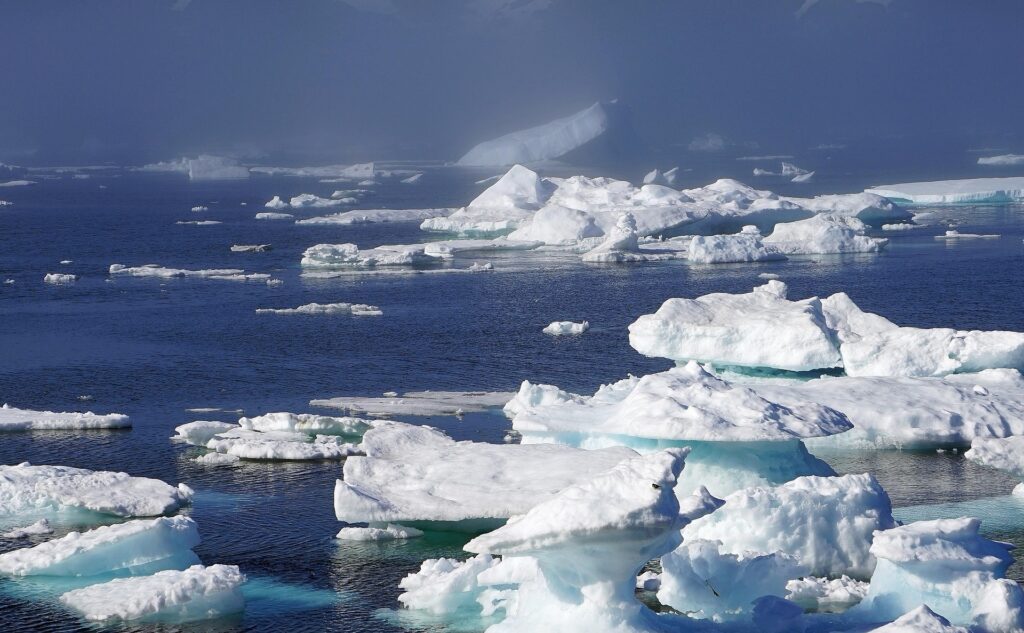
Climate change in the Arctic is expected to produce profound and multidimensional impacts on Korea’s socio-economic structure. As global warming accelerates the melting of Arctic sea ice, the region is undergoing rapid transformation, creating new maritime routes and expanding access to previously inaccessible natural resources. These developments are closely linked to shifts in global trade patterns, energy markets, and geopolitical dynamics. For a trade-dependent country like Korea, such transformations present both significant risks and strategic opportunities.
In particular, the emergence of Arctic sea routes has the potential to restructure traditional shipping networks connecting Asia and Europe. This could directly influence Korea’s export-oriented economy by reducing transportation time and costs while also challenging existing logistics systems. Furthermore, fluctuations in global resource supply and demand—especially in energy and critical minerals—may significantly affect Korea’s industrial competitiveness and long-term economic stability.
Korea’s interest in the Arctic is therefore multifaceted, encompassing economic, scientific, and strategic considerations. The Arctic serves as a critical region for climate change observation, with direct implications for the Korean Peninsula, including rising sea levels and increased climate variability. Korea’s engagement dates back over three decades, beginning with the establishment of the Polar Research Institute under KORDI in 1987, later reorganized into the Korea Polar Research Institute (KOPRI) in 2004. These institutional developments reflect the growing importance of polar issues in Korea’s national strategy.
Korea’s Arctic policy has evolved through a gradual process marked by the expansion of scientific capabilities, infrastructure development, and diplomatic engagement. Initially focused on research, Korea established the Dasan Arctic Science Station in Svalbard, Norway, in 2002, enabling continuous observation and strengthening its presence in the Arctic scientific community. Subsequent milestones include participation in Arctic exploration in 1999, the establishment of the Arctic Sea Route Center in 2009, and the deployment of the icebreaker Araon in 2010. These developments significantly enhanced Korea’s capacity to conduct independent research and participate in Arctic navigation and environmental monitoring. Diplomatic engagement has further strengthened Korea’s Arctic strategy. The 2012 visit by President Lee Myung-bak to Arctic-related countries underscored Korea’s commitment to cooperation in shipping and resource development. In 2013, Korea obtained observer status in the Arctic Council alongside China and Japan, enabling participation in Arctic governance and policy discussions.
Since then, Korea has expanded its cooperation with both Arctic and non-Arctic countries through joint research projects, institutional partnerships, and multilateral initiatives. Strategic frameworks such as the “Basic Plan for the Promotion of Arctic Activities” and the “2050 Polar Vision” illustrate Korea’s long-term commitment to Arctic engagement and sustainable development.
Economic Opportunities, Environmental Challenges, and Scientific Responses
The Arctic region offers significant economic opportunities for Korea, particularly in maritime logistics, energy security, and industrial competitiveness. One of the most important developments is the Northern Sea Route (NSR), which provides a shorter alternative to traditional shipping routes that pass through congested chokepoints such as the Strait of Malacca and the Suez Canal. For Korea, diversification of shipping routes is crucial to reducing vulnerability to disruptions in global supply chains. Korea’s geographical proximity to Russia’s Arctic waters enhances its strategic position in utilizing the NSR.
Additionally, Korea’s globally competitive shipbuilding industry provides a strong foundation for Arctic-related industries. Korean firms possess advanced technologies for constructing icebreakers, ice-class vessels, and offshore platforms, all of which are essential for operations in extreme polar environments. The Arctic is also rich in natural resources, including oil, natural gas, and rare earth minerals, which are vital for Korea’s energy security and high-tech industries. Korea has participated in international energy initiatives such as the Yamal LNG project and has strengthened bilateral economic relations with Arctic states, including Russia, Iceland, and Denmark. Investments in Arctic infrastructure, including ports and specialized vessels, further enhance Korea’s role in emerging Arctic markets.
Despite these opportunities, the Arctic remains an environmentally fragile and highly sensitive region. The rapid melting of sea ice threatens marine ecosystems, biodiversity, and the livelihoods of indigenous populations. Increased human activity, including shipping and resource extraction, raises the risk of environmental degradation and ecological disasters, which are particularly difficult to manage in polar conditions.
Korea’s Arctic policy reflects a complex balance between economic development and environmental protection. While emphasizing sustainable development and environmental responsibility, Korea also recognizes that climate change is creating new economic opportunities. This dual perspective highlights the inherent challenges of Arctic governance. To address these issues, Korea has prioritized scientific research as a key component of its Arctic strategy. Research efforts include atmospheric and oceanic observations, sea ice monitoring, and the development of climate models to better understand Arctic systems. Korea also actively participates in international scientific cooperation, collaborating with research institutions across multiple regions. These efforts contribute to global climate research while reinforcing Korea’s role as a responsible stakeholder in the Arctic.
Korea’s Legal Framework for Polar Activities
Regarding the Antarctic region, the ‘Antarctic Activities and Environmental Protection Act’ (Antarctic Activities Act) was enacted and implemented in 2004. This Act stipulates matters related to Antarctic activities in order for Korea to actively participate in the Antarctic Treaty system, including the implementation of the Antarctic Treaty and the Antarctic Treaty Protocol on Environmental Protection. The Antarctic Activities Act ultimately aims to contribute to the protection of the Antarctic environment and the development of Antarctic-related science and technology through these Antarctic activities.
The Antarctic Activities Act consists of the main text and supplementary provisions of Article 28, whose function is to accept and materialize the contents of various international laws related to the Antarctic Treaty and environmental issues of the Treaty system as domestic laws. In other words, this Act applies for activity permits to manage and supervise Antarctic activities, permit related activities for animal and plant protection, access and activities in Antarctic special protected areas, waste treatment and management, prevention of marine pollution, and monitoring the activities. In addition to the ‘domestic legalization of international law’ function, this law contains various regulations to support the active research and other activities in the region. In particular, Chapter 5, Regulations on the Promotion of Antarctic Research Activities, deals with the establishment and implementation of the Basic Plan for the Promotion (Article 21), fact-finding surveys (Article 21-2), and public relations and education (Article 22).
The enactment of domestic laws on polar activities, which started with the Antarctic Activities Act, moved to the task of enacting a general law (basic law) that includes activities in the Arctic region. Then, the bill for the ‘Polar Activity Promotion Act’ was submitted by the government at the National Assembly and the domestic law enforced from October 14, 2021. The Act consists of the main text of Article 16 and the supplementary provisions. The law will give consistency to Korea’s polar policies in the future and ensure that relevant institutions carry out projects stably.
Limitations and Challenges of the Polar Activities Promotion Act
However, problems with the enactment of the Polar Activities Promotion Act can also be found. To this end, it is necessary to interpret the meaning of the name and function of this Act once again. In fact, this Act clearly aims to ‘promote’ ‘polar activities’, but in reality, it fills the lack of legal basis for various polar activities in Korea and increases the effectiveness and consistency of activities. Therefore (although it is acceptable to some extent that the name of this Act is called the ‘Promotion Act’), the name ‘Basic Act’, which is faithful to the primary function of this Act, is rather appropriate. It is also worth considering that the word “promotion” itself has a great feeling of Japanese Chinese characters.
Regarding the Basic Plan for the Promotion of Polar Activities in Article 6 of the Polar Activities Promotion Act, it is necessary to establish and implement an integrated basic plan and action plan covering the Antarctic and the Arctic. Although it is already clear that the policies applied individually to the Antarctic and the Arctic originated from the differences between the two regions, and that they were established and implemented differently depending on various backgrounds and grounds, Article 6 of this Act provides for a ‘law mechanism different from the integration of policies’. This issue can also be linked to the difference between the Ministry of Oceans and Fisheries and the Ministry of Foreign Affairs, which are the main agencies in charge of the Polar Activities Promotion Act and the Antarctic Activities Act. Therefore, by amending or supplementing both laws, it needs to make a fundamental difference between the ‘Basic Plan for Polar Activities’ and the ‘Basic Plan for the Promotion of Antarctic Research Activities’ or there is no overlap, or ② create a completely integrated Comprehensive Polar Plan (policy) and a single base law without confusion.
There is also the problem that the legal mechanism (legal coherence or connection) related to Article 5 is cluttered because this Basic Law serves as a “basic law.” It is clear that the Antarctic Activities Act is related to this law, but the meaning or category of “other laws” in Article 5 of this law, which took effect recently, is not clear. If any special law in the field of environment conflicts with or conflicts with this Act on the Promotion of Polar Activities, there are no interpretation standards or precedents that can assure that ‘this Act applies’ or other laws take precedence under Article 5.
Along with the enforcement of the Polar Activities Promotion Act, the enforcement ordinance and enforcement rules are insufficient. Efforts to clarify the relationship between sub-norms and higher laws are natural, but sub-norms of this law are likely to create coherence issues with sub-norms related to other higher-level laws or provisions, such as the Antarctic Activities Act.
Polar activities often involve active exchanges with foreign countries or cooperation with international organizations. Therefore, since ‘polar international cooperation activities’ using the International Cooperation Regulations (Article 12) of this Act can be expected, research and efforts to utilize this Article in various ways are necessary. For example, ‘public diplomacy activities in the polar field’ in connection with the public diplomacy concept are possible. In such a case, ‘legislative linkage’ can also be considered, which links laws that are considered to be laws in a completely different field and promotes highly effective projects through this. It will be one of the new ways to use this law.