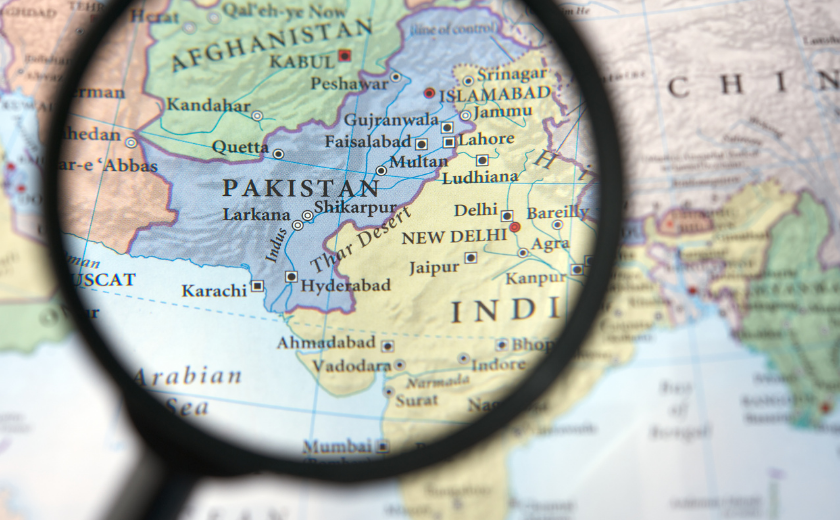

At moments of escalating tension between United States and Iran, the international system often searches for stabilizing intermediaries. In the current phase of confrontation, Pakistan has re-emerged as one of the few actors capable of maintaining open channels with both sides. Not because it holds decisive power but because its geography, diplomatic history and economic exposure compel it to act as a middle power.
Recent developments point to a more proactive posture. Islamabad has hosted and coordinated discussions involving Saudi Arabia, Turkey and Egypt while simultaneously engaging Tehran at the leadership level. In parallel, Pakistan secured arrangements to allow 20 vessels to transit the Strait of Hormuz safely, a concrete step that moves beyond rhetoric and into operational de-escalation. This matters because the Strait carries roughly 20 percent of global oil trade, making any disruption a systemic shock rather than a regional issue.
The question is not whether Pakistan can end a US-Iran conflict outright. It is whether it can meaningfully reduce escalation risks. The answer lies in how its structural position intersects with current geopolitical pressures.
A Mediator with Historical Depth
Pakistan’s diplomatic role is rooted in precedent. During the early 1970s, it facilitated secret contacts between the US and China, contributing to one of the most consequential geopolitical realignments of the Cold War. That experience established a pattern of quiet mediation that continues to inform its foreign policy behavior.
More recently, Pakistan has leveraged this tradition in regional crises. According to multiple reports, Islamabad has offered to host direct or indirect US-Iran talks, reflecting both its willingness and its perceived credibility. This credibility stems from a unique balance. Pakistan maintains long-standing security cooperation with Washington while sharing a 900-kilometer border with Iran, alongside energy and trade linkages.
Unlike many regional actors, Pakistan is not structurally locked into a single bloc. This flexibility allows it to function as a diplomatic intermediary at a time when formal channels between Washington and Tehran remain limited.
The Economic Imperative Behind De-escalation
Pakistan’s mediation efforts are not purely diplomatic. They are driven by tangible economic stakes.
The country imports a significant share of its energy, and global price fluctuations directly affect its macroeconomic stability. A major disruption in the Strait of Hormuz could push oil prices sharply upward, worsening inflation and fiscal pressures. For context, even a $10 increase in global oil prices can translate into billions of dollars in additional import costs for energy-dependent economies like Pakistan.
At the same time, Pakistan’s long-term development strategy depends on regional connectivity. The China-Pakistan Economic Corridor, a flagship component of broader Eurasian infrastructure integration, requires stable transit routes and predictable security conditions. Any sustained US-Iran confrontation would undermine investor confidence and delay infrastructure projects tied to China.
Trade patterns also reinforce this logic. Pakistan aims $100 billion in exports by 2035, with energy imports forming a large portion. Even limited disruptions in Gulf shipping lanes could create supply chain bottlenecks affecting everything from fuel to industrial inputs. In this sense, Pakistan’s push for mediation is not idealistic. It is grounded in economic survival and long-term strategic planning.
Regional Diplomacy in Practice
Pakistan’s recent diplomatic activity reflects an attempt to broaden de-escalation beyond bilateral channels. By engaging multiple regional actors simultaneously, Islamabad is working to create a wider framework for crisis management.
This approach recognizes that US-Iran tensions are embedded within a larger regional system. Rivalries involving Gulf states, shifting alignments in the Eastern Mediterranean, and ongoing conflicts across the Middle East all interact with the US-Iran dynamic.
Pakistan’s role, therefore, is not limited to acting as a messenger. It is attempting to build a platform where multiple stakeholders can coordinate responses. Hosting discussions with Saudi Arabia, Turkey, and Egypt is part of this effort to construct a more inclusive diplomatic space.
At the same time, Islamabad has maintained direct communication with Tehran, including high-level contacts between leadership figures. This dual-track approach allows Pakistan to operate both within multilateral frameworks and through bilateral channels.
Strategic Resilience Under Constraints
Pakistan’s ability to sustain this role is tied to its strategic resilience. Despite facing economic challenges and domestic political pressures, it continues to maintain functional relationships with competing global and regional powers.
This resilience is reflected in its foreign policy behavior. Rather than aligning rigidly, Pakistan has adopted a pragmatic approach that prioritizes flexibility. It engages with the US on security and economic issues, cooperates with China on infrastructure and investment, and maintains working relations with Iran despite regional tensions. Such a posture is difficult to sustain. It requires careful calibration and constant adjustment. Yet it also creates opportunities. In a polarized environment, actors that can maintain cross-cutting relationships become valuable intermediaries.
Pakistan’s experience managing internal and external pressures has reinforced this adaptability. It has learned to operate under constraints, which in turn shapes its diplomatic style. Incremental progress, rather than sweeping agreements, becomes the objective.
Therefore, Pakistan’s role should not be overstated. The structural drivers of US-Iran confrontation remain beyond its control. These include ideological differences, regional security doctrines, and broader great power competition. Pakistan cannot compel either side to compromise. Nor can it guarantee that any negotiated outcomes will hold. Its influence is indirect and contingent.
There are also internal limitations. Economic pressures, governance challenges, and security concerns constrain the resources Islamabad can devote to sustained mediation efforts. These factors limit its ability to institutionalize its role over time.
However, mediation in contemporary conflicts rarely depends on a single decisive actor. It is often the result of cumulative efforts by multiple intermediaries. In this context, Pakistan’s contribution lies in keeping channels open and reducing the likelihood of miscalculation.
A Case for Rethinking Pakistan’s Role
International discourse often focuses on Pakistan’s vulnerabilities. While these are real, they obscure a critical dimension of its foreign policy: its capacity to act as a stabilizing force. A more balanced approach would recognize Pakistan as a stakeholder in regional stability. Supporting its diplomatic initiatives and integrating it into broader multilateral frameworks could enhance its effectiveness as a mediator.
This does not require overlooking its challenges. It requires acknowledging that stability in complex regions depends on actors capable of bridging divides. Pakistan is one of the few states that maintains working relationships across competing blocs. Pakistan will not single-handedly end a US-Iran war. That expectation misunderstands both the nature of the conflict and the limits of mediation. What Pakistan can do is shape the environment in which escalation decisions are made. Its recent actions, from securing maritime transit arrangements to hosting regional discussions, demonstrate a willingness to move beyond symbolic diplomacy.
In a geopolitical landscape where many actors are choosing sides, Pakistan’s strategy stands out for its emphasis on engagement. It reflects a recognition that stability is not achieved through alignment alone, but through sustained efforts to manage tensions. If the international community engages more constructively with Pakistan, its capacity to contribute to regional stability could expand. The result may not be a dramatic resolution, but it could be something equally important: a reduction in the risks of conflict, and a gradual opening for dialogue where none currently exists.