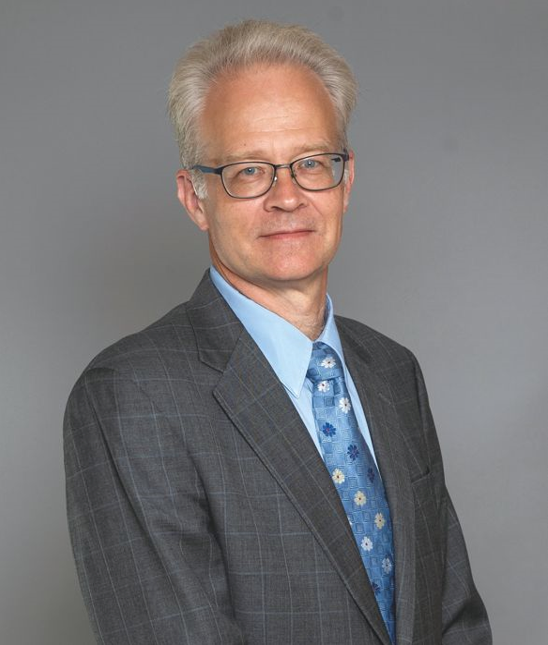
Ambassador Karl-Olof Andersson has served as Sweden’s Ambassador to the Republic of Korea since August 2024. He holds degrees in business and languages from Lund University and in international studies and political science from Johns Hopkins University. He also served as a fellow at Harvard University’s Weatherhead Center for International Affairs. During his diplomatic career, he held positions at the Swedish embassies in Athens, Berlin, Tallinn, Pyongyang, and Beijing, including as Ambassador to the Democratic People’s Republic of Korea and as Minister Counsellor and Deputy Head of Mission in China. At Sweden’s Ministry for Foreign Affairs, he served as Deputy Director for Asia and the Pacific and later held senior advisory positions. Before taking up his post in Seoul, he served as Consul General of Sweden in the Åland Islands, Finland.
Could you briefly introduce yourself and Sweden to our readers? Since arriving in the Republic of Korea as Ambassador, what experience or aspect of Korean society has been particularly memorable to you?
I serve as the Ambassador of Sweden to the Republic of Korea, committed to further strengthening the partnership between our two countries. Sweden is a nation built on innovation, sustainability, and openness. Since arriving in Korea almost two years ago, I have been deeply impressed by the high level of education, the rapid adoption of digital technologies, and the strong civic engagement that characterize Korean society. These qualities highlight the significant potential for future cooperation between our countries.
The partnership between the Republic of Korea and the European Union has continued to deepen across a wide range of fields. In your view, what achievement best represents the current Korea-EU relationship, and in which areas should the partnership develop further?
Among the most notable achievements in Korea-EU relations are the institutionalized strategic partnership and the successful implementation of the EU-Korea Free Trade Agreement. Our cooperation spans trade, climate action, digital transformation, and supply-chain resilience. Looking ahead, I see growing opportunities in security and defense cooperation, carbon-neutral technologies, AI and digital governance, and economic security.
At a time of increasing uncertainty in the international order, what roles can the Republic of Korea and European countries play together in promoting peace, security, democracy, and a rules-based international order?
Korea and European countries share a strong commitment to a rules-based international order, democratic values, and global stability. Together, we can contribute meaningfully to addressing nuclear and security challenges, strengthening economic security, and advancing cyber resilience, sustainability, and climate security. These areas represent essential pillars of our shared responsibility.
What role can exchange among universities, research institutions, students, and younger generations play in strengthening the long-term foundations of relations between the Republic of Korea and European countries?
Academic cooperation and youth exchanges form a vital foundation for long-term relations. Joint research projects, Erasmus+ programs, and youth innovation initiatives enable both sides to share knowledge and deepen cultural understanding. Korea’s participation in Horizon Europe, the EU’s flagship research and innovation framework, further expands opportunities for collaboration in cutting-edge fields such as climate science; digital technologies, including AI; health; and advanced manufacturing. These platforms help build the human capital that will shape future cooperation between our regions.
Additionally, Europe is a space defined by openness, diversity, and collaboration. In a rapidly changing global environment, Europe offers Korean youth wide-ranging opportunities for study, research, entrepreneurship, and cultural exploration. Cross-border cooperation and mutual understanding are essential to addressing global challenges, and young people are at the center of this effort.
Sweden’s medical support during the Korean War and its continuing role in the Neutral Nations Supervisory Commission form a unique historical foundation for bilateral relations. How can this legacy be connected to a more future-oriented partnership between Sweden and the Republic of Korea?
Sweden’s medical support during the Korean War and its continued role in the Neutral Nations Supervisory Commission (NNSC) have established a foundation of cooperation and trust between our countries. This legacy naturally connects to future cooperation in peacebuilding, humanitarian assistance, confidence-building mechanisms, and conflict prevention. Sweden stands ready to contribute its experience in mediation, facilitation, and peace diplomacy to support stability on the Korean Peninsula.
Sweden and South Korea are industrial and innovation-driven economies with strong capabilities in telecommunications, batteries, electrification, green steel, and advanced manufacturing. Where do you see the greatest opportunities for joint investment and technology cooperation?
Sweden and Korea are industrial nations with innovation-driven economies and complementary strengths. Significant opportunities exist in batteries and electric-vehicle ecosystems, green steel and low-carbon manufacturing, 5G/6G telecommunications, life sciences, the defense industry, and AI-enabled industrial innovation. Joint R&D, investment partnerships, and cooperation on resilient supply chains can further enhance our shared competitiveness.
Both countries are working to combine climate goals with industrial competitiveness. How can they cooperate in industrial decarbonization, circular economy models, clean transport, energy storage, and sustainable urban development?
Sweden leads in carbon-neutral industrial models and circular-economy policies, while Korea excels in rapid technological commercialization. Together, we can advance industrial decarbonization technologies, recycling and reuse systems, electric mobility, energy-storage solutions, and sustainable urban development. These areas offer strong potential for joint projects.
Sweden has a strong ecosystem linking universities, research institutes, startups, and global companies. What measures could expand joint research, student mobility, innovation programs, and collaboration among young entrepreneurs in the two countries?
Sweden’s innovation ecosystem, linking universities, research institutes, startups, global companies, and relevant government agencies, provides a strong platform for cooperation with Korea. Establishing joint research centers, expanding student and researcher mobility, developing shared incubation programs, and creating fellowships for young innovators are practical steps that can deepen collaboration.
Swedish design, music, literature, film, and social innovation are familiar to many South Koreans, but often as separate images. What public diplomacy initiatives could present a more connected and contemporary understanding of Swedish society and culture?
Sweden has actively engaged Korean audiences through diverse projects in film, music, literature, design, and architecture. A notable example is the Swedish Film Festival, which has served as an important cultural bridge between our countries for more than a decade. This year, the 15th edition begins on 8 September at Art House Momo in Seoul, followed by screenings on 10 September at the Busan Cinema Center, as well as events in Incheon and Daegu. Through this initiative, we aim to showcase Sweden’s creativity, social values, and cultural diversity. Activities such as this deepen mutual understanding and highlight Sweden’s contemporary cultural landscape.
Interviews conducted via email by Hayann Lee (Deputy Director, HUFS Jean Monnet Centre of Excellence)