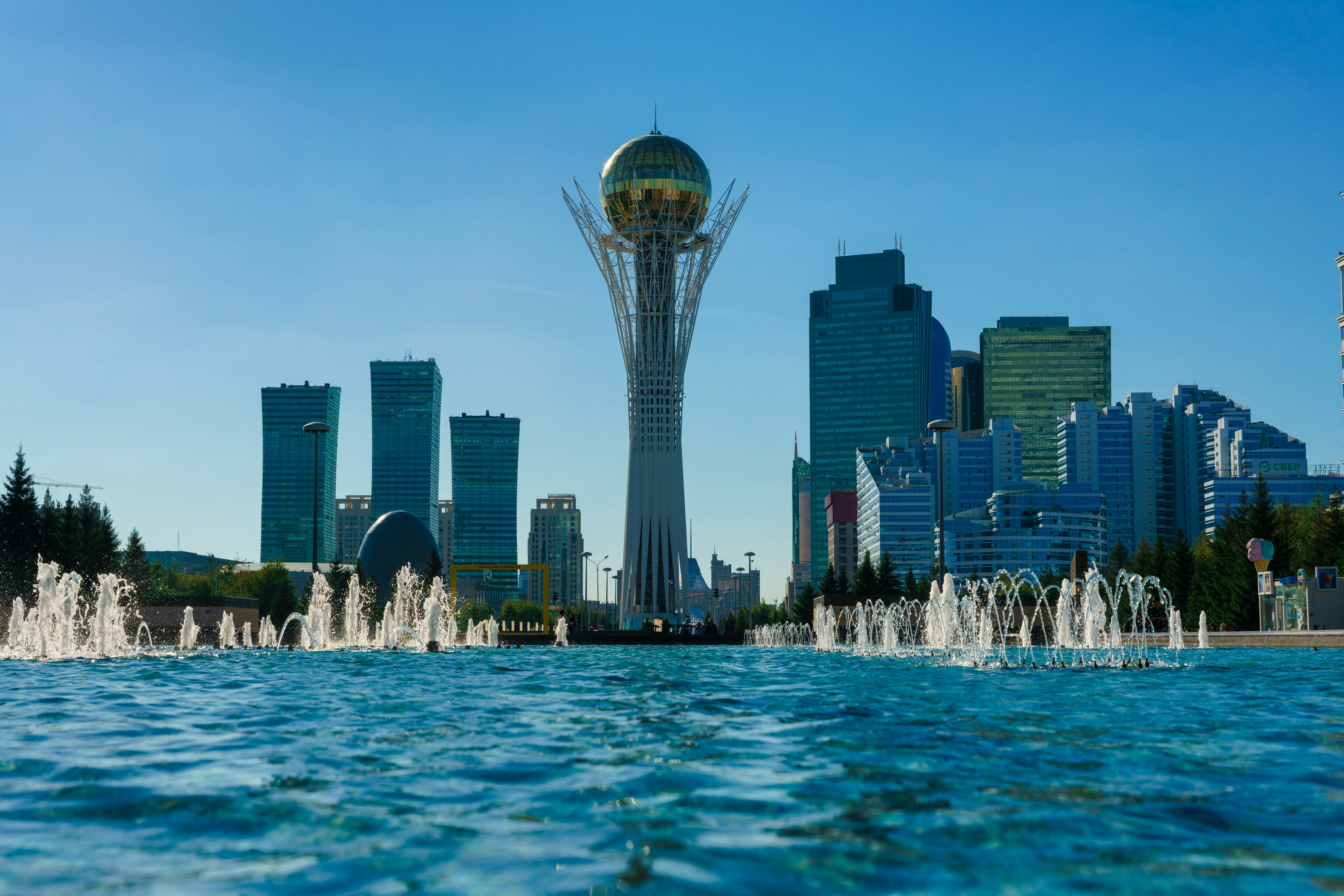

As Kazakhstan and Uzbekistan advance ambitious modernization strategies, their evolving relationship is becoming central to the future of Central Asia. Beyond reform indicators, the key issue is how the two states navigate complementarity and competition within an emerging regional architecture. They are not classical rivals, but indispensable strategic partners whose ability to manage this duality will largely determine the region’s trajectory in the coming decade. Together, they account for roughly 65–70 percent of Central Asia’s GDP and population, making their interaction structurally decisive for regional outcomes.
Two Models: Acceleration and Stability
Uzbekistan’s updated “Uzbekistan-2030” strategy reflects a decisive shift toward measurable governance. Hundreds of indicators are tied to ministries, funding sources, and implementation deadlines, signaling an attempt to institutionalize performance-based policymaking. This approach is supported by recent economic momentum. Uzbekistan’s GDP growth has averaged around 5.5–6 percent in recent years, while foreign investment and credit inflows have surged, reaching over 10 billion USD in recent years, with net FDI showing a consistent upward trajectory. Trade turnover has also expanded, with exports diversifying beyond traditional commodities.
The country is moving from gradualism toward a mobilized development model centered on execution and administrative coordination. The 2026–2030 framework incorporates geopolitical uncertainty, technological disruption, environmental pressures, and rising demand for energy and water. Uzbekistan aims to double its GDP over the next decade, increase the share of renewable energy to around 25–30 percent, expand its digital economy, and position itself as a regional IT and logistics hub. Initiatives such as IT Park Uzbekistan and expanded e-government platforms illustrate this shift toward measurable transformation.
Kazakhstan’s trajectory has been different. Its strength lies in institutional stability, macroeconomic resilience, and crisis management capacity. With a GDP exceeding 250 billion USD, Kazakhstan remains the largest economy in the region. It has accumulated significant financial buffers through mechanisms such as the National Fund, which has historically stabilized the economy against commodity price volatility. Inflation targeting frameworks, a relatively developed banking sector, and diversified trade relations have contributed to systemic resilience.
Over three decades, Kazakhstan has built regulatory systems, financial institutions, and a multi-vector foreign policy capable of absorbing external shocks. While its growth rates have been more moderate, typically in the 3–4 percent range in recent years, its governance model prioritizes predictability and risk management.
In simple terms, Uzbekistan represents acceleration, while Kazakhstan represents institutional depth and stabilization. Together, these models generate a structural complementarity that can underpin regional development if properly aligned.
From Competition to “Sparring Partnership”
Both countries closely monitor each other’s progress. Yet what emerged in Astana was not rivalry, but recognition of mutual dependence. Experts increasingly describe Kazakhstan and Uzbekistan as forming a functional tandem that anchors regional stability. Their combined economic weight, demographic scale, and geographic centrality create a de facto core within Central Asia.
Healthy competition can stimulate reform. Uzbekistan’s rapid administrative and economic transformation creates pressure for Kazakhstan to accelerate modernization efforts, particularly in digitalization and public sector efficiency. At the same time, Kazakhstan’s governance stability and institutional maturity enhance regional predictability, which benefits Uzbekistan’s integration into global markets.
Neither country can afford the other’s stagnation. Uzbekistan’s slowdown would weaken regional growth dynamics, while instability in Kazakhstan would undermine investor confidence across the region. This interdependence produces what can be described as a disciplined competitive partnership. It is competitive enough to drive policy innovation, yet cooperative enough to prevent systemic fragmentation.
Strategic Areas of Managed Competition
Energy remains central. Central Asia’s energy landscape is characterized by asymmetry. Kazakhstan is a major hydrocarbon exporter, producing around 80–90 million tons of oil annually, while Uzbekistan combines gas production with rising domestic demand. At the same time, both countries face increasing pressure to transition toward greener energy systems. Renewable energy projects, particularly in solar and wind, are expanding rapidly, with Kazakhstan targeting carbon neutrality by 2060 and Uzbekistan accelerating solar capacity through foreign partnerships.
Regional energy security increasingly depends on coordination rather than unilateral action. Water-energy linkages, especially involving upstream hydropower and downstream irrigation needs, further reinforce the need for cooperative frameworks.
Transport and logistics are equally critical. Projects such as the Trans-Caspian International Transport Route, the China–Central Asia–Europe corridors, and bilateral initiatives like the Uchquduq–Kyzylorda connection reflect a shared strategic logic. In a fragmented global economy, connectivity translates into geopolitical leverage. Trade corridors linking Central Asia to China, Europe, and the Middle East are gaining importance, particularly as sanctions and supply chain disruptions reshape Eurasian trade flows.
Technology and education are emerging as new arenas of interaction. Digital governance reforms, artificial intelligence strategies, and expanding academic mobility programs are creating opportunities for regional scaling. Uzbekistan’s rapid digitalization and Kazakhstan’s more institutionalized innovation ecosystem can be mutually reinforcing. Success in one country generates spillover effects across the region.
Geopolitical Constraints and Risks
Discussions also touched on Uzbekistan’s evolving relationship with Eurasian integration structures. The prevailing approach is pragmatic. While legacy frameworks such as the Eurasian Economic Union retain functional relevance, long-term regional cohesion is increasingly prioritized.
External pressures remain significant. Sanctions regimes, supply chain fragmentation, and shifting geopolitical alignments create persistent uncertainty. For example, disruptions linked to Russia’s economic isolation have already affected transit routes, financial flows, and labor migration patterns across Central Asia.
In such an environment, neither speed alone nor stability alone is sufficient. Uzbekistan faces risks of administrative overstretch, rising external debt exposure, and dependence on foreign capital inflows. Rapid reform cycles can strain institutional capacity if not matched by governance depth. Kazakhstan, by contrast, faces the risk of reform inertia if institutional conservatism slows adaptation to technological and economic shifts.
Neither model is complete in isolation. Their limitations become more visible under conditions of global volatility.
Regional Agency Instead of External Dependency
The key takeaway from the Astana roundtable is clear: regional convergence is no longer optional. For decades, Central Asia was primarily viewed as an arena shaped by external powers such as Russia, China, and, to a lesser extent, the European Union and the United States. A coordinated Kazakh-Uzbek tandem offers a different trajectory, one rooted in regional agency.
Practical steps are both necessary and feasible. These include coordinated transport and energy corridors, partial alignment of investment policies, development of common digital and industrial standards, expansion of academic exchange programs, and structured dialogue on major infrastructure projects. Intra-regional trade, which still accounts for less than 10 percent of total trade in Central Asia, has significant room for expansion if such coordination mechanisms are strengthened.
None of this requires political unification. It requires trust, transparency, and sustained expert-level engagement supported by institutional mechanisms. The central strategic question is no longer which country advances faster. It is whether both can scale simultaneously while keeping competition disciplined and constructive. If Uzbekistan successfully translates measurable reforms into sustained and inclusive growth, and Kazakhstan continues to reinforce institutional resilience while accelerating innovation, Central Asia could enter a new phase. This would be a shift from fragmented balancing to coordinated regional ascent.
In that scenario, competition will not divide the region. It will reinforce it. The future of Central Asia will be determined not by rivalry, but by synchronization.