
Introduction: From Contractor to Architect
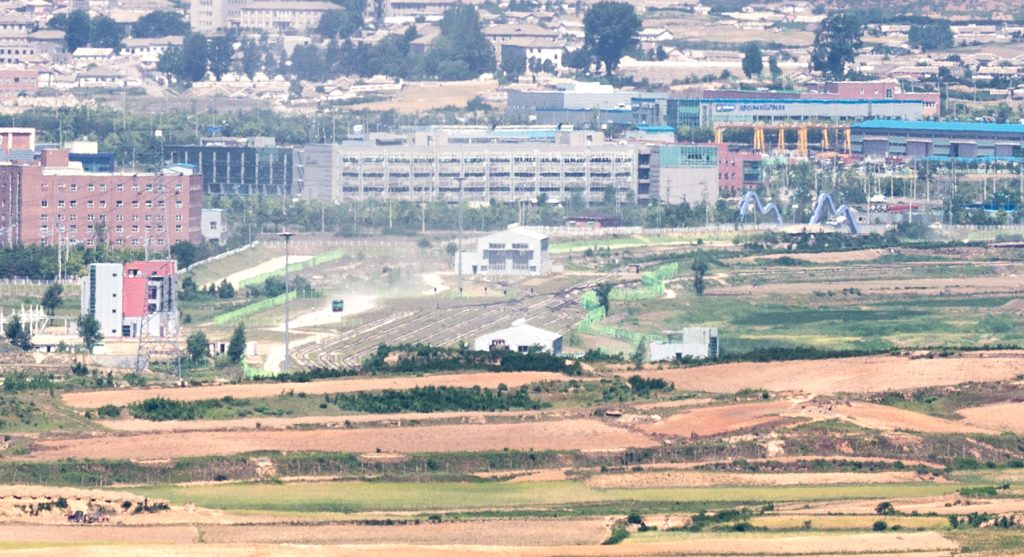
When the Kaesong Industrial Complex was shut down in February 2016, it was widely described as a failure. Commentators spoke of naïveté, of a misguided “Sunshine Policy,” of South Korean idealism exploited by a ruthless North Korean regime. Kaesong, they argued, had financed Pyongyang’s nuclear ambitions while exposing North Korean workers to harsh labor conditions and denying them basic rights. From this perspective, closing the complex appeared not only inevitable but morally necessary.
Yet this verdict is incomplete. It judges Kaesong solely by its political and institutional outcomes, while ignoring what actually happened between people. Kaesong was never just an economic zone or a diplomatic instrument. It was one of the most ambitious experiments in sustained inter-Korean contact since the division of the peninsula. And when examined from this human perspective, Kaesong appears less as a failure and more as a rare, fragile, but meaningful laboratory of learning—one that revealed the long-term, patient logic of South Korea’s engagement with the North.
Beyond Policy: The Meaning of Sunshine
Since the 1990s, South Korean policy toward the North has been shaped by a simple but demanding assumption: that isolation hardens division, while contact—however limited—creates the conditions for change. The Sunshine Policy was never based on illusions about the nature of the North Korean regime. Rather, it was grounded in a sober understanding of history: abrupt transformation was unrealistic, and pressure alone would not bridge a division sustained by ideology, security fears, and decades of mutual demonization.
Kaesong was the most concrete expression of this approach. Located just north of the Demilitarized Zone, it brought together South Korean capital, technology, and management with North Korean labor. Tens of thousands of North Korean workers and hundreds of South Korean managers interacted daily. Unlike diplomatic summits or symbolic cultural exchanges, Kaesong was built on routine: production schedules, quality control, deadlines, and everyday problem-solving.
This ordinariness was precisely its radical element. Kaesong did not aim to change North Korea through slogans or political conversion. It sought something far more modest—and potentially more durable: exposure, habituation, and practical cooperation.
The Shadow Side of Kaesong
Any honest account must acknowledge Kaesong’s darker dimensions. North Korean workers were employed under conditions dictated by the North Korean state. Wages were low by international standards, payments were mediated through the regime, workers had little knowledge of labor rights. From a human rights perspective, these conditions were troubling, and criticism from international observers was justified.
Moreover, Kaesong was structurally unstable. As a special economic zone located in one of the world’s most militarized regions, it was vulnerable to political shocks. Its very existence depended on inter-Korean relations that could deteriorate overnight. This instability affected not only workers but also South Korean firms, many of which later collapsed after the shutdown.
Yet to reduce Kaesong to exploitation alone is to miss its paradoxical nature. Its moral ambiguity was not an accident; it was the price of operating in a context where ideal conditions were impossible. Kaesong was not designed as a model of global capitalism or labor rights. It was an experiment conducted under extreme constraints—political, ideological, and security-related. And precisely because of these constraints, what happened within its walls deserves closer attention.
What Happened Between People
My research, based on interviews with South Korean business owners and managers involved in Kaesong, consistently points to one finding: meaningful change occurred not at the level of institutions, but at the level of interaction.
Initial encounters were marked by distance and suspicion. South Korean managers arrived with deeply ingrained images of North Koreans as rigid, indoctrinated, and incapable of initiative. North Korean workers, in turn, viewed their southern counterparts through the lens of decades of propaganda. The ideological divide was immense.
Yet daily cooperation gradually eroded these abstractions. Production required communication. Problems had to be solved. Mistakes had to be corrected. Over time, managers observed changes in how workers approached tasks: greater attention to quality, increased efficiency, and a growing sense of responsibility for outcomes. Workers, for their part, learned new rhythms of work and new expectations—not through lectures, but through practice.
What emerged was not ideological conversion, but practical learning. Capitalism in Kaesong did not arrive as a doctrine. It arrived as a timetable, a production target, a shared goal. Through repetition, North Korean workers were exposed to a different logic of work—one based less on political loyalty and more on performance, coordination, and trust.
Equally important, South Korean participants experienced change. Many spoke of shedding simplistic views of North Koreans as passive or uniform. They encountered individuals with skills, pride, and the capacity to adapt. In this sense, Kaesong functioned as a two-way process of de-stereotyping, even within a profoundly unequal setting.
Learning Without Liberalization
Critics often argue that Kaesong failed because it did not lead to systemic reform or political opening in North Korea. This expectation misunderstands the nature of learning under authoritarian conditions. North Korea’s history of economic experimentation—from joint ventures in the 1980s, through special economic zones in the 1990s, to limited market measures in the 2000s—reveals a pattern of cautious, reversible adaptation shaped by regime security concerns.
Kaesong fit squarely within this pattern. It did not trigger liberalization, but it expanded experience. It familiarized segments of the workforce with alternative practices, expectations, and forms of coordination. Such exposure does not translate immediately into reform, but it subtly alters the repertoire of what is imaginable and doable.
Change in North Korea, when it comes, is unlikely to resemble a sudden transformation. It is more likely to emerge through accumulated experiences that normalize difference. Kaesong contributed to this slow process not by challenging the regime directly, but by quietly introducing a different everyday reality.
Why Kaesong Was a South Korean Achievement
Seen in this light, Kaesong reveals something important about South Korea itself. It demonstrated a capacity for strategic patience rarely acknowledged in public debate. South Korea accepted asymmetry, uncertainty, and moral discomfort in pursuit of long-term engagement. It invested not only capital, but trust—knowing that tangible returns might never materialize.
This was not weakness. It was a form of confidence rooted in South Korea’s own historical experience of transformation. Having undergone rapid development and democratization, South Korea understood that change is often indirect, uneven, and driven by mundane interactions rather than grand political gestures.
Kaesong embodied this understanding. It treated North Koreans not merely as recipients of aid or objects of pressure, but as partners in a shared, if limited, endeavor. In doing so, it affirmed a vision of the peninsula’s future grounded in coexistence rather than domination.
Conclusion: Kaesong as a Lesson, Not a Relic
The Kaesong Industrial Complex will not reopen in its original form. The political conditions that sustained it have disappeared, and the peninsula remains locked in uncertainty. Yet Kaesong should not be remembered simply as a failed project or a cautionary tale.
It should be remembered as evidence that contact matters—even under the worst conditions. That learning can occur without freedom. And that South Korea, through patience and restraint, demonstrated a form of leadership rooted not in coercion, but in exposure and example.
Kaesong showed that even where borders are rigid and ideologies hostile, everyday cooperation can carve out small spaces of shared understanding. These spaces are fragile. They are easily erased. But once experienced, they are not easily forgotten.
In that sense, Kaesong belongs not only to the past, but to any future in which Koreans once again seek ways to meet—not as enemies or symbols, but as people working side by side.