
Introduction: The Awaza Diplomatic Nexus
Between October 7 and 9, 2026, the Awaza National Tourist Zone in Turkmenbashi, Turkmenistan, became the preeminent center of Eurasian multilateral diplomacy. Convened under the auspices of Turkmenistan’s 2026 chairmanship of the Commonwealth of Independent States (CIS), the week orchestrated three high-stakes summit tracks that brought together the heads of state of Central Asia, the South Caucasus, Russia, and Iran. Following preparatory ministerial consultations on foreign policy, regional leaders sequentially engaged in the Eighth Consultative Meeting of the Heads of State of Central Asia with the formal participation of the Republic of Azerbaijan, the jubilee summit of the CIS Council of Heads of State commemorating thirty-five years of the Commonwealth, and the inaugural Caspian Environmental Summit uniting the littoral “Caspian Five.”
The gathering of these distinct multilateral formats within a single maritime venue reflects the deepening maturity of regional statecraft. Rather than relying on external intermediaries or rigid bloc politics, the states of the Caspian basin and Central Asia are actively constructing institutionalized forums to manage shared infrastructural, ecological, and economic priorities. Crucially, the orchestrating force behind this diplomatic milestone was Turkmenistan, whose sustained initiatives have transformed the Caspian littoral into a vital nexus of peaceful Eurasian dialogue.
Proactive Neutrality: Turkmenistan as the Institutional Anchor of Eurasian Dialogue
The successful execution of this demanding summit sequence underscores the strategic efficacy of Turkmenistan’s foreign policy, which is grounded in its internationally recognized status of permanent positive neutrality, twice reaffirmed by unanimous resolutions of the United Nations General Assembly. Far from denoting passive disengagement, positive neutrality serves in practice as an active, forward-looking instrument of preventive diplomacy and consensus-building. By maintaining equidistant, principled, and non-aligned relations with all regional and global powers, Ashgabat possesses the unique credibility required to convene historically complex diplomatic formats in an atmosphere of mutual trust and sovereign equality.
Indeed, the conceptual origin of several landmark frameworks realized during the summit week traces directly to earlier diplomatic initiatives pioneered on Turkmen soil. It was in Turkmenistan that the strategic vision of bridging the consultative mechanisms of the Central Asian states with Azerbaijan was first formally articulated, laying the groundwork for the institutionalized six-party format that gathered in Awaza. Furthermore, Turkmenistan achieved an unprecedented diplomatic breakthrough by organizing and hosting the First Caspian Environmental Summit, marking the first time in history that a dedicated presidential-level ecological forum was convened with the direct multilateral participation of the Islamic Republic of Iran alongside the other littoral partners.
These diplomatic achievements are reinforced by Turkmenistan’s comprehensive domestic infrastructure investments. The Awaza National Tourist Zone, positioned directly on the Caspian coast, provides world-class convention and hospitality facilities engineered for complex international summits. Operating in close synergy with this diplomatic hub is the Turkmenbashi International Seaport, an ultra-modern maritime transport complex with a capacity exceeding twenty-five million tons annually. As a major maritime nation on the eastern Caspian shore endowed with massive natural gas reserves, including the Galkynysh field, Turkmenistan has consistently championed United Nations resolutions on the reliability and safety of international energy transit. By integrating its state-of-the-art seaport with north-south rail arteries connecting Kazakhstan to Iran and westward maritime lanes across the Caspian, Turkmenistan demonstrates that its national development strategy serves as a practical engine of continental connectivity and stability.
The Trans-Caspian Arc: Institutionalizing the Six-Party Cooperation Mechanism
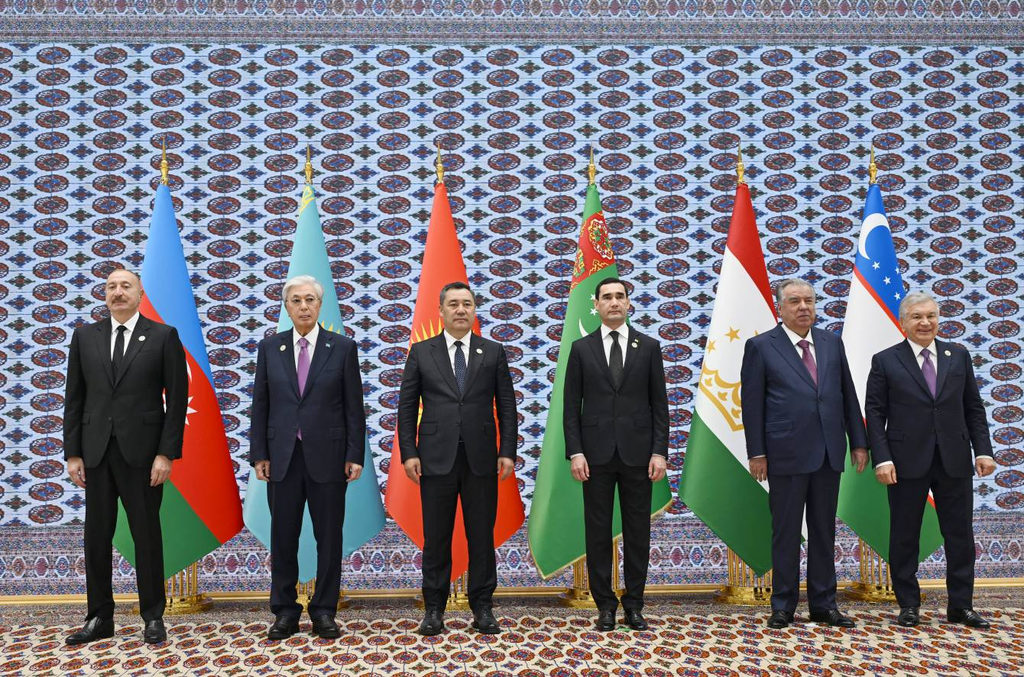
From a geo-economic and strategic perspective, the centerpiece of the regional agenda was the Eighth Consultative Meeting of the Heads of State of Central Asia, convened in close partnership with the Republic of Azerbaijan. Building upon the preliminary foundations laid during earlier high-level engagements hosted in Turkmenistan, the six-party dialogue has now evolved into an institutionalized, permanent mechanism. In his opening address, President Serdar Berdimuhamedov emphasized that establishing an institutionalized six-party coordination framework unlocks the powerful collective potential of the two neighboring regions, transforming their natural geographical convergence into an enduring strategic partnership.
The strategic logic of this alignment is rooted in the maritime geography of the Caspian Sea. While inland Central Asian nations seek efficient transit pathways to open seas, the eastern Caspian littoral – anchored by Turkmenistan’s advanced port facilities – serves as the natural maritime springboard across the basin. By connecting directly with Azerbaijani port infrastructure, the Trans-Caspian maritime route establishes an uninterrupted land-sea corridor linking Central Asia across the Caucasus directly to the Black Sea, the Mediterranean, and European markets. The participating heads of state cemented this shared vision by adopting a comprehensive Joint Statement and formal governing regulations, confirming that the Ninth Consultative Meeting will convene in Azerbaijan in 2027, marking the first time the consultative format gathers on the western shore of the Caspian.
Infrastructural Integration and Multimodal Transit Synergy
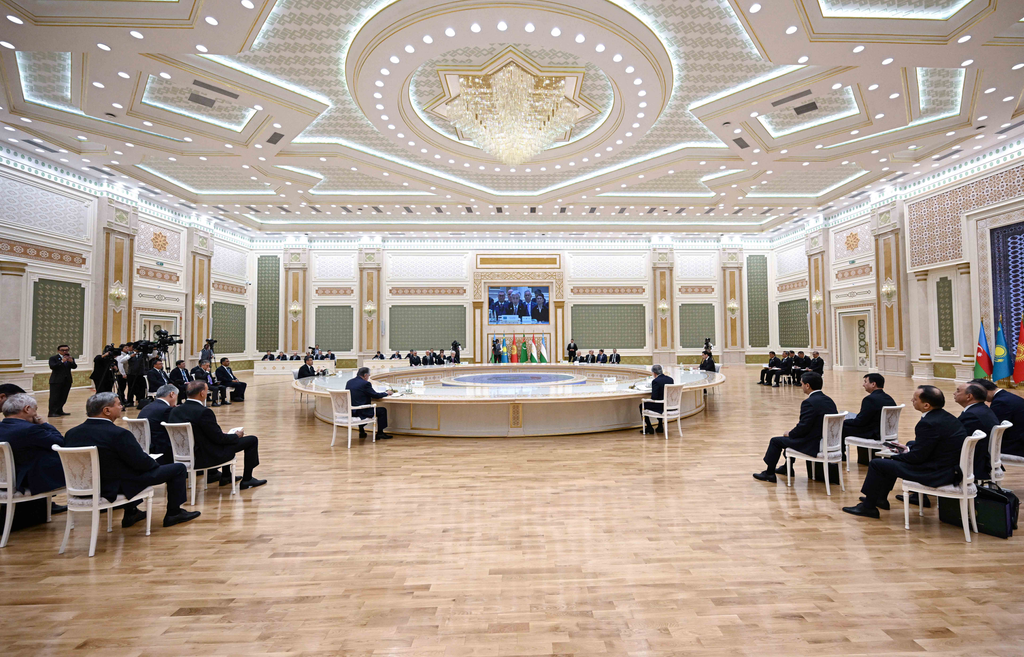
The practical deliberations of the six-party gathering focused on optimizing the Trans-Caspian International Transport Route, widely known as the Middle Corridor. Participating states recognized that maximizing the commercial viability of this corridor requires addressing systemic multimodal bottlenecks through harmonized policies rather than isolated national projects. The assembly coalesced around joint initiatives to advance industrial partnerships, establish coordinated preferential tariff frameworks, and streamline border clearance protocols through digital customs integration.
Within this integrated logistical matrix, the Turkmenbashi International Seaport serves as an indispensable transshipment hub. Equipped with specialized ferry, passenger, container, and bulk terminals, the port provides seamless multi-modal cargo transfers between Central Asian railway networks and Caspian commercial shipping lanes. By synchronizing operations with fellow Caspian ports and linking into continental rail lines that stretch from China through Central Asia and southward toward the Persian Gulf, the regional partners are systematically reducing freight transit times. This coordinated approach ensures that the Trans-Caspian route offers international shippers an agile, reliable, and legally secure transit alternative that strengthens the economic sovereignty of all participating states.
Pioneering Ecological Governance: The Inaugural Caspian Environmental Summit
A defining historic milestone of the Awaza diplomatic week was the convening of the First Caspian Environmental Summit, which gathered the heads of state of Azerbaijan, Iran, Kazakhstan, Russia, and Turkmenistan. Initiated and organized by Turkmenistan, this inaugural summit elevated the ecological preservation of the Caspian Sea to the highest presidential level for the first time, establishing a dedicated multilateral mechanism that incorporates all five littoral states into a cohesive environmental dialogue.
The urgency of the summit is dictated by alarming hydrological trends that directly threaten the ecological and economic future of the entire basin. Over the past quarter-century, the Caspian Sea’s surface area has diminished by more than 16,000 square kilometers due to shifting climate patterns and reduced river inflows, resulting in dramatic shoreline recessions across shallow coastal sectors. This sustained shallowing process directly endangers maritime trade by compromising port approach channels and necessitating continuous capital dredging, while severely disrupting endemic bioresources, including historic sturgeon spawning grounds and the habitat of the Caspian seal.
Under Turkmenistan’s leadership, the five littoral leaders agreed on the imperative of moving from reactive declarations to systematic institutional coordination. The summit endorsed proposals to establish collaborative scientific and research initiatives dedicated to Caspian marine ecology, expand joint hydrological monitoring networks, and strengthen practical enforcement under the Tehran Framework Convention for the Protection of the Marine Environment of the Caspian Sea. By spearheading this historic gathering, Turkmenistan demonstrated that responsible environmental stewardship is an essential prerequisite for sustainable maritime commerce and regional security.
Principled Multilateralism: The 35th Anniversary CIS Summit
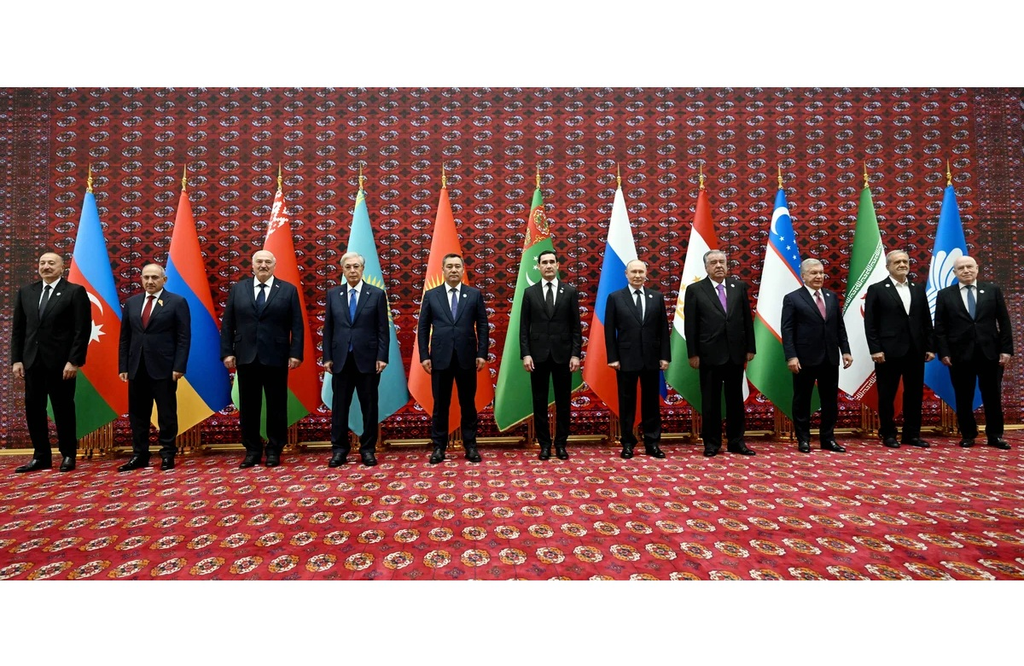
Running in parallel with the regional and littoral meetings, the CIS Council of Heads of State assembled in Awaza to mark the thirty-fifth anniversary of the Commonwealth. Presiding over the proceedings as the 2026 chair, Turkmenistan guided the anniversary summit with a commitment to pragmatic cooperation, sovereign equality, and constructive economic engagement. The meeting concluded with the adoption of approximately fifteen multilateral documents, focusing on shared security challenges, digital transformation, law enforcement cooperation, and unified communication strategies across regional media.
Economic discussions during the anniversary summit reflected an ongoing emphasis on commercial resilience, highlighted by the continued expansion of mutual trade settlements conducted in national currencies, which now surpass eighty-five percent across the member states. For Turkmenistan and its partners, the CIS framework provides a structured venue for functional economic dialogue and tariff harmonization, maintained strictly on the basis of mutual benefit, national sovereignty, and non-interference. Turkmenistan’s adept stewardship of the organization throughout 2026 demonstrated its ability to host constructive dialogue among diverse international partners while upholding its independent, neutral foreign policy trajectory.
Strategic Implications
The multifaceted outcomes of the Awaza diplomatic week mark a decisive stage in the evolution of Eurasian geopolitics. Above all, the summits illustrate the emergence of confident, indigenous regional agency. Rather than remaining passive subjects within the competing strategies of external powers, the states of Central Asia and the Caspian littoral are proactively designing their own multi-tiered institutional architecture. By determining the priority and direction of connectivity projects, institutionalizing ecological safeguards, and establishing consensus-based dialogue mechanisms, the region is asserting its collective autonomy on the world stage.
The formal institutionalization of the six-party Central Asia–Azerbaijan mechanism establishes a permanent geostrategic bridge uniting the eastern and western shores of the Caspian Sea. Far from being disconnected inland territories, the Caspian littoral states – anchored by Turkmenistan’s modern maritime infrastructure – now possess a coordinated, legally backed transit corridor that connects Central Asian industrial centers with the South Caucasus, the Black Sea, and Mediterranean trade routes. This alignment provides regional exporters with diversified logistical pathways, significantly reducing dependence on any single route and enhancing their collective bargaining position in global commerce.
Ultimately, the proceedings in Awaza reaffirm Turkmenistan’s standing as an indispensable diplomatic anchor in Eurasia. Through its principled policy of positive neutrality, visionary host diplomacy, and world-class infrastructure, Turkmenistan has proven its unique capacity to unite diverse international partners behind constructive, peaceful goals. Furthermore, by initiating the historic First Caspian Environmental Summit, Turkmenistan has demonstrated that the durability of continental transport corridors depends fundamentally on protecting the shared marine ecosystem upon which all littoral states rely. In doing so, Ashgabat has set a constructive precedent for cooperative, balanced regional governance that will shape Eurasian development for decades to come.